In commercial construction, bidding is a high-stakes game where margins are thin, and mistakes are expensive. Any seemingly small error in a $20-million project estimate can wipe out profits.
Most importantly, it should be built for the volume of data, a layered cost structure, and multi-user collaboration.
In my blog article, I will break down what commercial construction estimating software looks like in 2026, why traditional tools fall short, and which features actually help contractors win bids.
What is a Commercial Construction Estimating Tool?
Estimating software for commercial contractors is a tool to help you create accurate, detailed cost estimates for large-scale projects. The tools connect every phase of the bidding process, from initial quantity measurement through final proposal delivery.
Commercial estimating software is primarily used by:
Estimating-Only Tools: These platforms focus solely on the preconstructionphase. Estimating-only tools are ideal for teams that need speed and simplicity. Another option is that they are used by professional estimators. However, once the project moves into execution, data often needs to be manually transferred, and there is a need for another software.
Comprehensive Construction Management Tools: These estimating tools start from preconstruction but extend far beyond the bid. Estimates feed directly into project budgets, schedules, billing, and progress tracking. For larger commercial projects, these platforms ensure that the numbers in the bid match what actually happens on-site.
For multilayer commercial builds, estimating tools serve as a data hub since all information is in a single system.
What Makes Commercial Construction Estimating Software Different?
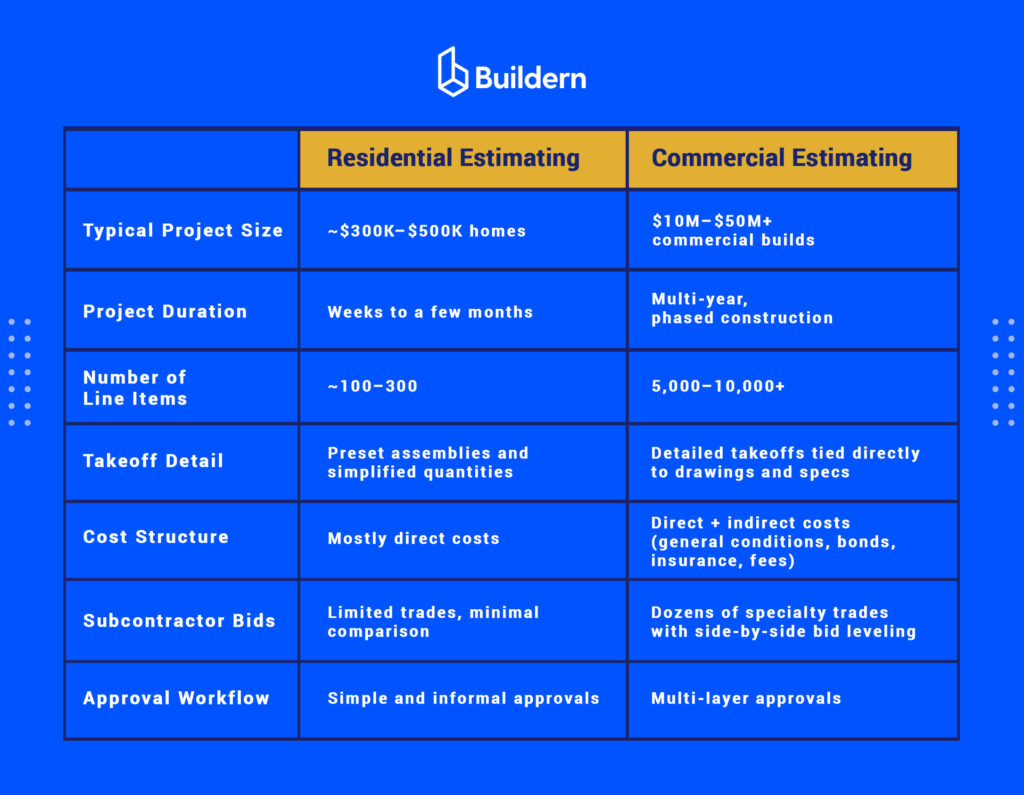
Commercial construction not only differs in the scope of projects. These builders work in an entirely different environment with the unique challenges they must solve.
As estimating is one of the initial steps of any construction project, it also affects the digital tools you use. Here’s what sets commercial estimating software apart:
#1 Project Scale
Commercial projects are often multi-million-dollar developments with long timelines and many stakeholders. Advanced estimating software can handle thousands of line items and multi-trade scopes, keeping all data organized and accessible.
#2 Level of Detail Complexity
In residential projects, preset assemblies and simplified line items are common. Meanwhile, commercial estimating requires detailed construction takeoffs directly tied to drawings and specifications.
Every material, labor hour, and piece of equipment must be accounted for, including indirect costs such as general conditions, bonds, and insurance. Besides, estimates are rarely static, as teams must manage multiple versions and revisions.
#3 Bid Collection and Management
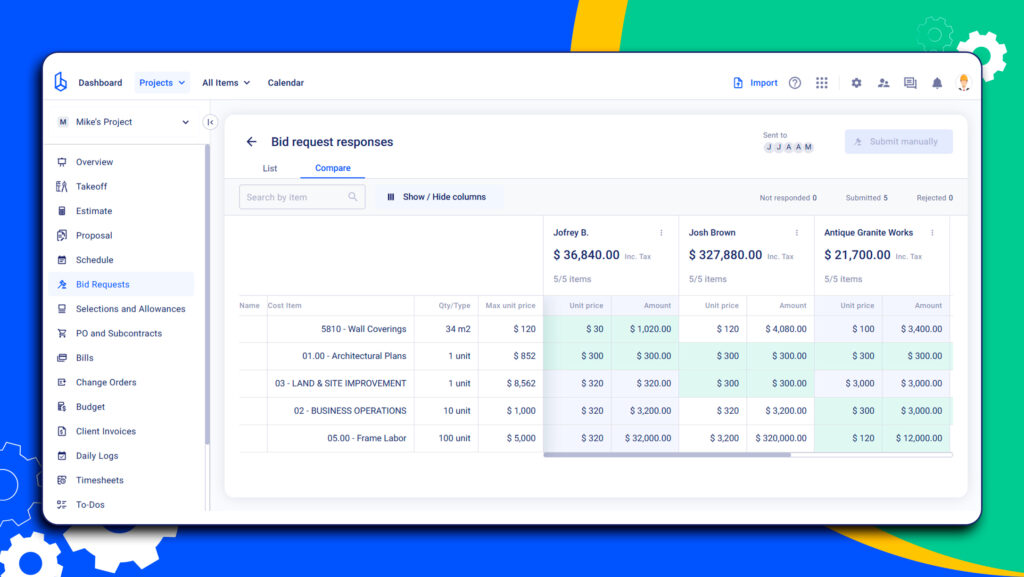
Commercial projects involve coordinating dozens of specialty subcontractors. The tools should allow a contractor to compare quotes side-by-side to ensure you’re evaluating consistent scopes.
#4 Invoicing
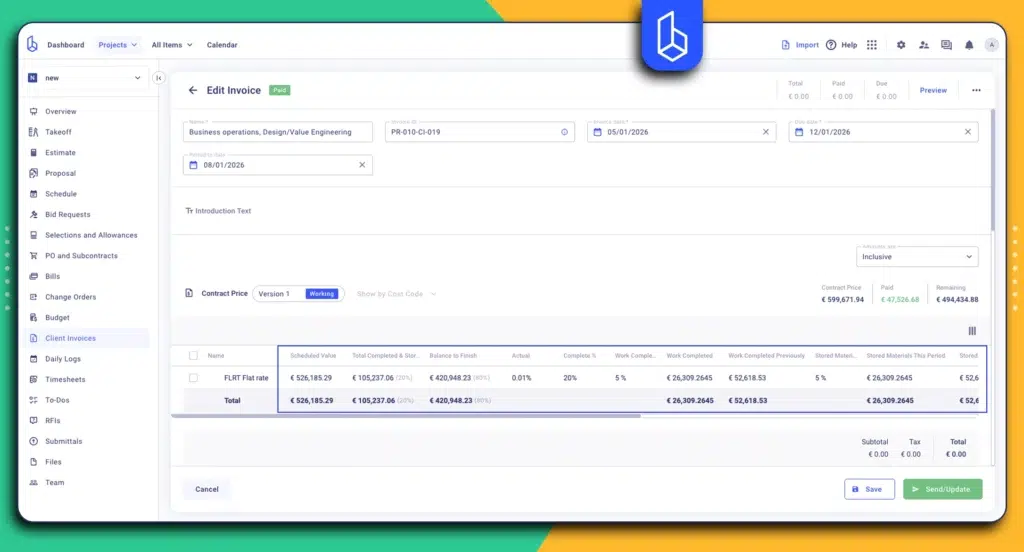
An estimate forms the foundation for all project billing and financial tracking. Estimating software allows contractors to turn detailed estimates directly into a Schedule of Values (SOV).
In the case of using this invoicing model, the total contract sum is divided into line items tied to work packages or project phases. With these tools, it’s easier to bill for percent complete, retainage, or progress payments.
Commercial projects involve many stakeholders, each with unique information needs. Estimates in commercial projects typically go through multiple approval workflows. Moreover, there should be a high level of transparency and accountability, not just during preconstruction but throughout the project lifecycle.
For example, this visibility remains critical for submittals, reporting to owners or lenders, and regulatory compliance.
Core Features Commercial Estimating Software Must Have in 2026
Contractors need tools that support complex cost structures, frequent revisions, and the financial realities of long-term commercial projects.
Let’s see how a typical commercial project develops. An estimate often begins at the conceptual or schematic design stage.
As the project moves through design development and construction documents, the estimate is revised multiple times to reflect design changes, value engineering decisions, updated subcontractor pricing, and evolving risk allocations.
Each revision must be traced with clear visibility into what changed and why. Besides, unlike residential work, an estimate must also be structured for what comes next. Therefore, here are the features a construction estimating software for general contractors should have.
Digital Takeoffs
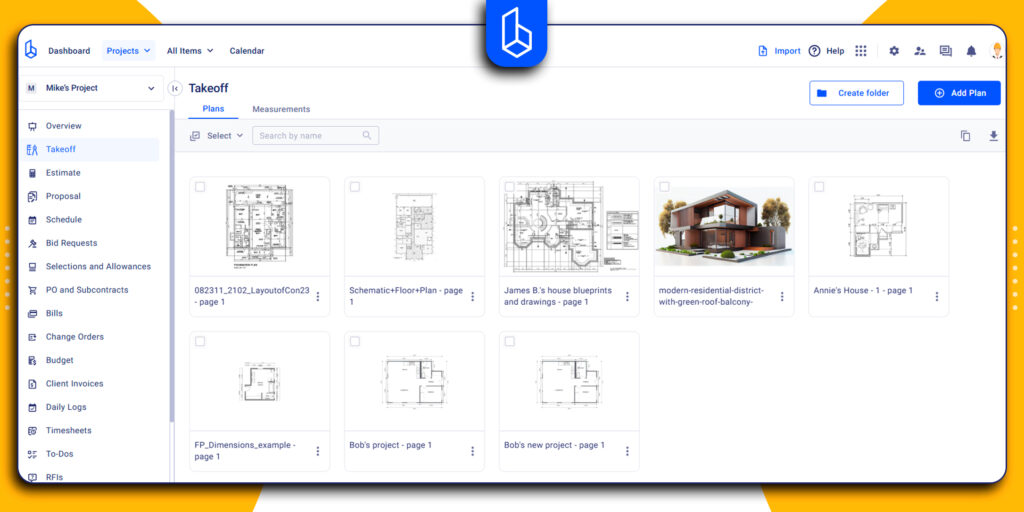
Instead of using one tool for quantity takeoffs and another for estimating, commercial construction demands an all-in-one tool. Estimators need to work from a single system where plans, quantities, and cost data stay fully connected.
Modern commercial estimating software allows contractors to upload drawings, perform digital takeoffs for area, linear, and count-based measurements, and link those quantities directly to estimate line items.
With this feature, quantities are tied to the estimate, and updates happen automatically as plans change.
Such a connection is especially critical on large commercial projects, where even small quantity errors can multiply across hundreds or thousands of line items. Manual data transfer between separate tools remains one of the most common causes of estimating mistakes.
By keeping takeoffs and estimates in sync, commercial estimating tools allow teams to respond faster when drawings are revised or value engineering decisions are made.
Commercial estimates require far more structure than a single total or high-level trade summary. To remain usable after the project is won, costs must be broken down in a way that supports financial control and future billing requirements.
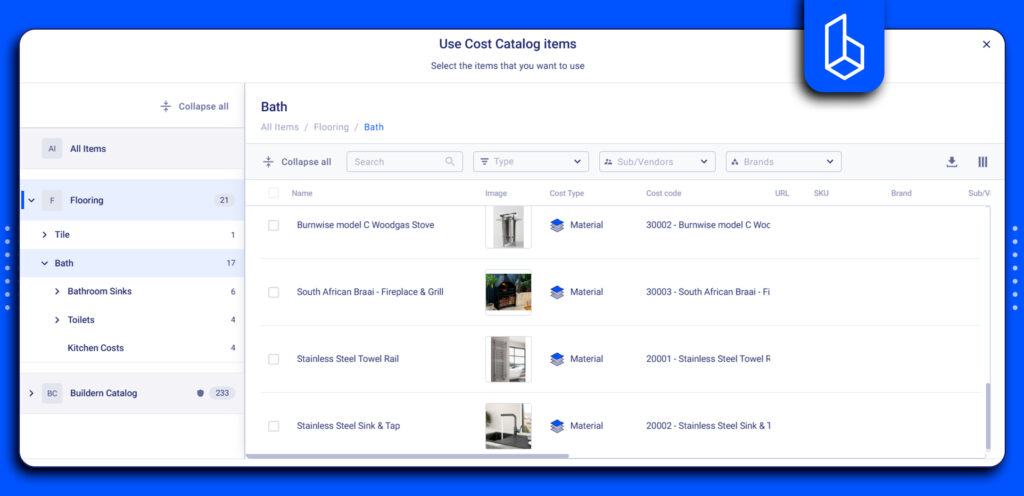
Advanced estimating software allows contractors to organize costs with customizable cost codes that reflect how the business actually tracks work.
A cost breakdown falls under several groups, such as labor, materials, equipment, and subcontractor costs. This level of detail is critical for understanding true job costs, identifying risk areas, and applying markups or contingencies accurately.
By enforcing consistent cost coding from the start, commercial estimating tools ensure that when a project moves forward, estimated costs can flow cleanly into budgeting and invoicing structures.
Advanced Bid Management and Leveling
The first step in generating an estimate is sending multiple bid requests. For a commercial estimator, it is no longer enough to send a couple of bids or guess what a subcontractor will charge.
Commercial bidding software sends bids in bulk to multiple subcontractors to get responses that are stored in one system. Once bids are received, bid leveling ensures that each quote is evaluated consistently.
The tools compare the bids side-by-side, identify pricing discrepancies, and copy them to the estimate when one is selected.
Integrated Financial Management
Etimating-only software often stops at the bid, leaving contractors to use manual steps or other software integrations, for instance, to flow to purchase orders.
This handoff creates multiple problems:
duplicate data entry
errors in quantities or pricing
lack of visibility into actual versus estimated costs.
Commercial estimating software addresses this by managing estimates with the next steps in mind.
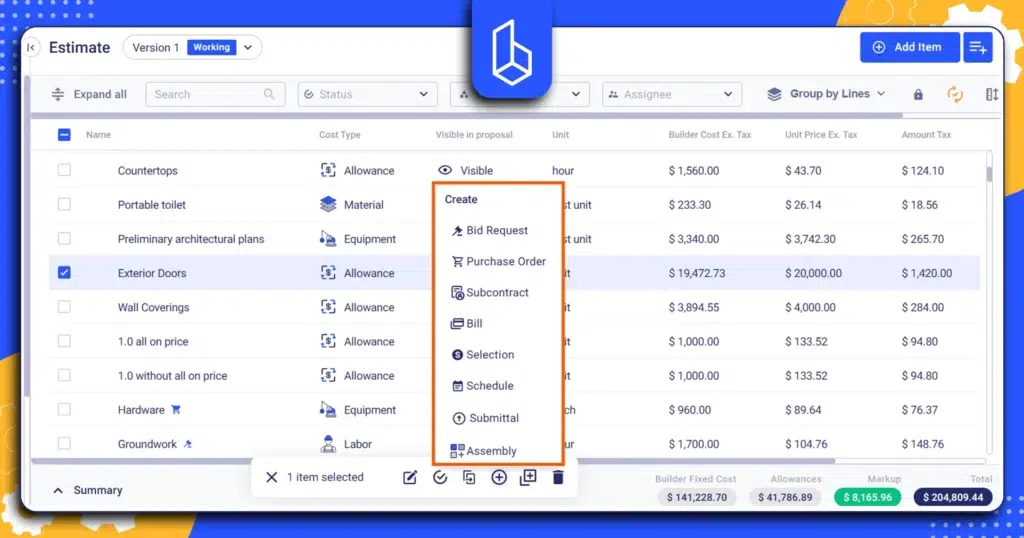
Once a bid is approved, line items can flow directly into schedules, purchase orders, bills, or submittals.
For example, an estimator finalizes an exterior doors scope with detailed quantities, unit costs, and approved subcontractor pricing.
With an estimate-to-purchase order workflow, the same data is used to generate POs for the door supplier and installation subcontractor, with the cost structure already aligned to the project’s budget.
The overall flow can look the following way:
Bids → Purchase Order (PO): The estimate contains approved quantities, costs, and subcontractor/vendor selections. The contractor generates POs from bids, ensuring the budgeted costs are carried over without re-entry.
PO → Bill: Once the supplier delivers materials or the subcontractor performs work, they submit a bill or invoice. The costs are then matched against the PO (and the original estimate) for accuracy, approval, and financial tracking.
Financial Controls and Risk Mitigation
There are financial control instruments that both residential and commercial builders use. Let’s see how they work :
Built-in Markups: Estimating software allows you to apply overhead, profit, or trade-specific markups automatically per line item or cost category.
Allowances and Contingencies: Instead of adding a blanket percentage, you can set targeted allowances for uncertain scopes or potential cost fluctuations.
Estimators can see how different allowances or markups impact the overall costs before bid submission.
As a next step, the allowances and markups flow to POs, budgets, and SOVs automatically.
5 Benefits of Commercial Estimating Software
If you still doubt whether software created for commercial builds will benefit your project, here is why it’s no longer optional.
#1 Scalability for Large Commercial Projects: Commercial projects involve hundreds of line items and multiple trades. The software handles any type of build, regardless of the number of items the estimate may contain.
#2Time Saving and Efficiency: What used to take several estimators two weeks can now be completed by one estimator quicker and more efficiently, without the risk of making mistakes.
#3Simplified Financial Flow: Commercial projects operate on tighter margins than residential builds. A 2–3% estimating error can mean the difference between profit and loss. With software, there are fewer surprises, and financial flow is transparent for an estimator and a project manager.
#4 Compliance and reporting: Digital tools maintain structured records of pricing decisions, approvals, and revisions, helping contractors stay compliant.
#5Collaboration and Transparency: Constant coordination between estimators, project managers, subcontractors, engineers, and owners is typical for such builds. Modern software supports this through multi-layer approval workflows, where subcontractor bids and scope submittals are reviewed and approved before moving forward.
Why Commercial Estimating Software Is No Longer Optional
The contractors winning work in 2026 aren’t the ones offering the lowest price.
Successful commercial contractors can deliver accurate bids quickly, justify their numbers with data, and execute projects without cost surprises. That level of accuracy requires software that will match the realities of commercial construction.
Owners demand transparency, while subcontractors expect fast turnaround on scope comparisons. To stay competitive, you need to use technology to bid faster and more accurately at the same time, working with several projects and having thousand cost items.
The question is no longer whether to adopt commercial estimating software. It’s how the one you use now has the necessary features to streamline work before your competitors pull further ahead.
What Features to Look for In Estimating Software?
For commercial projects, prioritize all-in-one platforms with integrated takeoffs, cost catalogs with assemblies, bid leveling, and other features. Look for tools that sync estimates directly into project budgets and purchase orders to ensure data continuity.
What Is the Best Commercial Construction Estimating Software?
The best software bridges the gap between bidding and execution of the project. It should offer cloud-based collaboration, cost codes, and automated financial flows that transform a winning bid into an operational budget without manual data re-entry.
How Does Estimating Software Help Protect Margins?
Software protects margins by applying tiered markups and contingencies. Real-time cost tracking allows you to compare estimated vs. actual spend.
If an owner or a home builder considers that the building is “complete”, it may not always match reality. A building can look finished, but still have minor issues, incomplete systems, or pending inspections that prevent full use. From my experience in construction projects, “done” doesn’t always mean fully complete. Only having a substantial completion […]
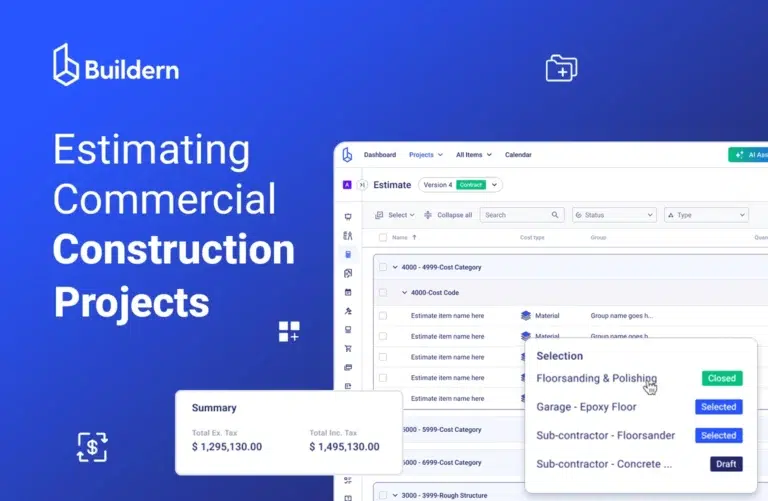
Estimating commercial construction projects is a different discipline from residential estimating. The scale is larger, the risk exposure is higher, and the financial consequences of small mistakes are magnified. I have seen projects where a single missed scope item erased the entire margin. Meanwhile, a disciplined estimate usually creates clarity that carries through the entire […]
On paper, every construction project runs on the agreed-upon payments outlined by clear contracts. In reality, when you are not a newbie, you know that it doesn’t always work this way. A subcontractor may complete weeks of work, but face delayed payments. The same is true with suppliers delivering construction materials and waiting for weeks […]