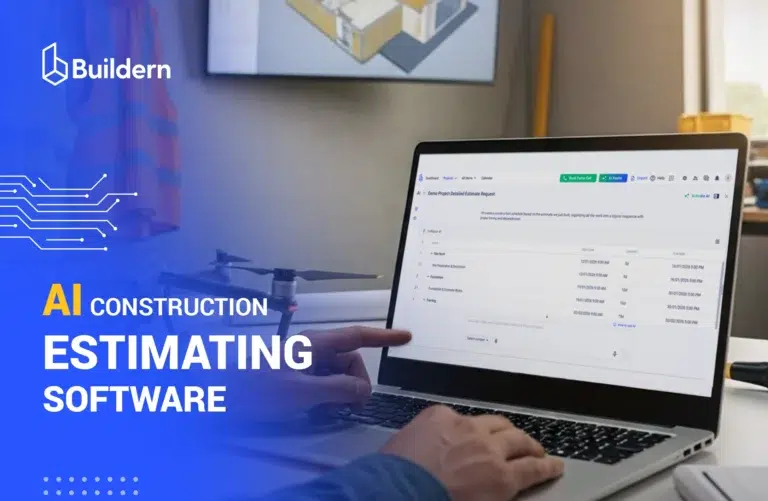
AI Construction Estimating Software: Improving Speed & Accuracy


I learned early in my career that construction estimating isn’t the luxury task most people treat it as. It’s more the decision filter for every other part of the job.
Good estimating protects margins, informs scheduling, and sets clear expectations with clients and trades.
Poor estimating is where small errors compound into cashflow problems, late variations, and mid-project firefighting.
In the past, estimating was either a spreadsheet puzzle or a manual takeoff marathon. However, AI construction estimating software shows real value today. Not in abstract “smarter numbers” claims, but in actual workflows where busy teams need speed, repeatability, and early warning of risk.
To share my experience, this article explains why estimating breaks, what AI really contributes (without marketing fluff), and where AI estimating tools create operational advantage in real jobs.
Table of Contents
- Why Construction Estimating Breaks Before the Build Starts
- What AI in Estimating Really Means (No Marketing Definitions)
- The Estimating Tasks AI Actually Improves Today
- AI Estimating vs Traditional Digital Estimating Software
- What to Look for When Evaluating AI Construction Estimating Software
- Builders Who Get the Most Benefits from AI Estimating

Why Construction Estimating Breaks Before the Build Starts
Before we talk about AI, automation, or software features, let’s address a harder truth: most estimating problems begin long before a shovel touches the ground. The breakdown is rarely dramatic. It starts quietly, inside assumptions that feel reasonable at the time.
Estimating operates in a compressed window. Drawings are incomplete, details are evolving, pricing is volatile, and yet the expectation is precision. General contractors are asked to convert partial information into fixed commitments. That tension between uncertainty and contractual certainty is structural, not accidental.
When estimating systems rely heavily on manual interpretation and static spreadsheets, that structural tension becomes a risk. Variability is treated as an exception rather than a constant. And once that estimate becomes a GC contract baseline, every hidden inconsistency is locked in.
The result is predictable. The project has not started, but the margin is already under pressure.
Fixed Pricing vs Variable Site Reality
General contractors today almost always sign fixed-price contracts. Clients want certainty, lenders want stability, and subcontractors want clear scopes.
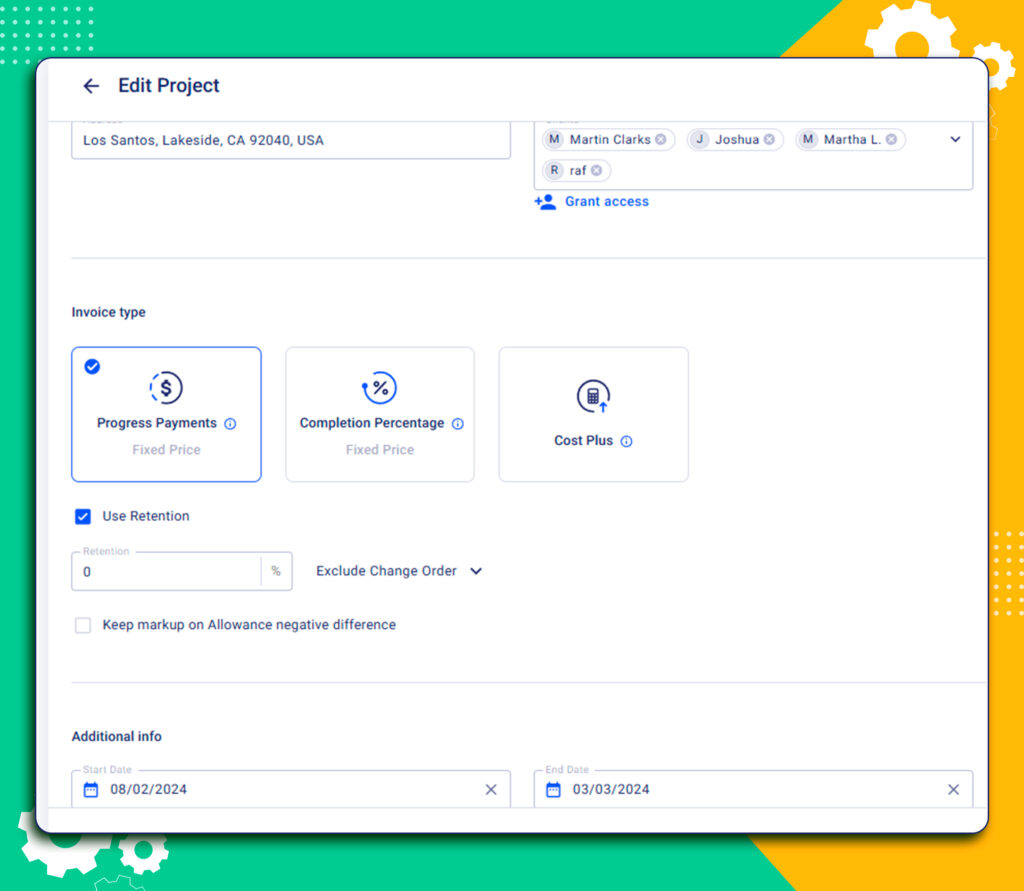
Yet the reality on the ground is variable:
- Site conditions differ from plan assumptions
- Design detail evolves after pricing
- Material and labour costs shift between the estimate and the execution
Traditional estimating treats the scope as stable at a time when it is anything but. The contract locks the price, while site conditions don’t wait for approvals. This mismatch is the main source of risks.
Manual Takeoffs as a Challenge, Not Just a Time Sink
Across multiple estimators, the same plan often yields different quantities simply because of how measurements are read, how waste percentages are applied, or how line items are grouped. When takeoffs vary, budgets vary as well. And with budgets varying, the whole projected margin begins to change.
Estimators are asked to be both quantity experts and cost strategists. That dual role is tough even without all the incremental changes that happen between tender and contract award.
How Small Estimating Errors Compound Into Schedule and Cashflow Problems
A 5% undercount on quantities might sound trivial in a spreadsheet, but on a large-scale job, it quickly turns into:
- Missed purchases
- Delayed deliveries
- Surprised trades
- Reactionary variations
Small errors in estimating can ripple across the schedulework waits for materials, trades reshuffle, crews, and then across cashflow. Unplanned spending pushes claims later, and the business ends up in a cycle of catch-up rather than control.
Therefore, estimating needs tools that support consistency and transparency.
What AI in Estimating Really Means (No Marketing Definitions)
Before looking at how AI helps, we need to be clear about what it is in this context.
AI vs Automation vs Rules-Based Estimating
There are three concepts often bundled together:
- Rules-based estimating applies fixed logic. “If X, then Y.” It’s deterministic and does not learn.
- Automation speeds up work by removing repetitive steps: button clicks, copy-paste jobs, and formatting.
- Artificial Intelligence involves pattern recognition and probabilistic inference. It learns from data to suggest outcomes not explicitly encoded.
AI construction estimating is automation with a fancy label. It means the system can identify patterns across past jobs, how quantities relate to actual costs, how changes affected budgets, and apply that insight early in new estimates.
What Machine Learning Actually Does in Estimating Workflows
Machine learning does three practical things:
- Pattern Recognition: It spots recurring cost behaviours within historical data that humans might overlook.
- Consistency Support: It suggests quantities and pricing based on learned rules
- Early Signalling: It flags anomalies before they become problems, e.g., when input data deviates from past patterns.
What AI doesn’t do is replace judgment. It doesn’t arbitrarily decide scope on its own. It gives suggestions that, when grounded in real data, help estimators make faster, more informed decisions.
The Estimating Tasks AI Actually Improves Today
AI cannot magically generate perfect estimates. It helps with specific parts of the workflow where human effort is error-prone or slow.
In every case below, I’ll explain what AI does well and what still needs manual review.
Quantity Takeoffs From Plans and Models
What AI does well:
Today’s AI models can read plans and extract quantities far faster than manual takeoff. They recognise walls, slabs, openings, and repetitive elements, and translate that into structured data more quickly than a person on a click-by-click takeoff.
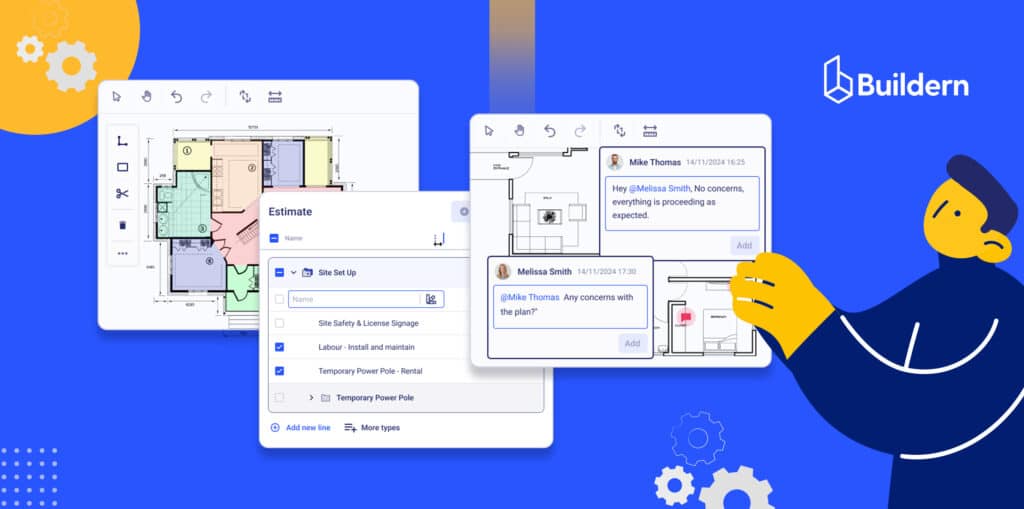
Where this adds value:
- Preconstruction estimating when the plan detail is available
- Identifying repetitive elements at scale
- Reducing physical clicks and cursor movement
What still requires manual review:
No AI is perfect at interpreting ambiguous drawings, legacy plan conventions, or site-specific features that deviate from templates. Estimators still validate AI-suggested quantities, especially for bespoke or irregular elements.
Cost Pattern Recognition From Past Jobs
What AI does well:
AI excels at spotting how costs have behaved historically across similar work. For example, it can learn that structural timber tends to overrun by 3-5% in similar soil conditions or that certain finishes cost more in a given area.
This helps in:
- Building realistic cost libraries
- Adjusting line items based on real delivery history
- Reducing guesswork in areas where past jobs provide strong signals
What still requires manual review:
AI learns trends, but it doesn’t know contractual or site-specific contingencies unless the estimator confirms them. Human insight is still needed to decide when to apply historical patterns and when to adjust for new conditions.
Flagging Scope Gaps and Inconsistencies
What AI does well:
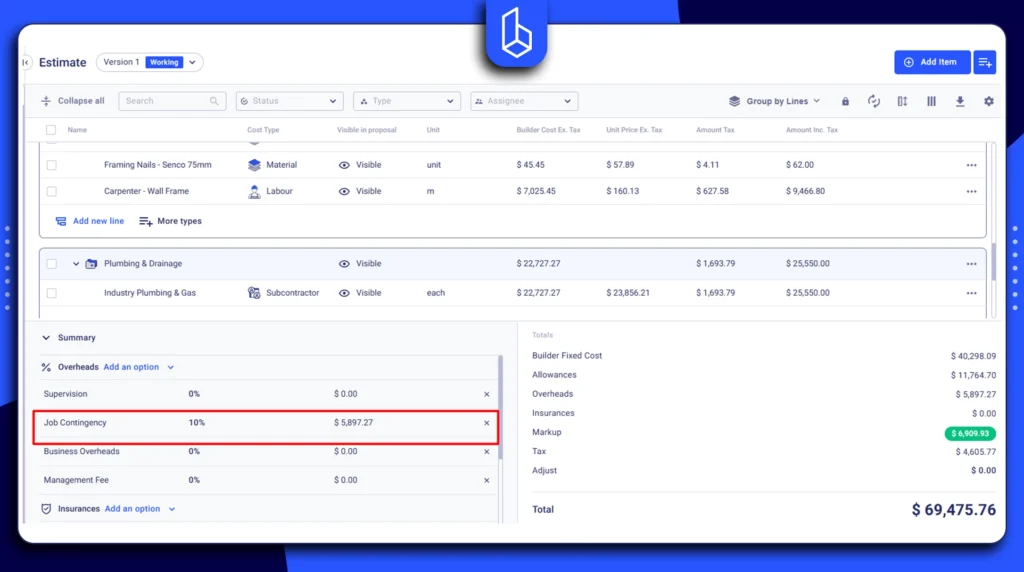
AI is particularly good at comparing line items against learned models of complete scope. It can highlight where numbers don’t match expected patterns, missing quantities, incomplete assemblies, or outliers that deserve a second look.
This reduces:
- Scope omissions
- Mismatched quantities
- Budget holes that only show up after approval
What still requires manual review:
AI flags anomalies. It still cannot decide whether they are actually scope changes or legitimate deviations. Estimators and project leads still interpret and resolve flagged issues.
Early-Stage Budget Forecasting Before Full Design Maturity
What AI does well:
Before plans are locked in, AI can produce early budget range forecasts based on partial data and historical analogues. This helps teams discuss feasibility with clients or refine design options early.
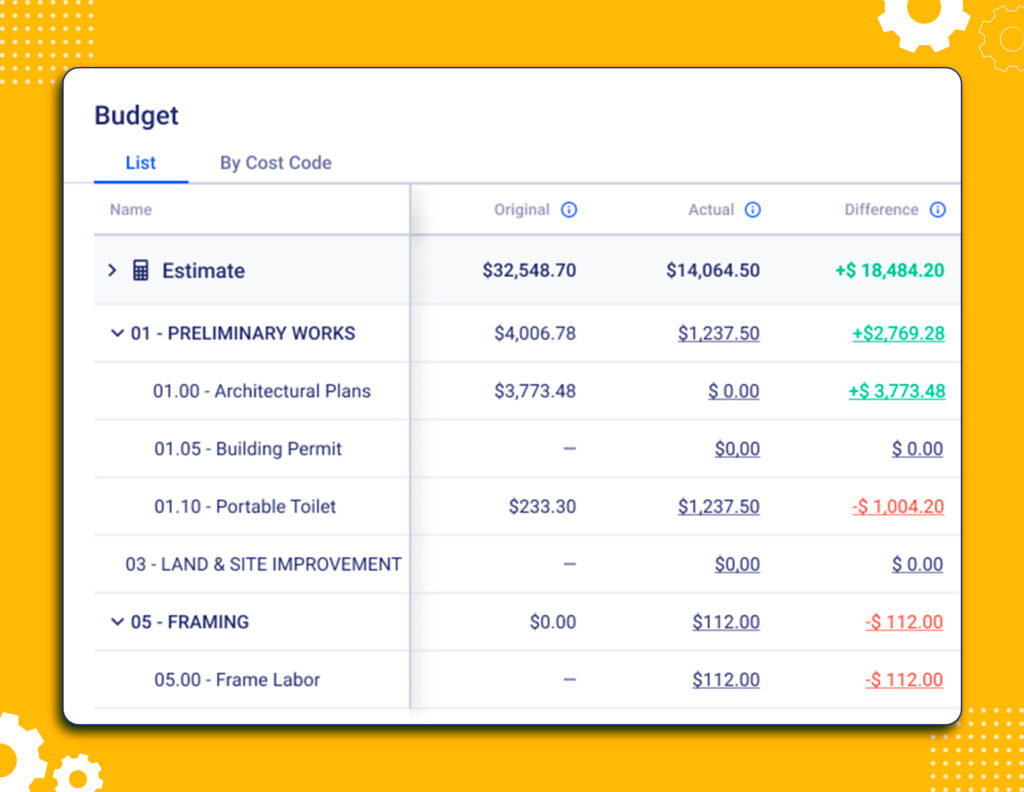
This adds value in:
- Pre-tender discussions
- High-level decision making
- Client-centric budget expectations
What still requires manual review:
AI forecasts are not substitutes for detailed design-stage estimating. Once the design matures, human estimators refine early forecasts with precision.
AI Estimating vs Traditional Digital Estimating Software
One of the biggest misunderstandings in the market is the difference between “AI-powered” and “AI-native” estimating. Many vendors adopt AI labels without changing how work actually gets done.
Spreadsheet-Based Estimating
Spreadsheets are so popular because they are cheap and flexible. But flexibility is also their weakness. Manual formulas, hidden tabs, and inconsistent application of rates and quantities create errors that are invisible until it’s too late.
Spreadsheets do not learn. They do not recognise patterns. They do not highlight anomalies. Speed gains in spreadsheets come only from individual labour, not systemic capability.
Digital Takeoff Software
Digital takeoff tools speed up manual quantity extraction and improve measurement accuracy over paper or spreadsheets, but they still rely heavily on human input. They automate clicks and counting, but do not offer insights based on job history.
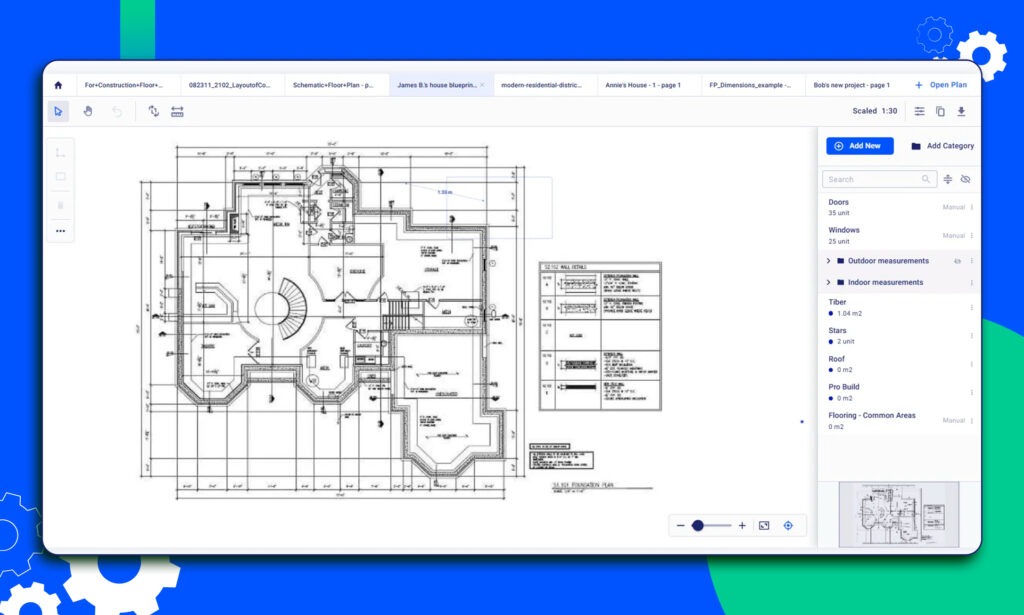
They still require:
- Manual integration into estimating models
- Linking to cost databases
- Manual updates when plans change
AI Construction Estimating Software
AI-native software adds a layer of learning and pattern recognition on top of issuing quantities:
- It suggests quantities and cost patterns based on past projects
- It identifies gaps that traditional tools usually miss
- It reduces repetitive manual tasks, so estimators focus on decision fields
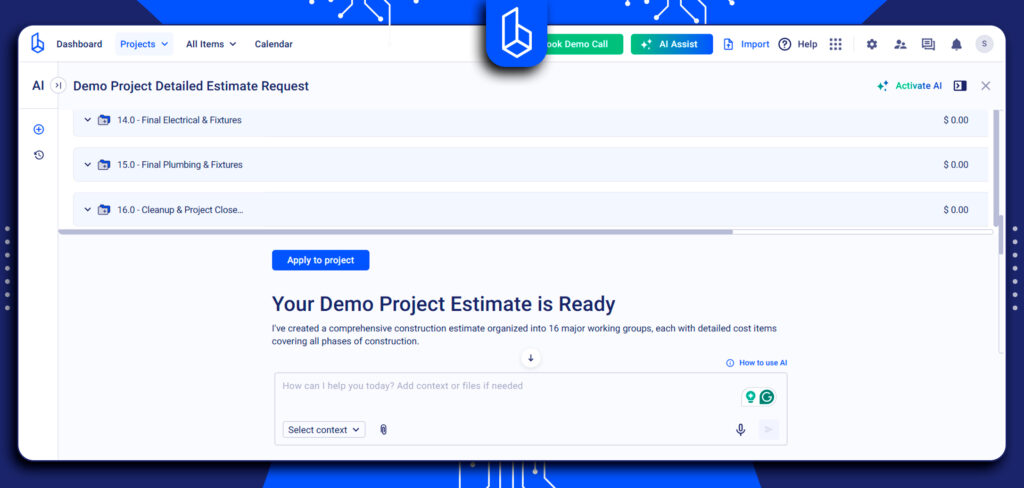
The difference is in workflow augmentation: AI helps keep models grounded in past reality while still allowing human oversight.
What to Look for When Evaluating AI Construction Estimating Software
Instead of ticking off the features vendors list, ask questions contractors actually care about:
- Does the software carry estimated data into execution workflows without retyping? True continuity reduces margin erosion.
- Can the system flag unusual line items or missing scope based on past jobs? Early gap identification prevents blindspots.
- Does it integrate with budgets and cost tracking so changes update downstream? Linking estimating to real costs is a core control.
- How does it handle revisions? Revision control matters more than a one-off speed boost.
- Is there transparency in how AI suggestions are derived? Builders should understand why the system suggests what it does.
These questions go beyond vendor marketing language and focus on how the software behaves under real job pressure.
Builders Who Get the Most Benefits from AI Estimating
Everyone claims “AI helps all contractors,” but the truth is more nuanced.
Small Builders With Limited Estimating Staff
Small teams often rely on spreadsheet models and person-dependent wisdom. In these operations, AI construction estimating software deliver immediate relief by:
- Reducing manual takeoff effort
- Applying consistency where staff are stretched
- Surfacing anomalies that a lone estimator might miss
Because small builders have less redundancy, tools that reduce rework matter more.
Mid-Size Residential Builders Under Fixed-Price Pressure
Mid-sized builders juggle multiple jobs, fixed-price contracts, and tight margins. For these teams, AI estimating adds value by:
- Anchoring estimates in historical delivery data
- Preventing underpricing on similar scopes
- Improving confidence when estimates are shared with clients
Teams Handling Frequent Variations
Where scope changes are frequent, AI helps by keeping estimating, budgets, and cost tracking in sync. Variations that once lived on separate spreadsheets now tie back to baseline budgets with context.
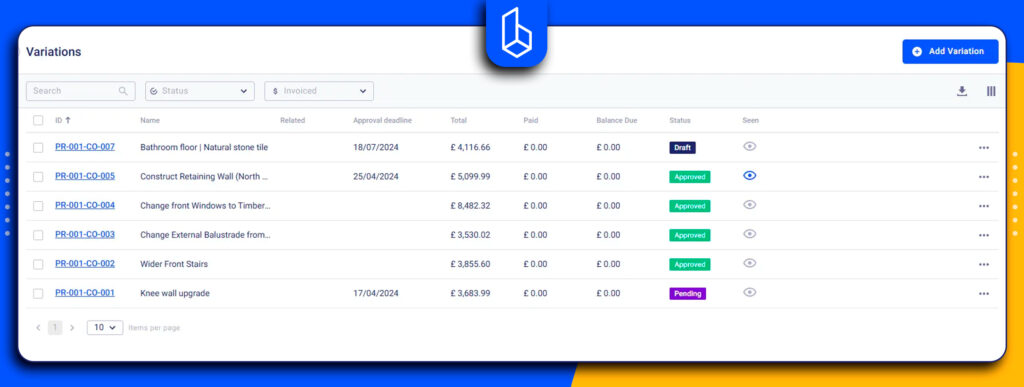
This improves:
- Transparency
- Speed of updates
- Alignment of expectations between the office and the site
Why Some Businesses Should Delay Adoption
AI estimating is not necessary for everyone right now. Teams with infrequent project turnover, highly bespoke work, or very small data history may not see enough value immediately.
AI thrives on patterns across many jobs. If those patterns don’t exist, the benefit will be limited.
Conclusion
AI construction estimating software is not a magic fix, but it is not hype either. Its value shows up where estimators historically spend too much time and where small errors turn into real costs.
AI improves speed by reducing repetitive work, it improves accuracy by recognising patterns and inconsistencies, and it improves control by linking estimates to budgets and execution workflows.
If you are switching from spreadsheets or disconnected tools, prioritise platforms that carry information forward. Such tools will help you see cost implications early and give you structured insight rather than static outputs.