Lien Waivers in Construction: How They Protect Payments, Projects, and Cash Flow



Lien waivers are often treated like routine paperwork, something you sign at the end of a billing cycle just to keep things moving. Yet, they are right at the center of how money flows through commercial project management.
Most challenges come down to timing, clarity, and alignment with the payment process. A waiver tied to a progress payment, a mismatch between document type and payment status, or unclear terms can shift how risk is distributed across the job.
To help you understand the logic behind this, I’ll break down how lien waivers function in real jobs, how they connect to billing and approvals, and how to structure them in a way that supports consistent cash flow and cleaner project execution.
Table of Contents
- What Is a Lien Waiver in Construction?
- Types of Lien Waivers (And When Each One Is Used)
- How Lien Waivers Work in a Real Payment Cycle
- How Lien Waivers Fit Into Overall Construction Financial Management
- State- and Region-Specific Rules You Cannot Ignore

What Is a Lien Waiver in Construction?
A lien waiver is a signed document that releases a party’s right to file a mechanic’s lien for a specific portion of work once payment is involved.
In simple terms, it connects payment to lien rights, which is why it carries more weight than a standard piece of billing paperwork.
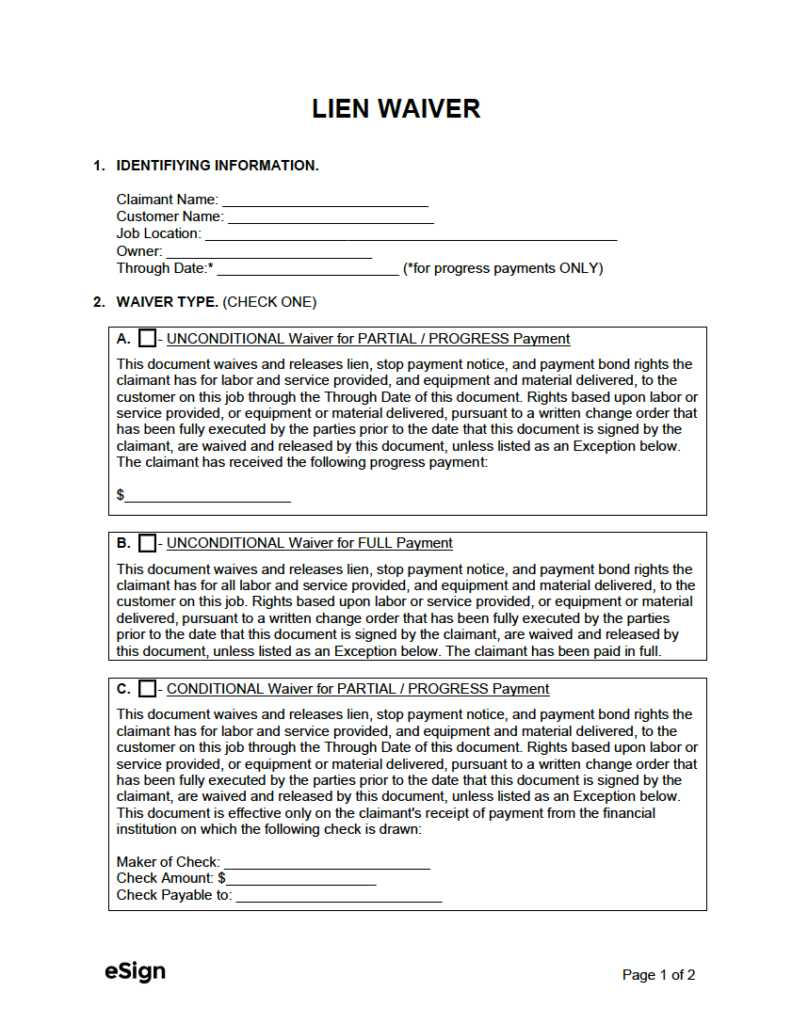
In commercial construction, lien waivers are built into the payment process because money moves through multiple layers: owner, general contractor, subcontractors, and suppliers. Each payment needs a clear paper trail, and lien waivers help create that clarity. They show that a certain amount of work, labor, or material has been financially accounted for, which gives owners and lenders more confidence as funds move through the job.
That is also why lien waivers are closely tied to pay applications, progress billing, and approvals. They help keep payment flow organized, reduce friction between parties, and bring more structure to how financial risk is managed across the project.
Lien Waiver vs Mechanic’s Lien
A mechanic’s lien is a security tool.
It gives contractors, subcontractors, and suppliers a legal way to protect payment by placing a claim against the property when money tied to completed work remains unpaid. It exists to preserve leverage in the payment chain.
A lien waiver works in the other direction.
It releases that protection for a specific amount and period of work, usually in connection with a progress payment or final payment. Once it is signed, the party covered by that waiver gives up the right tied to the corresponding portion of the job.
Such a distinction matters because these two documents serve opposite functions:
- A mechanic’s lien protects the right to pursue payment
- A lien waiver releases that right once payment is tied to the work
- The timing of that release affects financial risk immediately
When the terms are blurred, the payment process gets harder to control. A builder may treat a waiver like routine paperwork, while the document itself changes their legal position on the job. Therefore, lien waivers should always be reviewed in the context of payment status, not just signed as part of the paperwork stack.
Why Lien Waivers Exist in Commercial Construction
Lien waivers are a direct response to how commercial construction projects are funded and managed. Money usually moves through several layers, from owner to commercial general contractor, then down to subcontractors, vendors, and suppliers.
As a result, the more parties involved, the more important it becomes to document who has been paid, for what, and at what stage.
For owners, that structure creates a practical need for protection. A payment made upstream does not automatically guarantee that everyone downstream has been covered. Lien waivers help document that flow and reduce the chance of overlapping claims tied to the same scope of work.
Types of Lien Waivers (And When Each One Is Used)
Not all lien waivers serve the same purpose. The type you use depends on timing, payment status, and where you are in the project lifecycle. In commercial construction, these distinctions matter because waivers are tied directly to how billing and payments are structured.
Once you understand the categories, it becomes easier to match the right waiver to the right moment in the payment cycle.
Conditional vs Unconditional Waivers
The first distinction comes down to when the waiver becomes effective.
A conditional lien waiver takes effect only after payment has been received and cleared. It links the release of lien rights to actual funds, which makes it a common choice during progress billing.
An unconditional lien waiver becomes effective as soon as it is signed. It confirms that payment has already been received and accepted for the amount covered.
The difference is straightforward in theory, but critical in practice:
- Conditional waivers are tied to payment clearance
- Unconditional waivers take effect immediately upon signing
- The timing of signing directly impacts your payment protection
Because of that, the document type should always match the payment status. When the waiver and the actual payment timing are aligned, the process stays predictable and easier to manage across all parties.
Progress vs Final Waivers
The second distinction is based on how much of the project the waiver covers.
A progress lien waiver applies to a portion of the work tied to a specific billing period. It is typically used in monthly or milestone-based billing cycles, where payments are made incrementally as the project moves forward.
A final lien waiver applies to the entire project. It confirms that all work has been paid in full and that no further lien rights remain for that job.
In practice, they align closely with how construction billing is structured:
- Progress waivers support ongoing, partial payments
- Final waivers close out the project financially
- Both follow the rhythm of pay applications and draw schedules
This is why most commercial projects rely heavily on progress waivers during execution, with a final waiver marking the financial completion of the job.
The 4 Common Lien Waiver Combinations
When you combine timing (conditional vs unconditional) with scope (progress vs final), you get four standard types used across most commercial projects.
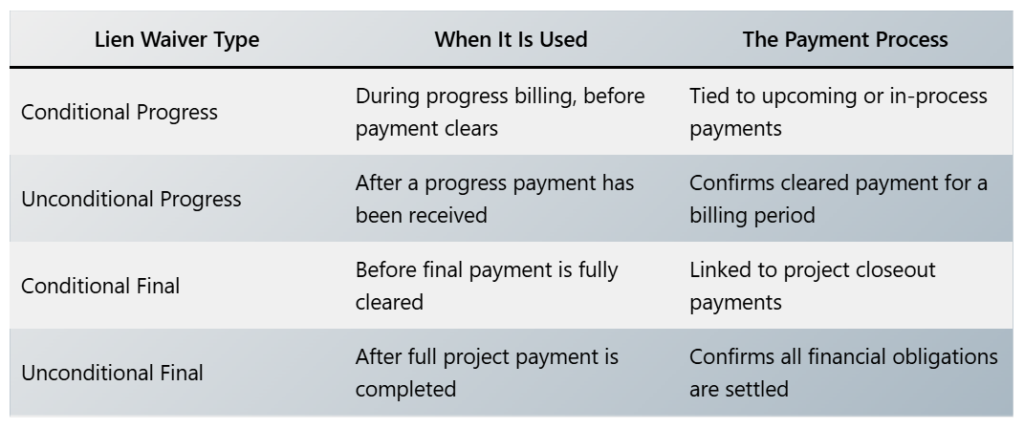
Each type reflects a specific point in the payment lifecycle. When used consistently, they create a structured flow between work completed, payments issued, and rights released, keeping commercial projects financially organized.
How Lien Waivers Work in a Real Payment Cycle
I’ve found that construction lien waivers make the most sense when you stop treating them as isolated forms and start looking at them as part of the payment workflow. On a commercial project, they move with billing, approvals, and funding, not after the fact.
That is why timing matters so much.
A lien waiver only works properly when it matches the stage of payment it is tied to. Once that sequence is clear, the whole process becomes easier to manage.
Step-by-Step Lifecycle
In most commercial projects, lien waivers follow a fairly predictable path through the billing cycle. The order matters because each step supports the next one.
- Work is completed for the billing period, whether that is a monthly draw, milestone, or other approved payment stage.
- A payment application is submitted to document the value of completed work and request payment.
- A lien waiver is requested as part of the review or release process, usually by the owner, lender, or general contractor.
- Payment is processed once the application and supporting documents are approved.
- The waiver is exchanged in the form that matches the payment status, creating a documented release tied to that amount.
When the following sequence is handled consistently, the payment trail stays clearer for everyone involved.
Where Things Usually Break
Most issues show up around timing and document coordination, not the waiver itself.
A few patterns come up repeatedly:
- Waivers are requested too early, before payment is ready to move
- Payment is delayed after a waiver is signed, which creates misalignment between document status and actual funds
- Lower-tier waivers are missing, leaving gaps between upstream payment and downstream coverage
This way the lien waiver management shifts from simple paperwork to payment control.
Role of Each Party
Each party touches the lien waiver process from a different angle, therefore alignment matters.
Owner
The owner wants assurance that payments are being released without leaving open claims behind. Lien waivers help confirm that the work covered by a payment has been financially addressed.
General Contractor
The general contractor is usually in the middle of the process, collecting waivers downstream and providing them upstream. That makes the GC the main point of coordination across billing, documentation, and release timing.
Subcontractor
Subcontractors provide waivers in exchange for payment on their portion of the work. Their position depends heavily on whether the waiver type matches the actual payment stage.
Supplier
Suppliers are often one tier further down the chain, but they still affect lien exposure on the project. Their waivers help complete the documentation trail tied to materials and delivered scope.
On commercial jobs, lien waivers work best when each party’s role is clear and the document flow follows the payment flow closely.
How Lien Waivers Fit Into Overall Construction Financial Management
Lien waivers tend to be treated as closing paperwork, something handled after billing is done. In practice, they connect what has been billed, what has been paid, and what is still exposed from a risk perspective.
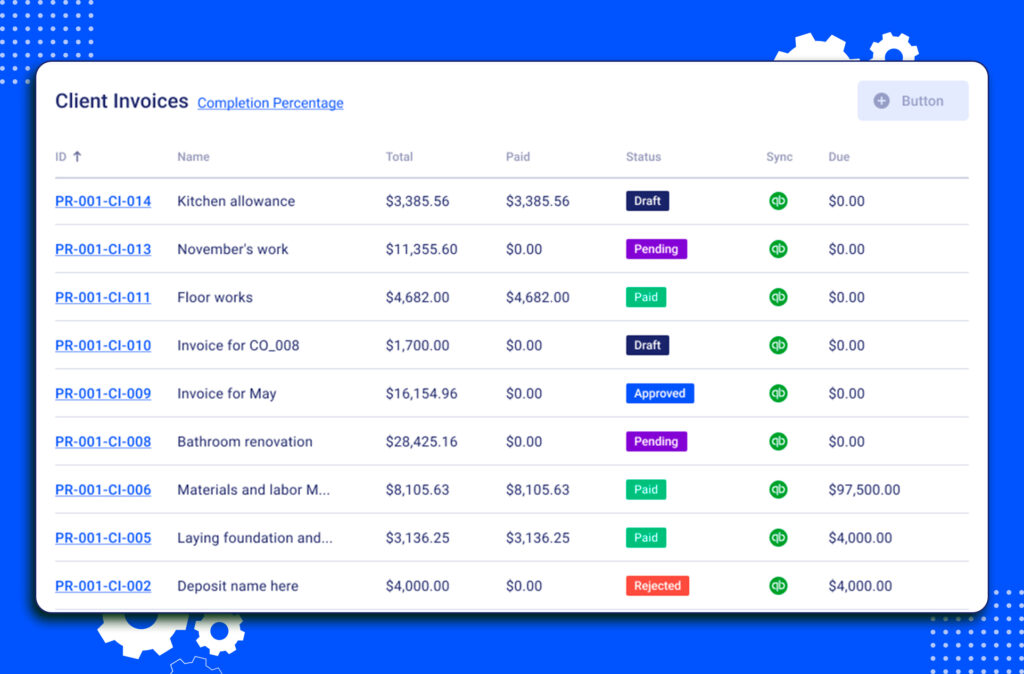
Once you look at them this way, lien waivers in construction become part of how you track cash flow, verify financial progress, and maintain control over project-level performance.
Connection to Cash Flow Forecasting
Cash flow management depends on knowing when payments will actually move, not just when they are billed. Lien waivers play a role here because they are often required before funds are released, especially on financed projects.
When waiver collection is aligned with billing:
- Payments follow a more predictable timeline
- Draw schedules stay closer to plan
- Cash inflow reflects actual project progress
This gives builders a clearer view of incoming cash and helps reduce uncertainty around payment timing.
Integration With Billing and Cost Tracking
Lien waivers are directly tied to billing, which means they should follow the same structure as your cost tracking. When waivers are aligned with pay applications, cost codes, and line items, they reinforce the financial picture of the job instead of sitting outside it.
In a structured workflow each waiver corresponds to a defined portion of work. Billing, costs, and documentation stay connected, while the financial reporting reflects both progress and payment status.
Impact on Profitability Visibility
Profitability is not just about total revenue and total cost. It depends on how accurately you can see what has been earned, what has been paid, and what is still at risk.
When lien waivers are handled as part of the financial control system:
- They confirm which portions of revenue are secured through payment
- Highlight gaps between billed work and collected cash
- Support clearer reconciliation between project progress and financial results
At that point, lien waivers move out of the administrative layer and into the core of financial management. They become one more tool that helps builders maintain visibility and control over project performance.
State- and Region-Specific Rules You Cannot Ignore
Lien waivers are not standardized across markets.
In the US, rules can change from one state to another. In Australia and the UK, the structure shifts even further because the legal frameworks around payment and security are different.
Treating lien waivers as a universal template creates friction in the payment process and can affect how enforceable the document is.
Let me explain this in more detail.
United States: State-Specific Requirements
In the US, lien waiver rules are governed at the state level. Some states allow flexibility in wording, while others require strict, statutory formats that must be followed exactly.
Certain states mandate specific waiver forms. Thus, California and Texas are the most well-known examples. In these cases, the wording, structure, and even formatting are predefined, which means any deviation can affect how the waiver is interpreted and enforced.
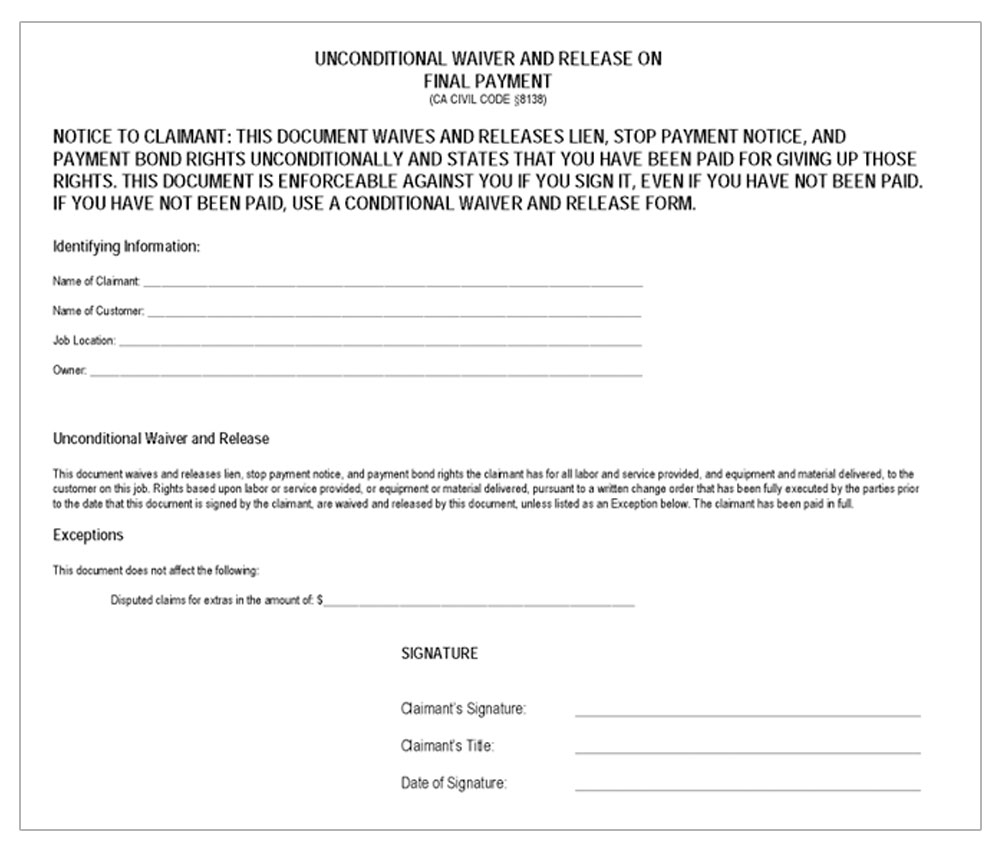
Conditional and unconditional formats are often legally defined, not just preferred. This means the waiver type has to match the actual payment status, not just the intent, so the document reflects the stage of the transaction accurately and holds up under review.
Australia: Progress Payments and Security of Payment Frameworks
Australia approaches payment protection differently. Instead of traditional mechanic’s liens, the system is built around Security of Payment (SOP) legislation, which focuses on enforcing timely payments through formal claim processes.
- Payment claims and payment schedules drive the process, not lien filings
- Waivers are less standardized and often contract-driven, rather than statutory forms
- Documentation still matters, especially in confirming payment status across parties
In this environment, lien waivers are not always a central mechanism, but similar documentation is still used to confirm that payments have been addressed at each stage.
United Kingdom: Payment Notices and Contractual Control
The UK also operates without a direct equivalent to US-style mechanic’s liens. Payment is governed through construction contracts and statutory payment notice frameworks.
- Payment applications, notices, and pay less notices control how money moves
- Lien waiver equivalents are typically contractual, not legally standardized forms
- Enforceability depends on contract terms and compliance with notice procedures
This means documentation still plays a role similar to lien waivers, but it is shaped more by contract structure than by a unified legal form.
Across all three regions, the core principle stays the same: payment documentation must match the legal and contractual environment of the project.
A consistent internal process is useful, but the documents themselves need to reflect where the project is located. That alignment is what keeps the payment process enforceable and predictable.
Summary
Lien waivers are a core part of how commercial construction payments stay controlled, documented, and enforceable. Once they are handled in line with billing, payment status, and project-specific legal requirements, they help protect cash flow, while supporting stronger financial control from preconstruction to closeout.
![Construction Estimating Software for Small Businesses: 7 Tools Compared [2026 Update]](https://buildern.com/resources/wp-content/uploads/2025/12/BLOG_COVER_Best-Construction-Estimating-Software-for-Small-Businesses-2026-768x501.jpg)