Substantial Completion in Construction: Definition and Impact on Construction Projects


If an owner or a home builder considers that the building is “complete”, it may not always match reality. A building can look finished, but still have minor issues, incomplete systems, or pending inspections that prevent full use.
From my experience in construction projects, “done” doesn’t always mean fully complete. Only having a substantial completion certificate, one can say the project is over. It’s a critical milestone that marks the point at which a project is sufficiently finished for the owner to use it for its intended purpose.
Effective construction project management and scheduling are crucial here and are monitored by all stakeholders, including architects and owners.
In my blog article, I will show what substantial completion really means in practice and why it affects every aspect of a construction project.
Table of Contents
- What Is Substantial Completion in Construction?
- What Is a Certificate of Substantial Completion and What Does It Contain?
- Legal and Financial Implications of Substantial Completion
- Substantial Completion vs Final Completion
- Best Practices for a Smooth Project Handover
- Construction Milestone That Almost Marks the End

What Is Substantial Completion in Construction?
Substantial completion marks a milestone when a construction project is finished, and the building is ready for use for the intended purpose. At this stage, some minor tasks may be unfinished, but overall, the building is safe and functional.
Completion is usually defined using standard guidelines, for example, those provided by the American Institute of Architects (AIA). However, the exact definition of substantial completion can vary slightly depending on the contract terms. Some contracts may tie it to the completion of specific systems, inspections, or approvals.
Others may define it based on the owner’s ability to occupy and use the building. For example, a project owner may decide that certain requirements, such as a parking area, must be 100% installed before the project is substantially completed.
Completion in Residential and Commercial Projects
While the concept of substantial completion applies to all types of projects, how it looks in practice can differ significantly between residential and commercial construction.
In residential jobs, this milestone is usually reached when a homeowner can safely move into the house and use all essential systems.
💡For example, a newly built home may be considered substantially complete when the electrical, plumbing, and HVAC systems are fully operational, the kitchen and bathrooms are functional, even if there are still minor items left.
In commercial construction, the process is often more complex. The key difference is that there are typically more layers of approval here. Substantial completion may require multiple inspections, system testing, and approvals before the building can be used.
💡For instance, an office building might reach that point only after fire safety systems are tested, elevators are operational, and local authorities approve occupancy. Even then, some interior finishes or non-critical areas may still need completion.
What Is a Certificate of Substantial Completion and What Does It Contain?
It is an official document confirming that a construction project has reached the substantial completion stage. In many projects, especially those using standard forms from the American Institute of Architects, this certificate is issued by the architect after a final walkthrough and inspection.

Although the format may vary depending on the contract, a Certificate of Substantial Completion typically includes the following:
- Project and Party Details: It identifies the project, its location, and the main stakeholders involved, for example, the owner and architect.
- Date of Substantial Completion: This is the most critical element and establishes the official date when the project is considered usable.
- Scope of Work Covered։ The certificate may apply to the entire project or only a specific portion of it. This is especially relevant in large or phased projects, where different sections may reach substantial completion at different times.
- Punch List of Remaining Items: A list of minor, incomplete, or corrective items. This ensures transparency, and the parties understand what still needs to be addressed before final completion.
- Assignment of Responsibilities: One of the most practical parts of the document is the clarification of who is responsible for what after substantial completion. This often includes maintenance obligations, insurance coverage, security of the site, etc.
- Signatures and Acknowledgment: The certificate is typically issued by the architect and acknowledged by both the owner and contractor.
Legal and Financial Implications of Substantial Completion
Substantial completion is a turning point that triggers a range of legal, financial, and operational consequences.
Let me list some of the key changes that take effect once this stage is reached.
The date of substantial completion officially marks the start of key timelines, including warranty periods. From this point forward, contractors are responsible for addressing defects that arise within the warranty period, making this date critical for both accountability and risk management.
Payment and Retainage Release
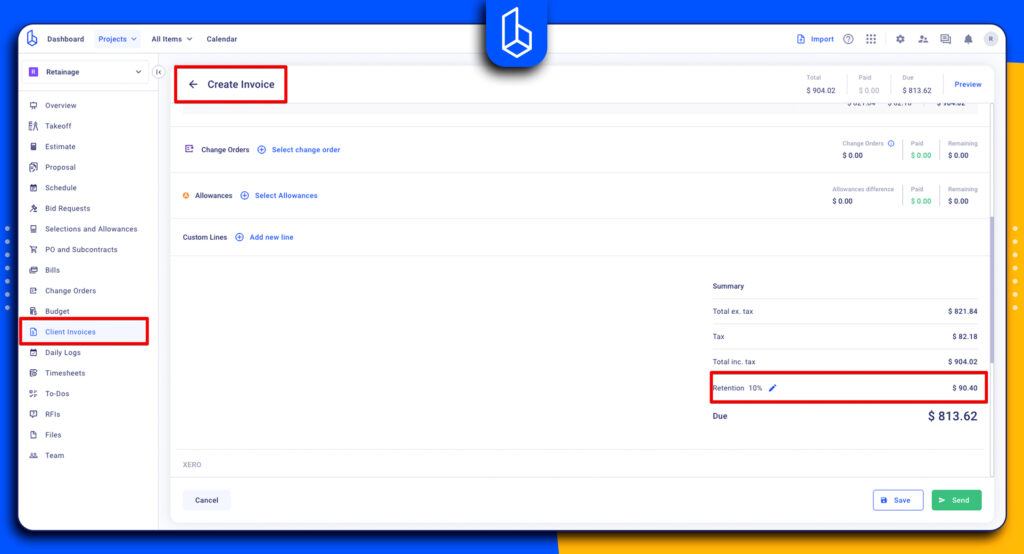
Reaching substantial completion often leads to the release of retainage, the portion of payment that was withheld throughout the project. The retainer amount is usually 5-10% of the contract value, which the project owner retains. The payment is made once the project is substantially completed.
By the way, when using construction project management software, retainage (or retention, as they call it in Australia and the UK) is set at the beginning of the project and automatically applies to all client invoices.
Recommended reading:
Liability Shift
At this stage, responsibility for the project begins to shift from a legal viewpoint. Control over utilities, security, maintenance, and insurance is typically transferred from the contractor to the owner. The building is now usable and is under the owner’s control.
Liquidated Damages Stop Accruing
If the project included liquidated damages for delays, these usually stop accumulating once substantial completion is achieved. This makes the milestone especially important for contractors, as it effectively ends daily financial penalties that are pre-written in the contract to compensate the owner for losses caused by delays.
Learn about construction contracts:
Punch List is Formed
Substantial completion does not mean the work is 100% done. It is when a punch list is created with all the remaining minor items that the contractor must complete. This sets clear expectations and a defined path to completion.
The punch list may differ depending on the type of construction project. In commercial jobs, the list is usually longer and more detailed. Additionally, there are more layers of approval, including architects and engineers. In contrast, residential projects usually have shorter punch lists and fewer approval steps.

Substantial Completion vs Final Completion
Both milestones point to progress toward project closeout. However, substantial completion and final completion serve different purposes and involve different levels of detail, documentation, and approval.
Substantial completion focuses on functionality, whether the building can be used as intended. Final completion, on the other hand, is about full contract fulfillment.
While some minor details can be fixed after the project is completed substantially, the final completion suggests there is nothing left to be done. Every requirement in the contract has been completed, reviewed, and the contractor has no remaining obligations.
What Happens After the Final Completion of the Construction Project
Some portion of payments is typically released at substantial completion, so final completion assumes taking the last financial steps, including:
- Final payment to the contractor
- Release of remaining retainage (if applicable)
- Closing out project accounts
Thus, final completion formalizes the full handover. At this stage, the owner has all documentation, all systems are fully verified, and no further work is expected from the contractor.
Best Practices for a Smooth Project Handover
To avoid mistakes and ensure a smooth project handover and that all payments are made on time, contractors should take several steps by the time of substantial completion.
Define Substantial Completion Clearly in Contracts
One of the most effective ways to avoid any mistakes is to legally define what “substantial completion” means for the project owner and the contractor from the very beginning.
An important milestone means a period of shifting responsibilities, possible penalties and payments, and even small mistakes may lead to disagreements.
A well-defined contract should specify:
- The exact criteria for substantial completion (e.g., which systems must be ready for use)
- Any required inspections or approvals
- What level of remaining work is acceptable at this stage
💡 Practical Example:
A contractor finishes a retail space and considers it ready for substantial completion. The building is functional and ready for tenants, but the contract doesn’t clearly state whether fire safety approval is a must.
The contractor requests payment, but the owner refuses, arguing the space isn’t safe to occupy without official approval, leading to delays and disputes.
Keep Documentation Updated
Document management is essential to avoid surprises during the handover. Missing or outdated records can delay approvals and payments.
Contractors should ensure that all key documents are consistently updated, including:
- Inspection reports
- Change orders
- Contracts and subcontracts
- Warranties and manuals
- Payment records and invoices
- Insurance documents
- RFIs and submittals
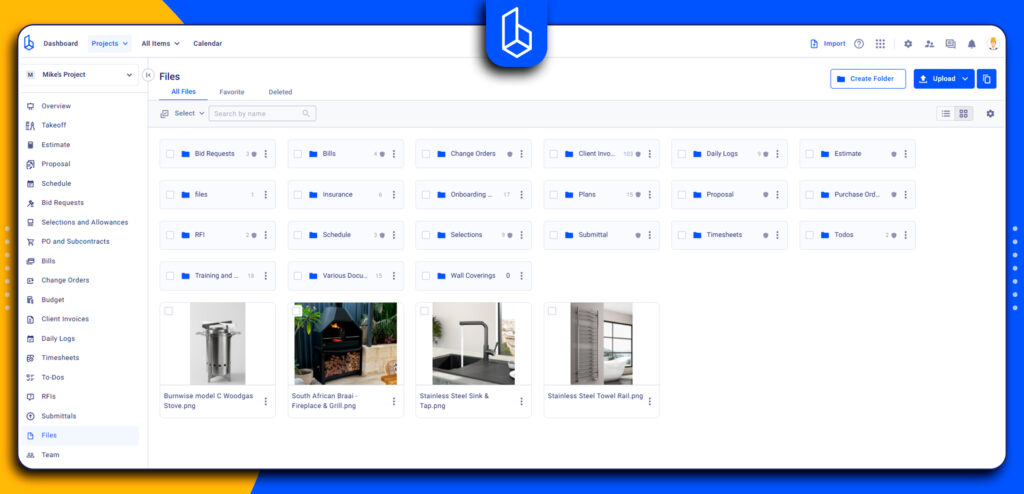
Using construction project management software makes this process easier. All documents are in a centralized storage, allowing teams to access the latest versions in real time.
💡 Practical Example: A contractor reaches substantial completion but struggles to gather the required documents for final approval because files are in emails and spreadsheets.
Maintain Clear Communication with the Project Team
Strong communication is important at all stages of the project, but as it slides into its final phase, the changes and milestones should be communicated better.
At this stage, multiple stakeholders, including contractors, subcontractors, architects, and owners, must be aligned on progress, expectations, and remaining tasks.
It’s a good idea to have built-in messaging and dedicated portals for clients and subs within one construction project management software. This ensures that everyone involved has real-time visibility into project status and can respond quickly to changes.

💡 Practical Example: A project is nearing substantial completion, but a subcontractor is unaware of a pending inspection requirement. With a centralized platform, updates and reminders about inspections are shared with the entire team.
Construction Milestone That Almost Marks the End
Substantial completion is often the most anticipated but sometimes the most debated part of any project. It is a near-finish line when a building stands and is functional enough for its intended use, even if minor parts of work remain.
In other words, substantial completion is not the end but rather a transition point between active construction and final closeout.
What follows is a critical phase focused on completing punch list items, final inspections, and documentation. How efficiently this phase is managed often determines whether the project wraps up smoothly or faces delays and disputes.

What Does Substantial Completion Mean?
Substantial completion marks the points when a construction project is mainly finished. The building is safe and functional, allowing the owner to occupy or use it, even if minor work remains.
Who Issues Certificate of Substantial Completion?
An architect usually issues the certificate after inspections, with acknowledgment from both the owner and contractor confirming the project has reached this milestone.
How Is Substantial Completion Determined?
It is defined by contract terms, inspections, approvals, and system functionality. It is typically guided by standards like the AIA.
![Construction Estimating Software for Small Businesses: 7 Tools Compared [2026 Update]](https://buildern.com/resources/wp-content/uploads/2025/12/BLOG_COVER_Best-Construction-Estimating-Software-for-Small-Businesses-2026-768x501.jpg)