Construction Bookkeeping: Essentials, Best Practices, and How to Manage It Efficiently


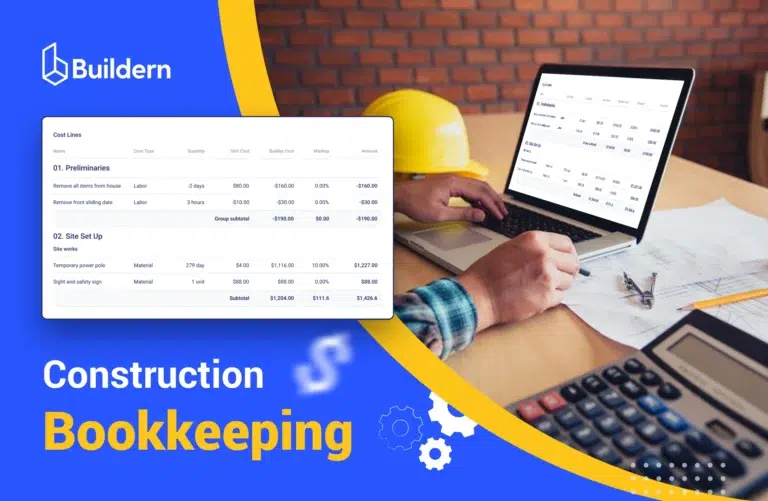
Financial tracking in construction is an everyday job with dozens of moving parts, new subs, and vendors. Poor bookkeeping in construction doesn’t just create minor accounting headaches but affects the entire project.
Part of the challenge lies in how construction financial management works. Retail or service businesses rely on point-of-sale accounting, where transactions are recorded instantly at the time of sale. In construction, it’s usually a project-based construction accounting model. Here, revenues and costs are tracked over weeks or months.
In this blog article, we will break down the essentials of construction bookkeeping, explain its key components, and discuss how it is efficiently managed by construction software.
Table of Contents
- What is Construction Bookkeeping?
- Difference Between Bookkeeping in Construction and Other Industries
- Main Pillars of Construction Bookkeeping
- How Construction Bookkeeping Software Works?
- Bookkeeping Tools vs. Construction Management Tools
- Key Takeaways
What is Construction Bookkeeping?
Construction bookkeeping is the process of managing all financial transactions related to construction projects. The standard bookkeeping deals with the health of the company, while construction bookkeeping focuses on the individual projects.
In construction bookkeeping, every cost, including labor, materials, and equipment, is tied to specific jobs. Its main goal is to give general contractors clear visibility into project-level profitability, cash flow, and overall business performance. The workflow includes managing job costs and tracking progress payments.
Recommended reading:
Difference Between Bookkeeping in Construction and Other Industries
Construction workflow is fundamentally different from standard bookkeeping due to the nature of the work. Here is a breakdown of why regular accounting practices may not work here.
Project-Based vs. Transaction-Based
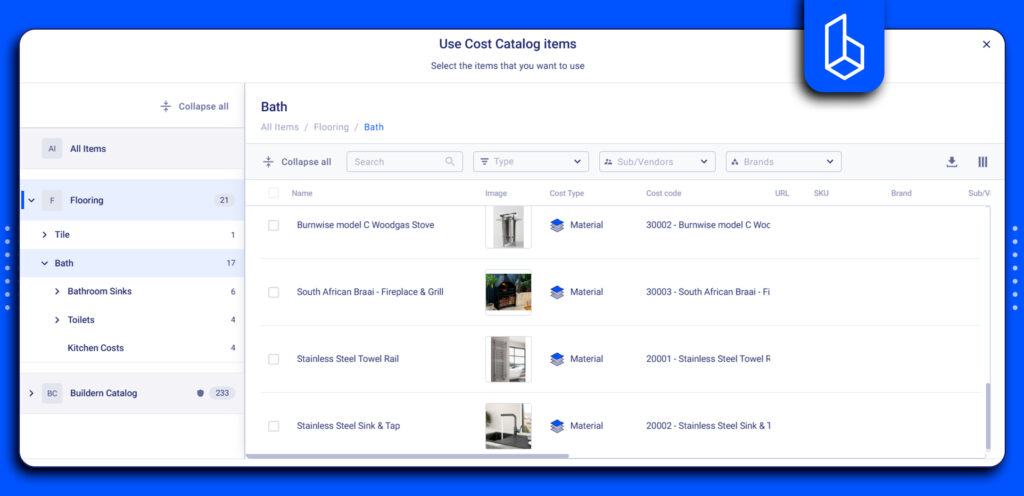
Most industries, for example, retail sales, record transactions as they happen. Meanwhile, in construction, finances are tracked per project over time. General contractor tracks every dollar of labor, materials, and subcontracting back to a specific project and even a specific cost code.
Revenue Recognition Is More Complex
Unlike other industries, revenue is not recognized at the point of sale, and construction businesses often use methods like percentage-of-completion or milestone billing.
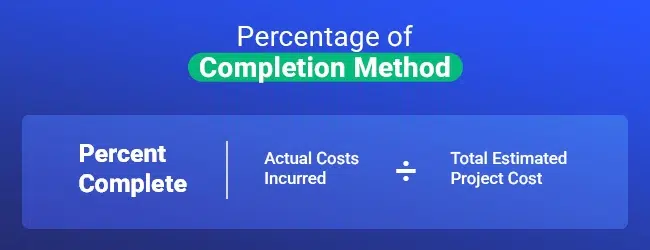
- Percentage-of-Completion when revenue is recognized as work progresses
- Completed-Contract: You get paid only when the job is done
These methods affect taxes, financial statements, and bonding capacity.
Project Timelines Are Longer
A retail store closes the books each month. Construction projects often span months or even years, which means revenue and expenses are spread over extended periods. This requires careful tracking and structured reporting to ensure financial accuracy over time.
Recommended reading:
Multiple Job Sites and Subcontractor Teams
Data and expenses come from different locations, making tracking and consistency more difficult. There can be dozens of subcontractors per project, which adds administrative complexity absent in most industries. In addition, there are lien waivers, certificates of insurance, and other payments to consider.
Cash Flow Is Less Predictable
Payments depend on project progress, approvals, and billing cycles․Thus, as compared to other industries, cash flow in construction is irregular, and contractor profit is vulnerable.
Contract Retainage
Holdback is a common practice in construction. Clients withhold 5% to 10% of the total contract price until the project is completed to contractor has finished everything as agreed by the contract. Your books must track this “Retention Receivable” separately, so you don’t forget to collect it six months later.
Main Pillars of Construction Bookkeeping
There are some key points that every contractor should know before starting a company. Most importantly, it is on several core pillars working together. These elements ensure financial clarity, accurate reporting, and better control over project profitability.
Job Costing
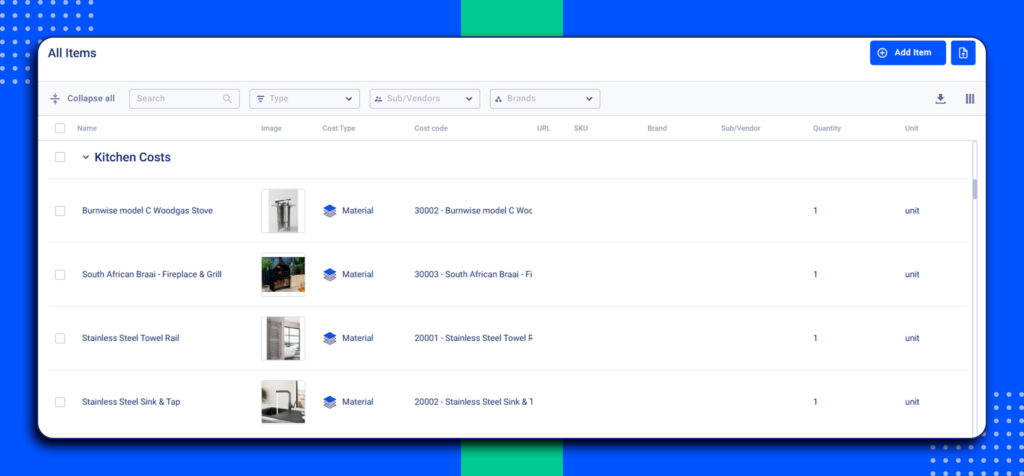
Let’s start with job costing, which is the foundation of bookkeeping for construction projects. It provides a detailed breakdown of all expenses related to a specific project. It focuses on individual projects, helping contractors understand exactly where their money is going and how each job is performing.
Recommended reading:
The costs are divided into key categories such as labor, materials, and equipment. General contractors usually group individual job costs into an Assembly, a single unit of work (a finished wall or a linear foot of a retaining wall). The costs are usually tracked using a cost catalog, which organizes expenses into standardized categories and provides more granular visibility into different phases of a project.
Accurate job costing enables contractors to compare estimated costs with actual expenses in real time. It also plays a key role in pricing future projects, as historical cost data helps improve the accuracy of estimates.
WIP Reporting
WIP is a real-time snapshot of a project’s financial health, comparing the costs incurred to date with the revenue earned.
Thus, a construction bookkeeper has to constantly track a project’s financial status, helping contractors understand whether a project is overbilled, underbilled, or on track.
For a project that may last a year, the revenue is recognized accurately based on project progress rather than just invoice timing. A typical WIP report tracks three core elements: actual costs, estimated total costs, and earned revenue. By analyzing these figures, contractors can identify discrepancies between budgeted and actual performance early in the project lifecycle.
Retainage Management
Retention directly impacts cash flow and the timing of real profit realization. Retainage, or retention, as they call it in Australia and the UK, protects project owners from incomplete or defective work; it creates a significant financial gap.
The contractor and subcontractor continue funding labor, materials, and operations without receiving the full contract value. For contractors, this amount is “locked” and should be tracked separately from standard receivables.
Recommended reading:
If the retainage is not tracked correctly and automatically, financial reports can become misleading, showing overdue balances that are not actually collectible yet.
However, the biggest risk in retainage management is simply losing visibility over time. Strong bookkeeping practices ensure retainage is continuously monitored and collected promptly. Otherwise, when teams start new jobs, retained funds can be delayed.
Progress Billing
In construction, general contractors invoice clients during the entire project rather than in one lump sum at the end. This creates additional challenges for bookkeeping as work is measured by milestones reached, percentage of completion, or a schedule of values.
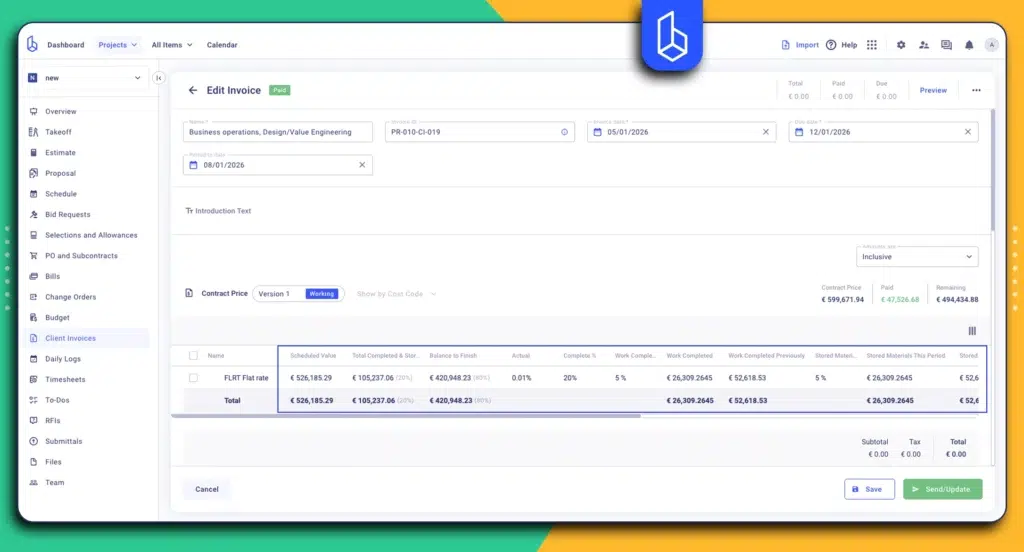
The most common document used in progress billing (especially by commercial contractors) is the Schedule of Values (SOV), which breaks down the entire contract amount allocated across different scopes of work. Each pay application draws from this schedule, showing what was completed in the current period and cumulatively to date.
Recommended reading:
For bookkeepers, in particular, progress billing means carefully recording each pay application. Their main goal is to track what has been billed versus what has been earned, and reconcile those figures against the WIP schedule.
Change Order Management
The project scope rarely stays the same. Design changes, client requests, and material substitutions all lead to changes in costs and schedule. Without proper bookkeeping, it’s possible to affect the entire project.
From a bookkeeping perspective, a change order represents a financial update to the original contract value. It must be documented and approved in both revenue and cost tracking systems. This ensures the project’s financial position reflects the true scope of work being delivered.
Problems may occur with revenue. If additional work is performed but is not recorded in the books, the contractor risks covering costs without taking into account the income. Over time, small gaps accumulate and can significantly impact overall profitability.
How Construction Bookkeeping Software Works
The main goal of the bookkeeping software in construction or any other industry is to help move from manual actions to an automated workflow. For contractors, this means the automated system where all financial data is connected with real project activity (unlike the spreadsheet).
The financial indicators are not treated in isolation but are linked to each other. Most tools work by centralizing financial operations in one hub, including job costing, invoicing, payroll, and reporting.
What It Does in Practice
Construction bookkeeping software supports contractors at several stages:
- Automatically assigns costs to specific projects or cost categories
- Generates invoices based on progress or milestones
- Tracks real-time budget vs. actual spend
- Manages accounts payable and receivable in one place
- Produces financial reports, such as cash flow and job cost summaries
3 Examples of Bookkeeping Software
QuickBooks

QuickBooks is one of the most popular options for contractors as it has all the tools to fit the construction workflows.
Moreover, it has an online and a desktop version. The first works for small businesses, while the desktop fits heavy industrial contractors with large material inventories and complex workflows.
Read more about QuickBooks integrations:
At its core, QuickBooks helps contractors manage income and expenses, invoicing, payroll, and financial reporting. For construction businesses, its value comes from how these features can be aligned with project-based accounting.
QuickBooks also has such features as expense tracking and bank reconciliation, it helps maintain accurate, up-to-date financial records. In practice, QuickBooks works best as the financial backbone of a construction business, but it’s more powerful when integrated with the construction management software.
Xero

Xero is a cloud-based accounting platform that is especially popular among Australian and UK builders.
The software helps contractors handle invoicing, expense tracking, bank reconciliation, payroll, and financial reporting. Its biggest advantage is real-time data syncing, including bank transactions, payments, and expenses.
It isn’t specifically for construction, but it can be integrated with the construction project management software. In this case, Xero works as a financial hub, while the construction management tools handle project execution and field data.
Recommended reading:
Freshbooks

Another example is FreshBooks, which focuses on simplicity, helping users manage invoicing, expense tracking, time tracking, and basic financial reporting.
FreshBooks isn’t built specifically for construction and has limited job costing capabilities. However, it works well as a lightweight financial tool and, in practice, works well for managing simple day-to-day finances.
Bookkeeping Tools vs. Construction Project Management Tools
It’s a misconception that if you have a bookkeeping tool, you do not need construction project management software. They have different goals and solve different problems
General bookkeeping tools record what happened financially. Construction software tells you why it happened, which job it happened on, and what to do about it.
Contractors try to adapt bookkeeping tools to their construction workflow. However, the best option is to use the construction software with strong integrations with accounting tools. Instead of adapting a general tool to fit construction needs, these platforms are designed from the ground up around how construction projects actually work.
In this case, the contractor has a reliable source of truth instead of constantly transferring information between different tools.
Key Benefits and Features
- Two-Way Sync Between Systems: It’s an important element, as the one-way sync may not be efficient. If the data flows automatically between construction software and accounting tools, costs, invoices, payments, and updates are reflected in both systems in real time.
- Real-Time Financial Visibility: Project costs, budgets, and financial performance are always up to date.
- Accurate Job Costing: Expenses recorded in the field are instantly synced with accounting software, ensuring every cost is assigned to the correct project and category.
- Streamlined Invoicing and Payments: Progress invoices and client payments can be managed more efficiently, with financial data automatically updated.
- Better Cash Flow Management: With synchronized data, contractors can track receivables, payables, and retainage more accurately.
- Improved Collaboration Between Teams: Office and field teams work from the same data, reducing miscommunication.
Key Takeaways
Construction bookkeeping differs greatly from other industries. First of all, it is project-driven, not transaction-driven. Financial complexity is explained by long timelines, multiple job sites, subcontractors, and variable costs.
It requires constant monitoring of cash flow to avoid gaps that can occur due to delayed payments, retainage, and milestone billing. When using bookkeeping software, the accuracy and efficiency improve. However, construction management tools add operational context as they connect the numbers with real project activity and timelines.

How to Do Bookkeeping for a Construction Company?
Set up project-based accounting, track all costs by job, use a cost catalog, manage progress billing and retainage, and monitor cash flow with reports like WIP and job costing.
What Is Construction Bookkeeping Software?
It’s a tool that helps contractors manage financial data tied to projects. Its main goal is to automate job costing, invoicing, expense tracking, payroll, and reporting.
How to Reduce Bookkeeping Errors in Construction?
Automate data entry, standardize processes, and track costs in real time. The accounts have to be reconciled frequently. When integrating bookkeeping with construction management software, the contractor will have consistent data and improved data accuracy.
![Construction Estimating Software for Small Businesses: 7 Tools Compared [2026 Update]](https://buildern.com/resources/wp-content/uploads/2025/12/BLOG_COVER_Best-Construction-Estimating-Software-for-Small-Businesses-2026-768x501.jpg)