

Builders usually do not get into trouble because they have a bill of quantities (BOQ). Trouble starts when quantities are disconnected from the scope breakdown, scheduling logic, and actual costs. Once that happens, every update becomes slower, procurement decisions carry more guesswork, and budget reviews turn into arguments about what the original number really meant.
If it stays isolated as a pricing document, it becomes static paper. If it carries through into the way the job is bought, tracked, and billed, it becomes a working part of project control.
Table of Contents
- What Is a Bill of Quantities (BOQ)?
- How to Build a BOQ That Works in Real Projects
- Why the BOQ Has Project-Wide Consequences
- Key Components of a Bill of Quantities
- Types of BOQs Used in Construction
- BOQ vs BOM vs Takeoff: Where Builders Get Confused
- Your Bill of Quantities is Only as Good as Its Use

What Is a Bill of Quantities (BOQ)?
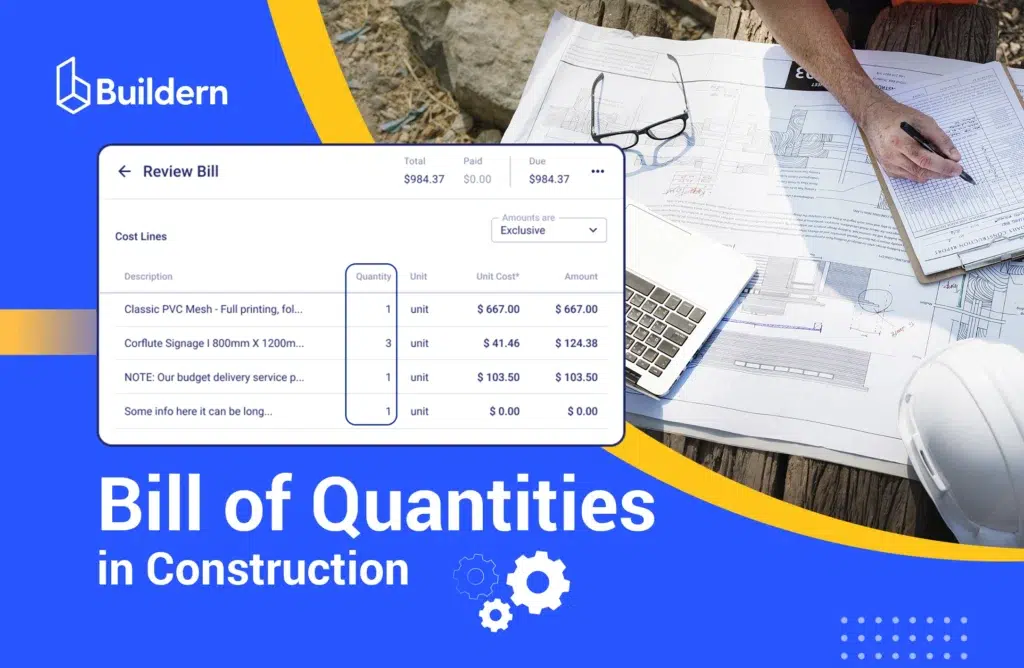
A bill of quantities is a structured document that lists the work items in a construction project, assigns units of measurement, shows quantities, and often includes rates and total prices. It gives bidders, estimators, project managers, and commercial teams a shared reference for pricing and scope.
In construction, BOQs are used during tendering, budgeting, procurement planning, and cost tracking. On stronger projects, they keep serving the team after contract award, while on weaker ones, they stop being useful the day the contract is signed.
Construction BOQ Example (Simple Breakdown)
This is the kind of simple breakdown people usually point to when explaining a BOQ. It is useful as a starting point because it shows the basic structure clearly. Each line tells you what the item is, its measurement, quantity, unit rare, and the resulting total.

💡What this example hides
The problem is that a table this simple leaves out the parts that usually decide whether the number survives real execution.
Labor allocation is missing. The concrete rate may look straightforward, but the crew size, productivity assumption, forming effort, finishing scope, supervision, and overtime exposure can shift the actual cost quickly. When labor is buried inside a single rate, teams lose visibility into what is driving the number.
Recommended reading:
Waste factors are also invisible. Rebar rarely arrives or gets used with zero loss. Concrete placement can carry overruns from over-excavation, spillage, poor sequencing, or design changes. If waste assumptions are weak or undocumented, the quantity may look precise while the real usage drifts.
Equipment costs are in the same blind spot. Pumps, cranes, compactors, cutting equipment, access gear, temporary works, and mobilization time often sit behind a neat line item without enough detail. The BOQ may show a price. It may not show what had to happen operationally to produce that price.
BOQ vs Estimate vs Schedule of Values
These three terms overlap, which is why teams mix them up.

An estimate is broader than a BOQ. It can include subcontractor quotes, production assumptions, indirect costs, contingencies, and pricing judgments that do not appear line by line in a BOQ. A BOQ gives structure to quantities and priced items. The estimate is the full cost thinking behind the job.
Recommended reading:
A Schedule of Values comes later and serves a different function. It is built for billing and progress claims. Sometimes it is aligned closely with the BOQ. Sometimes it gets reorganized to suit owner reporting or lender requirements. When those structures drift too far apart, the project team starts reconciling the same job through multiple financial languages.
How to Build a BOQ That Works in Real Projects
It’s simpler than you may think:
1. Start With Accurate Takeoffs
A BOQ cannot outrun bad quantity input. If the construction takeoff is incomplete, duplicated, or measured from outdated construction drawings, the entire structure inherits that weakness. That includes tender pricing, procurement plans, and early budget expectations.
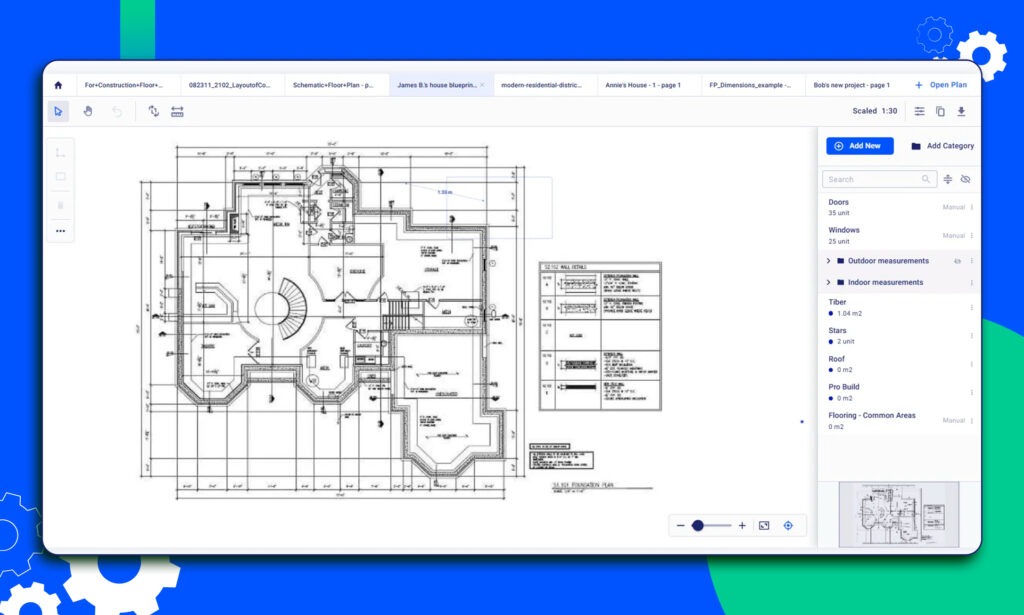
Accuracy at this stage depends on version control, clear scope boundaries, trade coordination, and consistent measurement rules. The point is not only to get a number on paper, but to build quantities the rest of the project can rely on.
2. Structure For Execution, Not Just Tender
A BOQ should reflect how work will actually be bought, sequenced, and controlled. If it looks logical to an estimator but useless to a superintendent or project manager, it will die early in the job.
That means work sections should be broken down in a way that matches site reality. Concrete may need to be split by area, floor, pour sequence, or cost package. Finishes may need separation by room type or zone. The right structure helps people act on the information, while the wrong one produces clean, tender paperwork and messy execution.
3. Align With Cost Codes And Schedule
This is where many BOQs stop short. They are built as one-time pricing tools and never mapped properly to the codes used for budgets, commitments, site costs, and scheduling activities.
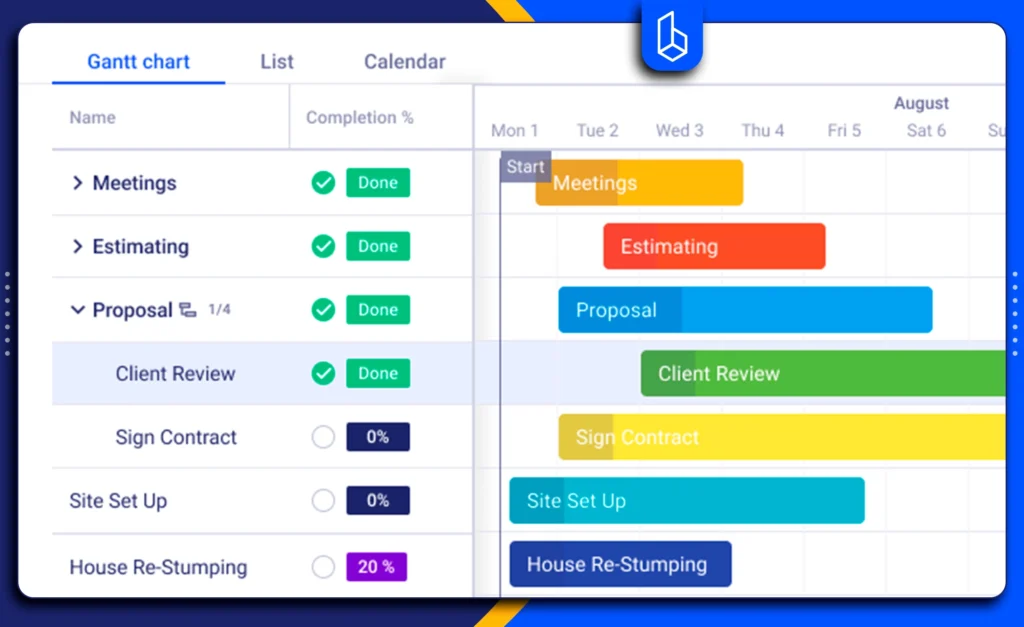
When the BOQ lines line up with cost codes, the team can compare estimate intent against actual project spend. When the BOQ also supports schedule logic, procurement and delivery planning improve because quantities can be tied to work timing. That reduces lag between what the plan says, what purchasing needs, and what the field is ready to install.
4. Keep It Updateable
A BOQ that cannot absorb project changes without chaos becomes a liability.
The structure should allow revisions without forcing the whole team to rebuild their references from scratch. Clear item descriptions, stable coding, revision history, and disciplined quantity updates matter here. Teams need to know what changed, when it changed, and what it touches downstream.
5. Connect it to real cost tracking systems
A BOQ becomes far more useful when it connects to the construction project management software the team uses during execution.
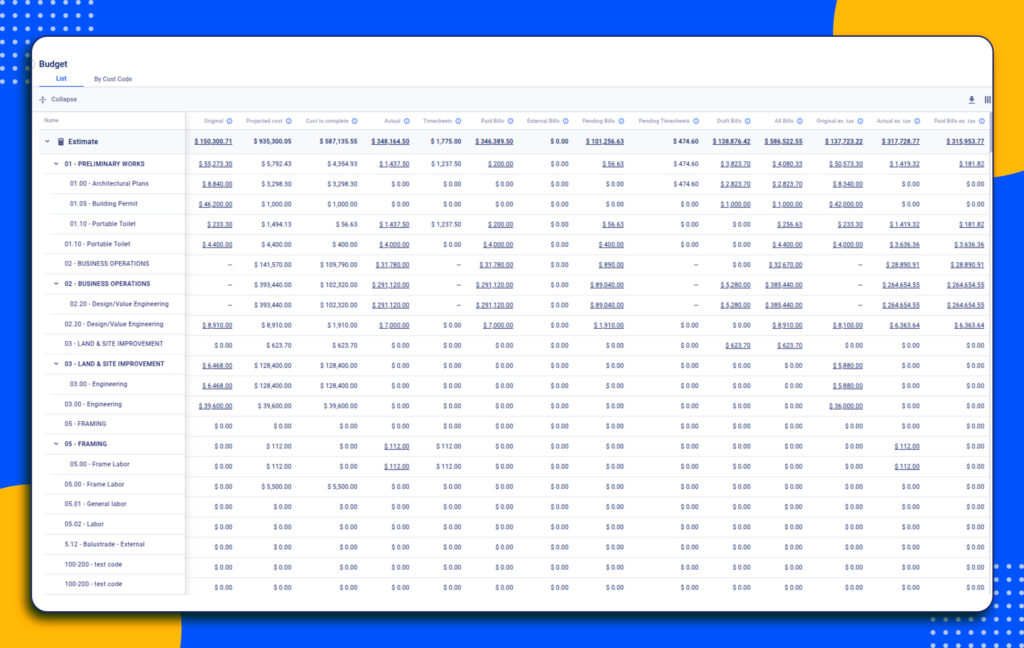
If the quantities live in one place, committed costs in another, and field progress somewhere else again, the BOQ becomes a passive reference. When systems like budgets, purchase orders, subcontract commitments, and cost reports connect, teams can see a clearer picture ahead.
Why the BOQ Has Project-Wide Consequences
A construction bill of quantities influences much more than tender pricing. It shapes how the project gets compared, bought, tracked, and reported. Therefore, the way quantities are structured early can either support the project for months or create problems all the way through completion.
Here are a few reasons this happens in our industry.
Standardization Across Bidders
A strong BOQ gives bidders a common pricing frame. Everyone is pricing against the same work sections, the same units, and the same quantity basis. That makes bid leveling cleaner and reduces the fog around what is included in each number.
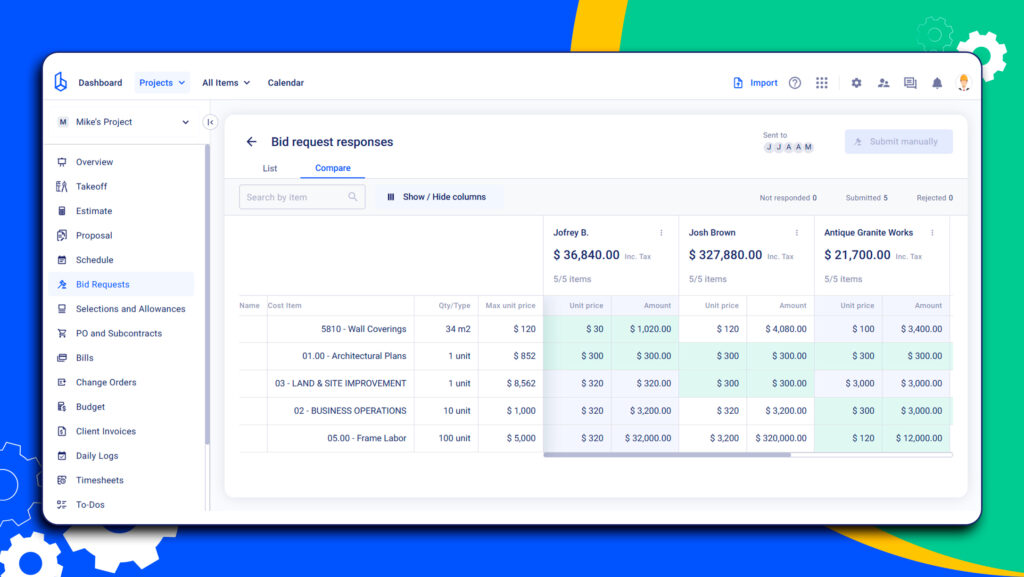
Without that structure, bids can look competitive while hiding scope gaps, inconsistent measurement assumptions, or pricing spread caused by interpretation. Apples-to-apples comparison becomes much harder, and the apparent low bidder may simply be the one who priced a different job.
Early Cost Control Foundation
The BOQ often becomes the first structured base for budget tracking. Once line items are accepted and coded into the project’s financial management and setup, they influence how teams read cost performance.
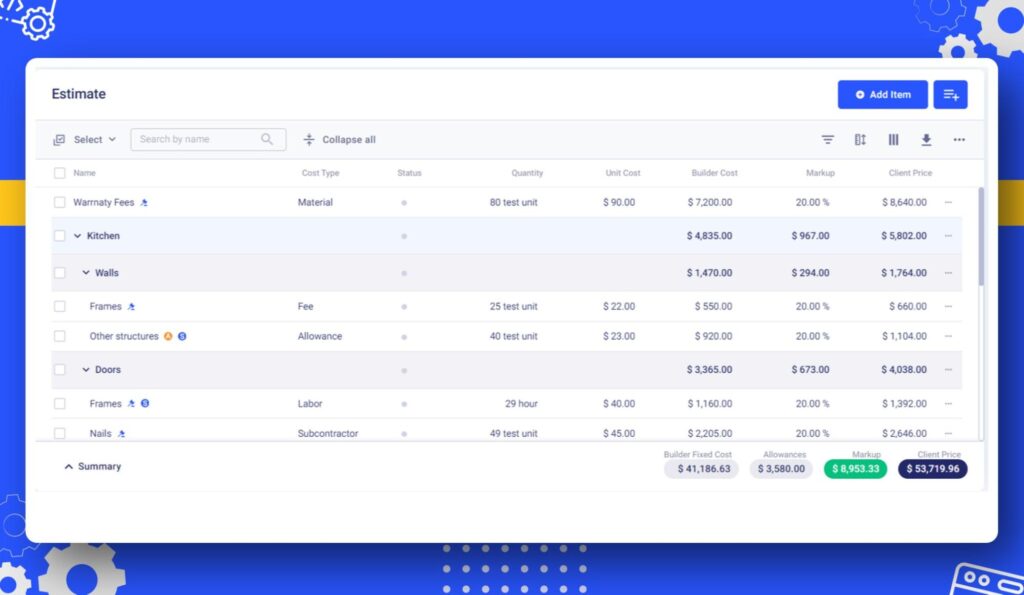
That is why early errors do not stay small. A wrong quantity, vague item description, or weak trade split can carry through procurement, commitments, and monthly reporting. The damage compounds because the team keeps making decisions on top of that first structure.
Procurement and Sequencing Alignment
Quantities drive buying decisions. If the BOQ is structured well, it supports material planning, procurement, packaging, and delivery timing. It also helps cash flow planning because teams can forecast when major quantities will convert into commitments and site spend.
Poor quantity structure can distort buying priorities. Materials show up too early, too late, or in the wrong breakdown. That creates site congestion, storage problems, wasted handling time, and cash leaving the project before the work is ready.
Key Components of a Bill of Quantities
Work sections and trade breakdown. This is the high-level organization of the BOQ. It separates the job into practical divisions such as earthworks, concrete, steel, finishes, MEP (Mechanical, Electrical, and Plumbing), and external works. Its purpose is to group scope in a way that supports pricing, tender review, procurement packaging, and job cost visibility.
Item descriptions. These define what each line actually covers. A strong description reduces ambiguity and limits later arguments over inclusions. Good descriptions help estimators price correctly and help project teams understand what was intended.
Units of measurement. These are the measurement bases, such as square feet, square meters, cubic meters, linear feet, tons, or lump sum. Units matter because they shape how quantities are measured, priced, and later checked against progress or consumption.
Quantities. These are the actual measured amounts for each item. They are the core numerical inputs for pricing, procurement, and cost forecasting. Weak quantities undermine every stage that follows.
Rates and pricing. The rate shows the cost per unit. It often contains a blend of labor, material, equipment, subcontract input, productivity assumptions, overhead allocation, and margin. Rates turn measured scope into commercial value.
Total cost per line item. This is the quantity multiplied by the rate. It provides the financial weight of each item and helps identify the trades and scopes carrying the biggest exposure.
Preliminaries and general conditions. These cover project-wide costs that are needed to deliver the job but do not attach neatly to a single production item. Site supervision, temporary facilities, mobilization, safety setup, utilities, and project administration often sit here. Their purpose is to make indirect delivery costs visible and priced.
Types of BOQs Used in Construction
The structure of a BOQ depends on where the project stands and how the team plans to use it.
Some formats are built for pricing accuracy, others for early planning, and some are shaped around how work is bought and managed on site.
Choosing the right type upfront affects how well the BOQ holds up once the job moves into execution.
Measured BOQ
A measured BOQ is built from completed design information and detailed quantity measurement. It is the most precise format when drawings and specifications are sufficiently developed. Contractors and owners use it when they need a tighter pricing structure and clearer scope definition.
Approximate BOQ
An approximate BOQ is used when design development is still moving and exact measurements are not fully available. Quantities may rely on assumptions, benchmarks, or partial information. It gives teams a working basis for early pricing, but it carries more exposure if treated as the fixed truth.
Elemental BOQ
An elemental BOQ organizes cost by building elements such as substructure, superstructure, envelope, finishes, and services. It is useful during early planning and cost planning because it helps teams evaluate where major cost weight sits across the project.
Trade-Based BOQ
A trade-based BOQ group works by trade package or subcontract scope. This format is practical for procurement and execution because it matches how many builders buy and manage work on site. It can also improve accountability across commitments and cost tracking.
Operational Insight
The type of BOQ matters less than whether it fits the job stage and downstream workflow.
- A measured BOQ gives control when the design is mature.
- An approximate BOQ helps early planning if the team respects its limits.
- A trade-based structure can support site buying and reporting more directly.
The right choice depends on what the team needs the document to do next.
BOQ vs BOM vs Takeoff: Where Builders Get Confused
A takeoff gives measured quantities. A BOM lists materials needed for purchasing. A BOQ turns measured work into a commercial and operational structure that can support pricing, tender comparison, and project control.
Confusion usually starts when teams assume one document can do the whole job without translation. A takeoff can feed a BOQ, but it is not a BOQ. A BOM helps procurement, but it does not explain the total installed cost. Once the team understands the role of each document, the handoff between estimating, buying, and project management gets cleaner.
Your Bill of Quantities is Only as Good as Its Use
A BOQ can be precise, well formatted, and professionally prepared, yet still fail the project if it never connects to execution.
The document itself is only one part of the story.
What matters is whether the quantities, item structure, and pricing logic continue to guide how the job is budgeted, bought, and tracked.
A useful BOQ supports budgeting by giving the project a stable cost structure. It supports execution by breaking scope into packages people can actually build and manage. It supports cost tracking by linking planned quantities and prices to commitments, field progress, and actual spend.
When that connection holds, the BOQ keeps doing useful work long after tender day. When it breaks, the team is left interpreting static numbers while the job moves on without them.