



Fixed price is not always about the construction industry. Price fluctuations are a common practice for contractors during the entire project management cycle. Besides, it’s hard to put a price on something that is not built yet.
Those are daily challenges behind a lump sum contract or a fixed-price contract. It’s easy to see why this contract type is so widely used. They get cost certainty from day one, while contractors benefit from a straightforward structure.
However, it’s simple on paper, not so much in practice. The real pressure is the financial risk that comes at the cost of this simplicity.
In this guide, we will discuss the advantages of the lump sum contract and how it works in real-world construction projects, and when it makes the most sense to use it.
Table of Contents
- Essence of a Lump Sum Contract
- Lump Sum Contract vs. Other Construction Contracts
- How Lump Sum Contracts Are Signed
- Benefits of a Lump Sum Contract in Construction
- Cons of Fixed Price Contract
- Bottom Line

Essence of a Lump Sum Contract
A lump sum contract is an agreement where the contractor commits to delivering the entire scope of work for a single, fixed price. In this case, both parties agree on one total amount that covers all labor, materials, equipment, and overhead required to complete the project.
The core detail of this contract is that the price is set before construction begins. That number is based on the contractor’s estimating results and the project’s drawings and specifications at the time of signing.
Recommended reading:
For example, a contractor may agree to complete the project for a fixed amount based on finalized plans. As long as the scope remains unchanged, that price does not vary even as the project progresses.
Contract templates are available through organizations like the American Institute of Architects (AIA) and can be adapted to suit the specific needs of both parties.
Scope of Work Matters
At the center of a lump sum contract is the scope of work. The fixed price applies specifically to what is clearly defined and agreed upon in the contract documents. The more detailed and complete the scope, the smoother the project is likely to be.
You may also hear this structure referred to as a fixed-price contract or a stipulated sum contract. While the terminology can vary, the core idea remains the same: one agreed price tied to a clearly defined scope.
This approach differs from other contract structures where job costs can fluctuate during the project. Instead of adjusting based on actual expenses or time spent, a lump sum contract relies on upfront clarity and agreement.
Read more about construction project costs:
Lump Sum Contract vs. Other Construction Contracts
A fixed-price contract is one of several structures used in construction. Choosing the type of contract one depends on how well the project scope is defined and how risk is distributed. Below is a breakdown of how it compares to the most common alternatives.
Lump Sum vs. Cost-Plus Contract
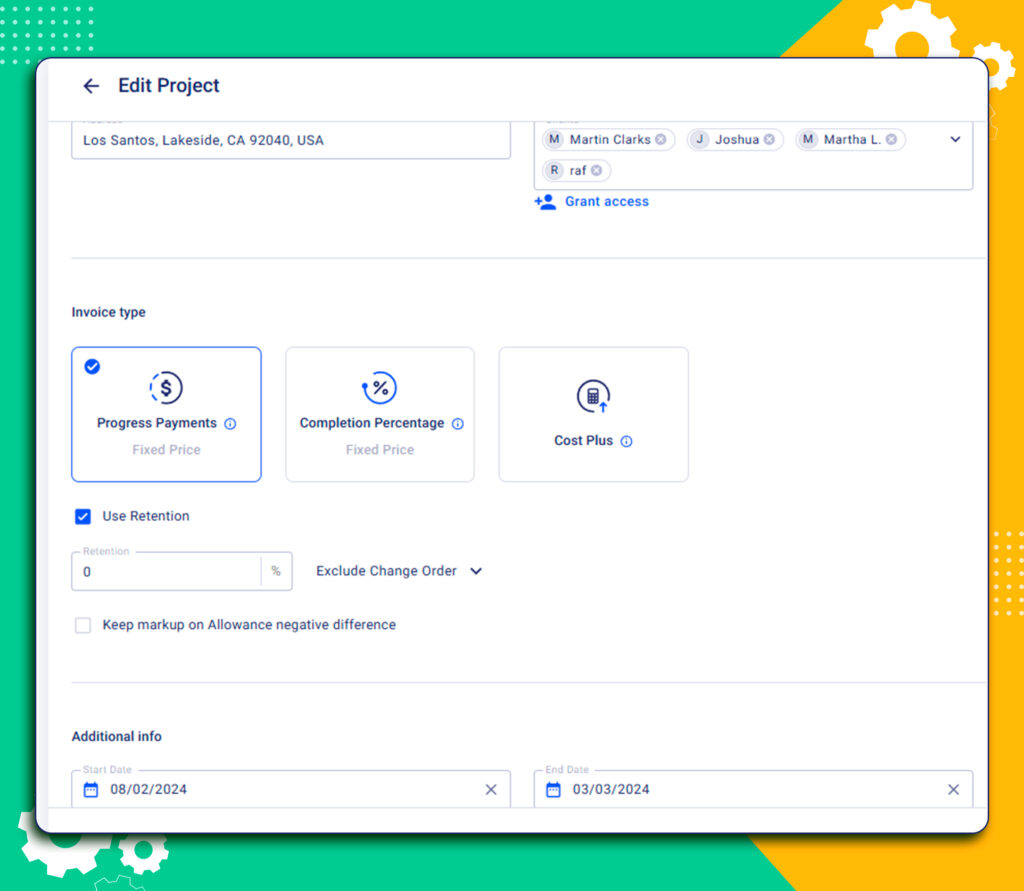
This is the most fundamental contrast in construction contracting. Unlike the lump-sum contract, under a cost-plus agreement, the owner agrees to reimburse the contractor for all project costs and pay an additional fee on top. It is paid as a fixed amount or a percentage of total costs, which we usually call a markup in construction. The latter refers specifically to a percentage added over project costs, not every type of cost-plus fees.
There is also a different risk distribution. Under cost-plus, that risk shifts almost entirely to the owner. If costs rise, the owner pays more.
Recommended reading:
When to Use Each:
- Lump sum works best when the design is fully complete and the scope is well-defined before construction begins.
- Cost-plus is better for projects where the design is still changing.
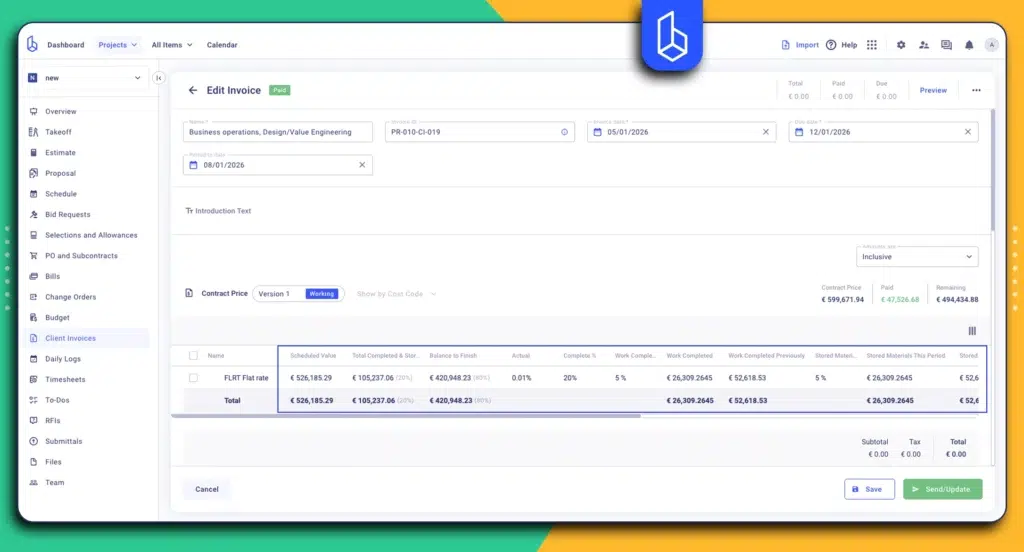
There is also a difference in invoicing. In the case of a lump sum contract, invoicing follows a pre-agreed schedule of values. The contractor submits progress billing at defined milestones or intervals. The invoice amount is tied to the percentage of work completed, not to actual costs.
For cost-plus, the contractor invoices the owner for actual expenses during the billing period (backed by receipts, timesheets, and supplier invoices) plus the agreed fee.
Lump Sum vs. Time and Materials (T&M) Contract
Compared to a lump sum contract, T&M offers maximum flexibility. Here, the owner pays for actual hours worked at agreed labor rates, plus the actual cost of materials, often with a markup.
The common use cases are smaller projects, including renovation jobs. The project owner bears the financial risk. If the project takes longer than expected or materials cost more, the owner is responsible for it. The advantage is that the owner is only paying for work actually performed.
The Time and Material Contract invoices are issued regularly, for example, on a weekly basis, and include labor rates, hours, and material costs for that period. There is no schedule of values or milestone structure.
Lump Sum vs. Guaranteed Maximum Price (GMP) Contract
This is a hybrid model that reimburses the contractor for actual costs, as in a cost-plus contract, but also includes a maximum price. This ceiling is paid regardless of what the actual costs turn out to be. If costs come in below that ceiling, the savings are typically shared between both parties according to a pre-agreed formula.
Compared to a lump sum, a GMP contract offers the owner more transparency and cost visibility. The contractor, however, carries less risk than in a lump sum arrangement.
GMP contracts are common in large, complex projects. In this case, full design completion before construction is not practical, but the owner still needs to set a budget ceiling for financing.
How Lump Sum Contracts Are Signed
A big part of the job is done before such a contract is signed. Since we deal with a fixed price, all components should be determined well ahead of the actual building start. Moreover, the quality of what goes into forming the contract impacts how smoothly the project will run.
Here are some essential steps before the contract is signed:
1. Complete Design and Scope Definition
The scope of work that should be determined typically includes:
- Drawings and technical specifications
- Bill of quantities or scope narrative
- Site information, such as surveys or soil reports
- Project schedule requirements, including key milestones and the expected completion date
2. Detailed Estimating
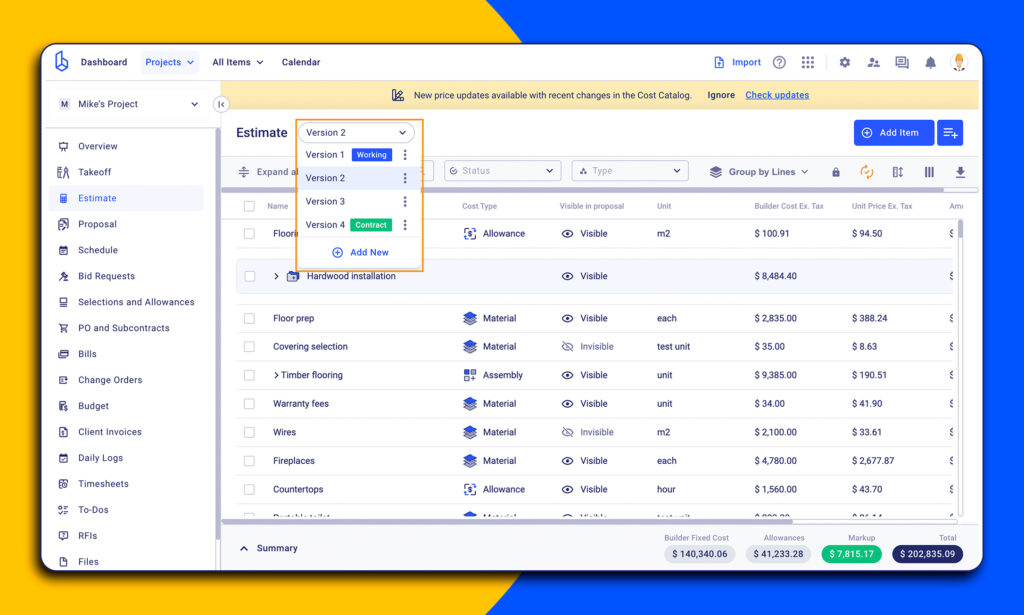
Building a detailed estimate is true for any project, but in the case of a lump sum contract, it’s even more important to stick to details. The entire scope should be brought down into measurable components, including material prices, labor hours, equipment needs, overhead costs, and profit margins.
On the owner’s side, this is where the process of selecting the right contractor begins. The owner receives estimates from multiple contractors and evaluates them. The goal of this stage is not just to find the lowest price but to find the right contractor at the right price.
3. Negotiation and Agreement on Terms
Before the contract is signed, both parties negotiate and agree on the key terms that govern the entire project. The terms include the sum, payment terms, timelines, and risks.
At this stage, the parties finalize the points related to retainage, an amount that the project owner holds back until the work is completed.
Most importantly, the processes for handling possible changes (hardly any construction project is exempt from them) are also discussed.
4. Dealing with Changes
One of the biggest misconceptions about lump sum contracts is that none of the terms change. In reality, changes happen on almost every project.
In such a contract, the change order is the only legitimate way to adjust the scope, price, or schedule. It is an amendment to the original agreement, namely a formal, written document that both parties must review and sign before any additional work begins.
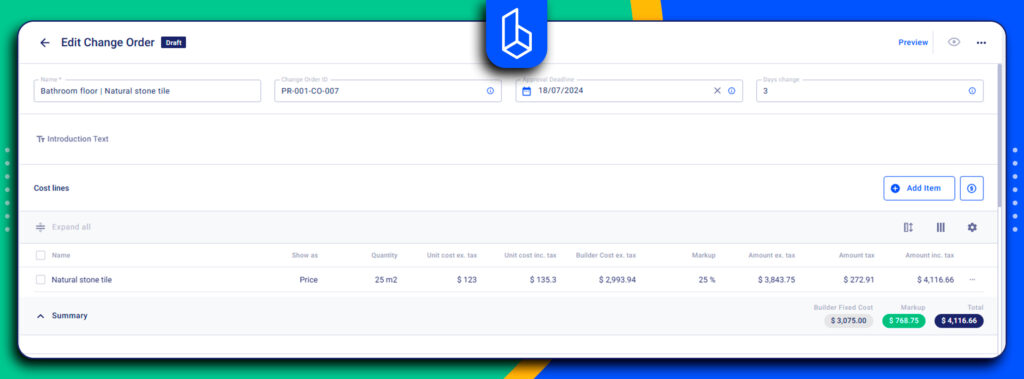
With the change order software, the process can be recorded much more easily. It is a document that can be signed electronically. Besides, a purchase order or a subcontract can be created based on it.
Benefits of a Lump Sum Contract in Construction
This agreement delivers real, tangible advantages to both parties. The benefits are different depending on which side of the contract you are on.
Benefits For a Project Owner
Budget Certainty: The most immediate and powerful benefit for any owner is knowing exactly what the project will cost. There are no surprises in the final invoice, no escalating bills to track, although changes are common. That certainty makes financial planning, financing approvals, and stakeholder reporting significantly easier.
Easier Bid Comparison: When multiple contractors submit a single fixed price for the same scope, comparing bids is easier. The owner can evaluate proposals side by side.
Stronger Contractor Accountability: As the contractor’s profit depends on delivering within their estimate, they have a strong financial incentive to stay on schedule and manage their subcontractors tightly.
Benefits for a Contractor
More Profitable: This is the flip side of the cost risk. If the contractor prices the work carefully and executes the project efficiently, the savings below the estimate make a profit. The contractor can save, for example, by finishing ahead of schedule or negotiating better subcontractor rates.
Predictable Cash Flow Planning: With a defined schedule of values and agreed payment milestones, the contractor knows in advance when payments will arrive. That predictability makes it significantly easier for financial management.
Less Administrative Burden: A significant advantage of this model is reduced administrative burden during the construction phase. The contractor is not required to provide ‘open-book’ accounting, which simplifies the billing process and lowers accounting overhead.
Cons of Fixed Price Contract
Just as advantages, the fixed price can have certain drawbacks. The same characteristics that make it attractive for a contractor can also become serious liabilities.
Disadvantages for a Project Owner
Less Transparency Into Actual Costs: Unlike a cost-plus contract, where the owner sees every invoice and receipt, here the owner has very little visibility into what the contractor is actually spending. Why does it matter? If the contractor is cutting corners on materials or labor to protect the margin, the owner can see only when there are obvious quality issues.
Change Orders Can Affect the Budget: If changes are not tightly controlled, the budget certainty can be damaged quickly. Many changes reopen the price, and the contractor may sometimes recover their margin through a change order rather than the original bid.
Recommended reading:
Limited Flexibility for Design Changes: Once the scope is locked and the contract is signed, making changes is more difficult and often expensive. Owners who like to adjust or evolve the design as the project progresses will find the lump-sum structure frustrating and costly.
Disadvantages for a Contractor
Full Exposure to Cost Overruns: This is the biggest risk of a lump-sum contract. If the actual cost of the work exceeds the contract price due to underestimation or unforeseen conditions, the contractor is responsible for covering the entire difference. Thus, a single badly priced project can impact the profit from several successful ones.
Estimating Errors Are Extremely Costly: The entire financial outcome of a lump-sum contract rests on the accuracy of the initial estimate. A missed item, an incorrect quantity, or a misjudged labor rate can translate directly into a loss. If done manually, the risk of mistakes is higher.
Disputes Over Changes: Even with a well-drafted contract, disagreements over what is included in the original scope are inevitable. Owners frequently push back on change order requests. Under such contracts, more documents and cost approvals are needed. Long negotiations on changes and the approval process can affect the timelines and lead to more problems.
Bottom Line
No single contract type fits every project. The project owner and the contractor agree on the type of contract. However, the right choice depends on how much uncertainty exists at the time of signing and how much transparency the owner requires.
In the case of a lump sum contract, the decision depends on the readiness. If the design is complete and the scope defined, a fixed-price structure can deliver a strong outcome. The owner gets budget certainty and the contractor a clear framework.
For this, good preparation is important. Contractors should invest in accurate estimating, manage change orders diligently, and treat the scope of work as the foundation of other construction project phases.