Framing Takeoff: How Residential Builders Can Get It Right


Framing is the structural basis of the building and every residential construction project as well. It defines the shape and strength of the entire build, and at the same time, it determines the further success of estimating.
Problems with framing usually have a ripple effect on all other stages of the project, including mechanical, electrical, and finishing trades. This is the reason framing takeoff is a preconstruction task that the contractor should consider as a profitability safeguard. If done right, it reduces overordering and shortages, ensuring tighter cost control.
In this blog article, we will break down how residential builders can approach framing takeoff with precision to have an accurate estimate and protect profit margins.
Table of Contents
- What Is a Framing Takeoff in Construction?
- Components of Framing Takeoff
- How to Do Framing Takeoff?
- Manual vs. Digital Takeoff
- Real Cost of Framing Takeoff Mistakes
- Treat Digital Takeoff as a Competitive Advantage
What Is a Framing Takeoff in Construction?
It is a process of measuring every structural material needed to build the skeleton of a home during the preconstruction process. In residential construction, it typically includes everything from wall studs to all necessary connectors and fasteners.
Unlike a simple material list, a framing takeoff is done based on construction drawings and specifications. It requires a detailed review of architectural and structural plans. The goal is to translate what’s on paper into precise numbers. They are later used for estimating costs, ordering materials, and planning labour.
Recommended reading:
A well-prepared framing takeoff plays a critical role in preconstruction. It gives builders a complete picture of the project and subsequently avoids material shortages, reduces waste, and prevents costly errors during execution.
Importance of a Lumber Takeoff
Measuring framing is very important for the contractor. Lumber is one of the most price-volatile materials in residential construction. It responds to housing demand, tariffs, mill capacity, transportation costs, and seasonal patterns.
Prices can swing by double digits in just a few months. The data shows framing lumber prices in North America exploded by 17% in a single year. And, in the second quarter, the gain spiked by over 5%.
In construction, the period between the takeoff and the start of the actual build can take months. This is the reason the accuracy during lumber takeoff is essential.
💡Tip: Contractors usually get a supplier quote locked in as close to bid submission as possible. A quick call to a lumber supplier at the time of a takeoff gives a real number to build from.
Components of Framing Takeoff
A framing takeoff covers far more than just counting studs. It’s a detailed breakdown of the structural components required to build the house.
There are also some small but essential items that hold everything together. A complete takeoff ensures nothing is missed as the accurate estimate reflects actual jobsite needs and makes a foundation for a competitive proposal.
Structural Lumber: At the core of any framing takeoff is structural lumber, which forms the vertical and horizontal framework of the building. This includes common studs for walls, as well as king and jack studs used around openings like doors and windows.
Floor and Roof Framing: The quantity takeoff accounts for all horizontal structural systems. Floor framing includes joists and rim boards, which support loads and define floor layouts. For the roof, builders quantify rafters or trusses depending on the design, along with their spacing and configuration.
Sheathing and Panels: Sheathing ties the structure together and provides the necessary surface for finishes. Wall sheathing is calculated based on exterior wall areas, while roof sheathing covers the entire roofing surface. Proper calculation helps avoid gaps or excess material.
Connectors and Hardware: Often underestimated, connectors and hardware are essential for structural performance and code compliance. A thorough takeoff includes nails, screws, and anchors, as well as specialised hardware like joist hangers, straps, and clips.
Waste Factors and Allowances: No framing takeoff is complete without calculating the waste. Cuts, offcuts, material defects, and on-site adjustments all contribute to losses. To avoid it, the typical waste percentages are applied at this stage when pointing out the area a contractor wants to measure.

How to Do Framing Takeoff?
There are several important steps that have to be considered when doing a framing takeoff.
1. Read the Plans Like a Builder, Not an Estimator
Every takeoff starts with the drawings, but how one reads them makes all the difference. Most estimators scan for dimensions, but builders need to look deeper than that. First of all, both architectural and structural drawings have to be relied on.
Pay attention to framing notes and details, as these are where complexity hides. An unusual roof pitch, a cantilevered floor section, and a vaulted ceiling in the great room change much. If something looks structurally unusual on paper, it will almost certainly require more labour and materials in the field. Flag it before you price it, not after.
Recommended reading:
2. Measure and Quantify Materials
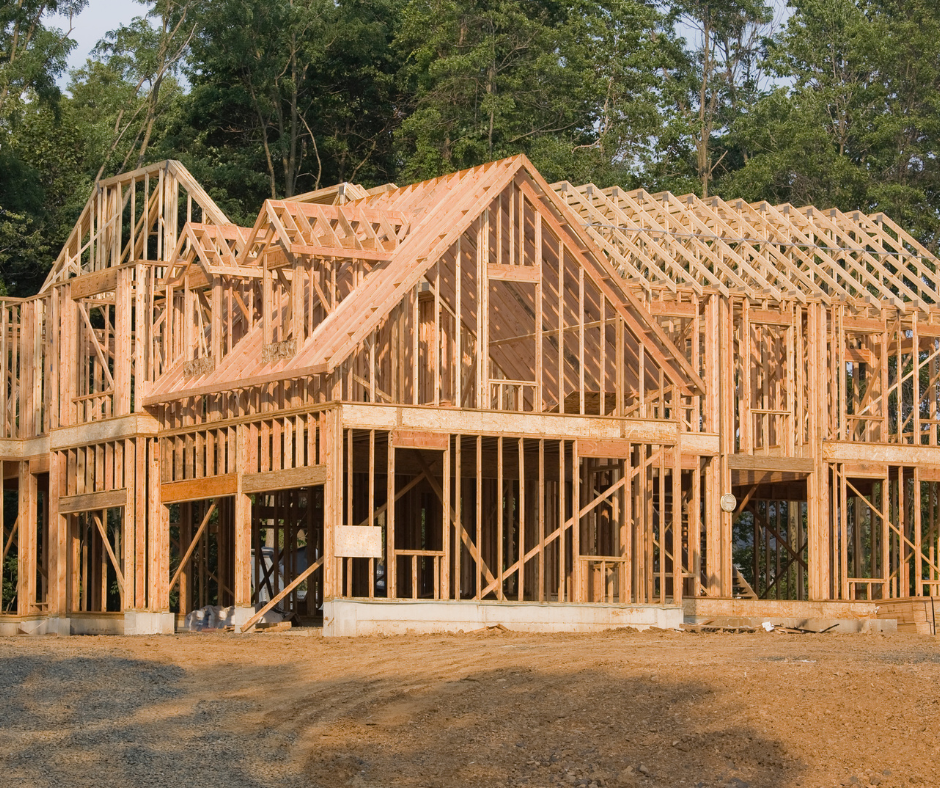
Now we have come to the core of the takeoff, when a contractor or an estimator translates plan dimensions into actual material quantities.
However, each framing component is quantified differently. For example, studs are calculated by count, plates by linear footage, and sheathing by area. The formulas exist, and they work when calculated manually. Meanwhile, modern takeoff software handles this automatically, and we will later show how.
| Component | Measurement Type | Calculations |
| Studs | Count-based | Wall length × 0.75 + corner/opening additions |
| Plates | Linear footage | Wall length × 3 + 10% waste |
| Headers | Count + dimension | Opening width |
| Sheathing | Area based | (Length × height − openings) ÷ 32 sheathing |
| Connectors | Count-based | Per the structural drawing location |
3. Apply Waste and Contingency Factors
Another key component of the takeoff is waste calculation. Most importantly, it is not a sign of poor planning but a reality of construction. For example, plans get modified in the field, or material arrives with defects. These scenarios account for waste, and you have to include them in the takeoff properly.
Standard waste also differs depending on the component. For instance, for studs, the typical waste is 10%-15%.
Adjust these upward when the plan has significant angles, curved walls, a complicated roof line, or when you’re working from preliminary drawings that are likely to change. For projects with a longer timeline between takeoff and build start, it’s better to add a separate material cost contingency to your estimate.
Recommended reading:
Manual vs. Digital Takeoff
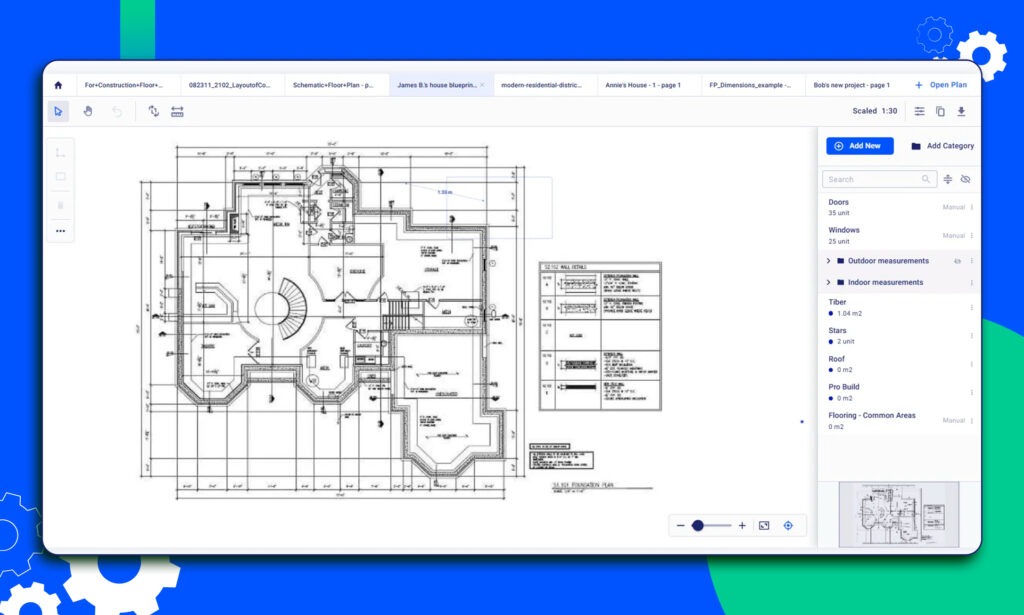
Framing takeoffs can be done either manually or with digital tools.
Manual takeoffs rely on printed plans, scale rulers, and spreadsheets. Many experienced estimators were comfortable with this method, as there were no tools to do it accurately. Besides, for smaller or straightforward projects, manual takeoffs can still be effective. However, they are time-consuming and highly dependent on individual accuracy. Besides, they increase the risk of human error.
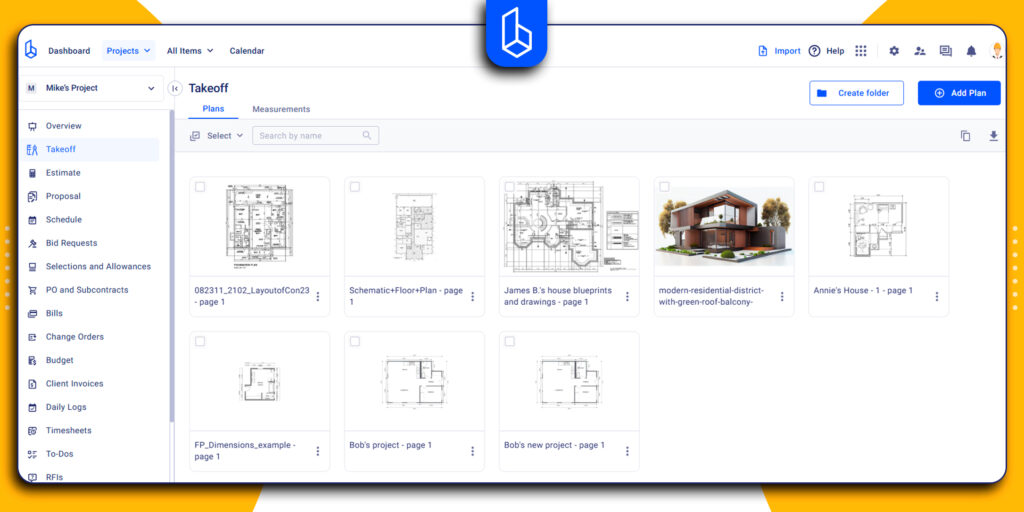
Digital takeoffs, on the other hand, use software to streamline and automate much of the process. Plans can be uploaded and scaled instantly. Measurements are calculated with precision, and quantities are generated in real time.
In the digital takeoff, you can add a waste percentage or a markup. You can create a measurement, add it as a material line item to your estimate (for instance, hardwood). At the same time, custom formulas can be applied for project-specific estimate requirements.
This significantly reduces the chances of miscalculations and speeds up the entire workflow. Most importantly, digital tools make it easier to update takeoffs when plans change.
Recommended reading:
Real Cost of Framing Takeoff Mistakes
We have already discussed why the framing takeoff usually shapes the entire project from the very start, before even bidding starts. Let’s see why it’s so important and what wrong consequences the quantitative takeoff can lead to.
Direct impact on costs and margins. Framing takeoff determines how accurately you can forecast material quantities and associated expenses. In the case of small miscalculations in lumber and sheathing, it can flow to other systems, such as electrical, plumbing, and HVAC.
Recommended reading:
Prevention of shortages and overages. An incomplete takeoff can lead to running out of critical materials mid-project, causing interruptions and last-minute purchases at higher prices. On the other hand, overestimating results in excess inventory that ties up cash and may never be used. A well-executed takeoff strikes the right balance: materials arrive in the right quantities and at the right time.
Fewer delays and less rework. When crews have exactly what they need and clear guidance based on correct measurements, work progresses more smoothly. Errors caused by missing components or incorrect dimensions often lead to rework, which can be too costly.
A foundation for calculating profit from day one. The advantage of doing it with the construction project management software, it is the earliest point in the project where real profit planning is possible. Builders apply their margin, which later flows to the estimate, and they go into every job with a clear picture of what they stand to make.
Treat Digital Takeoff as a Competitive Advantage
Most builders treat the framing takeoff as an administrative task and something that is done before the real work begins. The ones who win more jobs and protect better margins treat it differently.
A precise takeoff is the earliest point in a project to establish control over costs, over scheduling, and over what the job will actually return. Builders who get this right go into every bid knowing their numbers are defensible.
The shift from manual to digital takeoff has made this level of precision accessible to every contractor, not just large firms with dedicated estimating departments. Now we have a reality where a takeoff that used to take a full day can be completed earlier.
It can be a contractor’s competitive advantage, especially in scenarios when some still rely on rough measurements and waste counts. When done right, it turns from just a preconstruction task into a business advantage and a chance to win more jobs.