Construction Estimating Mistakes: How to Stay on Budget Without Losing Profit


A common estimator’s dilemma is how to balance between accurate estimating for winning a project and a healthy profit margin.
From my experience, a correctly calculated cost estimate that fully meets the interests of a general contractor is the backbone of a construction project. Mistakes at this stage are risky as they will have a domino effect on the entire construction, affecting timelines, resource allocation, and your bottom line.
In this blog article, I will break down the most common construction estimating mistakes and will share practical strategies to prevent them.
Table of Contents
- A Quick Overview of the Estimating Process
- Why Profit Depends on Accurate Estimating
- Most Common Estimating Mistakes
- How to Avoid Construction Estimating Mistakes: Solutions Explained
- Precision During Estimating is the Best Strategy
A Quick Overview of the Estimating Process
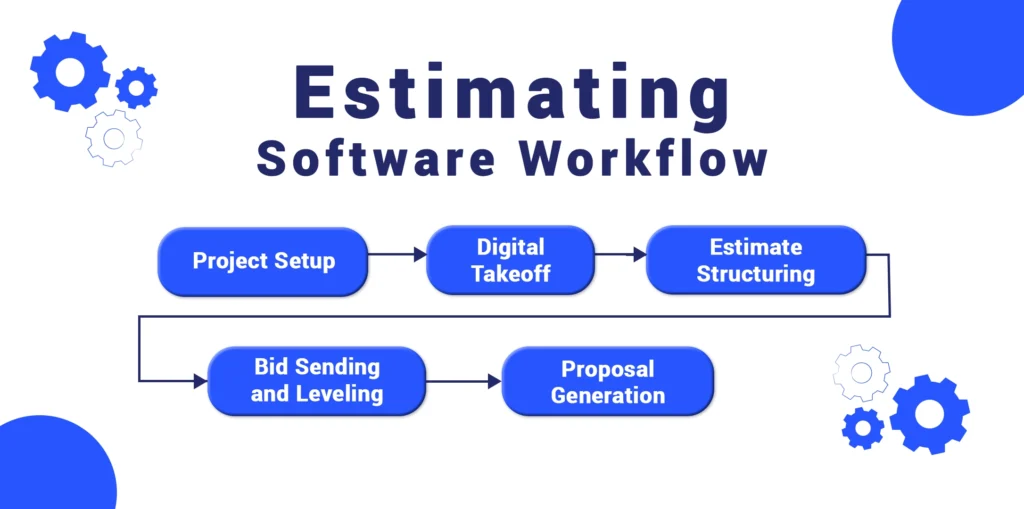
Estimating is the stage of research and tight timelines when a general contractor tries to understand how the final proposal can look. The process itself is straightforward, but the impact of each step is essential for the entire construction process.
This preconstruction stage starts with a document review, where the goal is to fully understand what’s being built. The risk here is that drawings and specifications may not be fully ready at this stage. Meanwhile, any gaps, assumptions, or overlooked details at this stage flow into the phase that follows.
The same is true for quantity takeoff when detailed calculations of the materials and labor start. From there, estimators move into costing, which also includes indirect costs like overhead, permits, and contingencies.
Once the estimate is built, it’s reviewed and adjusted to align with business goals. At this stage, contractors make critical decisions about pricing strategy, competitiveness, and risk. The numbers may be accurate, but how they are positioned ultimately determines the outcome.
Finally, the estimate becomes a proposal, representing both the contractor’s understanding of the project and their financial expectations.
Recommended reading:
Why Profit Depends on Accurate Estimating
The numbers mentioned in an estimate, or in other words, a financial forecast of the project, have a direct impact on what the general contractor will earn.
Of course, the average profit percentage can vary, but whatever it is, it makes up only a small percentage of the entire construction project. According to the National Association of Home Builders, the average profit margin is around 8%. Thus, if there is a small miscalculation, it can turn a successful project into a financial problem.
Accurate estimates allow contractors to set realistic pricing and make a clear plan for unexpected costs that will not affect their profit.
On the one hand, underestimating costs to win work may seem tempting, but it often leads to rework, delays, and cost overruns, all of which cut into profit. On the other hand, in the case of overestimating, you risk losing competition to another contractor.
Recommended reading:
6 Most Common Estimating Mistakes
Contractors have to address the following critical mistakes to stay on budget without sacrificing the margin. By the way, regardless of the type of construction, a residential or commercial general contractor may encounter these mistakes. However, for a commercial contractor, the stakes are even higher as there are numerous stakeholders and the risk of delay will hit harder.
Recommended reading:
#1 Overlooking Labor Realities
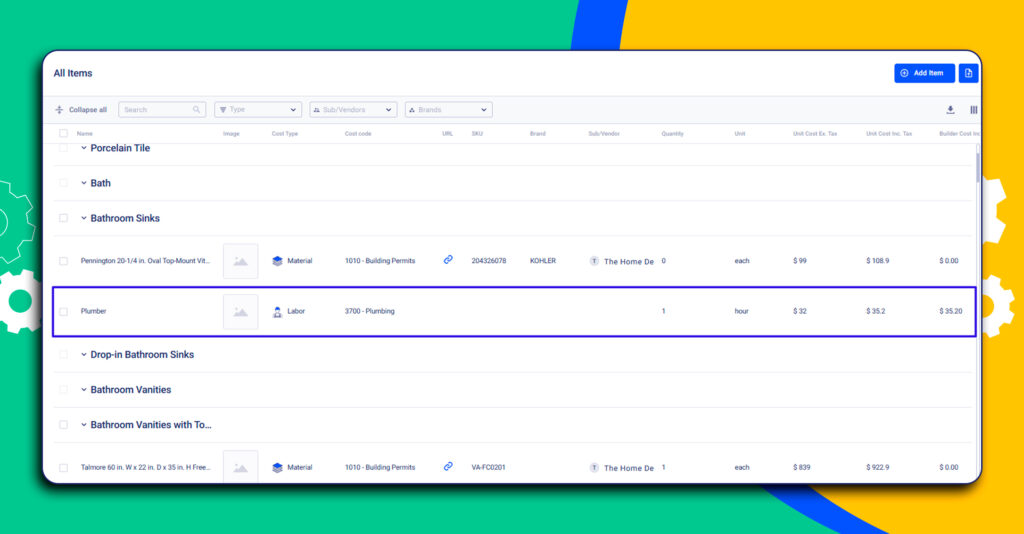
From my experience, labor is one of the most unpredictable parts of any construction estimate. Yet, many contractors still rely on generalized assumptions or outdated rates instead of accounting for local labor conditions.
It is even more critical now because of the ongoing labor shortage in construction. Skilled workers are harder to find, while wages are rising. The contractor should note that productivity can vary significantly depending on workforce availability and project complexity.
Ignoring these realities can lead to:
- Underestimated labor costs, especially in high-demand states and regions
- Delays due to workforce shortages
- Increased overtime expenses to meet deadlines, which have a direct impact on the profitability
For example, a productivity rate that worked on a previous project may no longer apply if the labor market has tightened or if subcontractor availability is limited.
#2 Inaccurate Bidding
Even the most accurate estimate can be ruined during the bidding phase. It often happens due to incorrect price comparison. When contractors review multiple supplier or subcontractor quotes, it’s easy to miss some numbers, especially when a contractor or an estimator is dealing with hundreds of items.
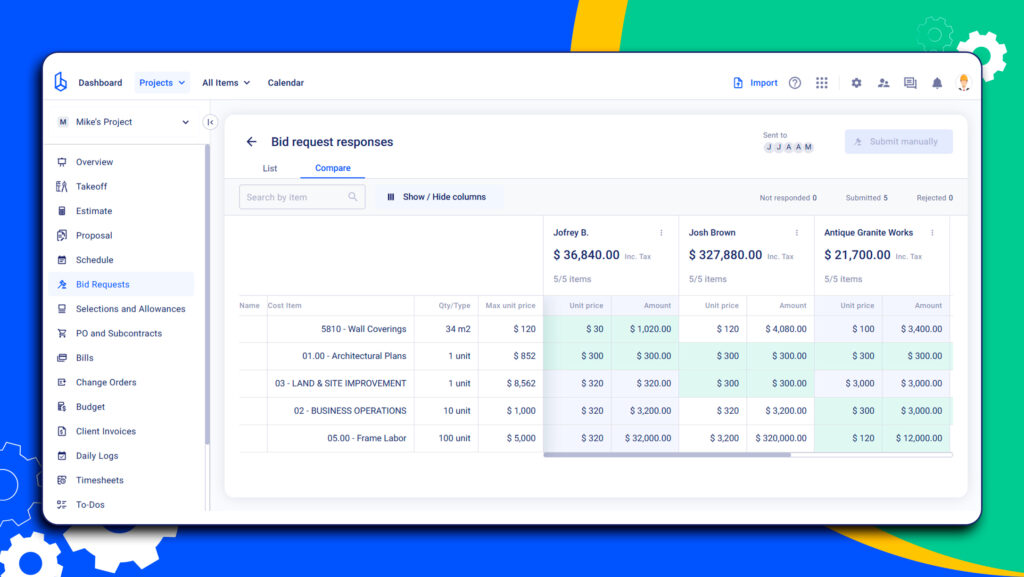
Another frequent problem is manual data handling, copying numbers from spreadsheets, emails, or PDFs into a final bid. There is a risk of typos, misplaced decimals, and outdated figures. These small errors often go unnoticed during tight deadlines but can significantly affect the final proposal.
The same refers to last-minute bid adjustments to stay competitive. At the end of the day, these changes can result in winning the project, but at the expense of your own profitability.
#3 Ignoring Material Cost Fluctuations
Underestimating material costs is one of the fastest ways to waste a project’s contingency fund. Many estimators treat material pricing as a fixed variable, but in reality, it is a moving target.
Material prices are influenced by global supply chains, seasonal demand, and inflationary spikes. Besides, the client may also change preferences during the project. And, a preliminary amount to be spent on the kitchen tiles may be completely different from the one mentioned in the final bill.
For example, a 5% increase in the price of raw materials between the bidding and the procurement phase can be critical for the entire budget of a commercial job.
Besides, estimators may fail to consider the “waste factor,” which is also a mistake. If your estimate only covers the exact net quantities from the takeoff without considering the percentage of the material lost to cutting, breakage, or site damage, you are underfunding the project from day one.

#4 Copy Pasting from Previous Estimates
Efficiency is important in terms of saving time and resources, but there is a dangerous line between using a template and blindly copying data from the previous estimate.
One of the most common estimating mistakes is reusing numbers from a previous proposal because the projects “look similar”. In addition to the cases described above, when ignoring the fact that vendor pricing, fuel surcharges, and even regulatory fees may have changed, there are risks.
Manual copying also means you copy possible past errors. If there was a formula mistake or a misquoted price in the original spreadsheet, that error is now being duplicated into your new one.
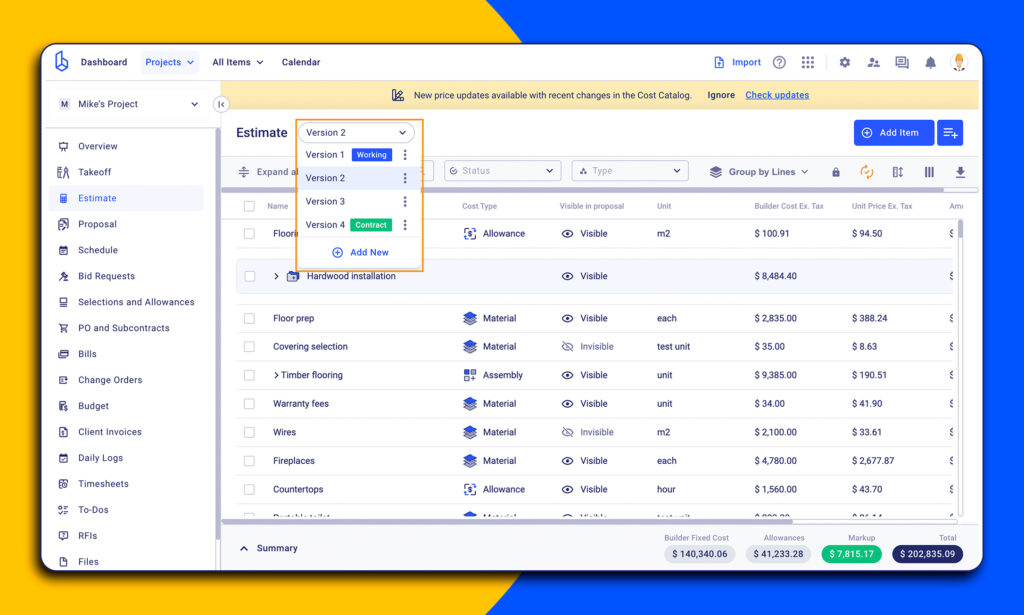
Besides, if a contractor makes several versions but has no tools to monitor changes, during the revisions, it becomes difficult to track which numbers are final.
#5 No Profit Protection Plan
Contractor’s profit margins have to be protected from the start. However, without a clear profit protection plan, even a well-calculated estimate can quickly fall apart once real-world uncertainties appear.
For example, a contractor submits a competitive bid with no contingency. If material prices increase during the project, minor scope adjustments are required. Since there’s no financial buffer, those extra costs come directly out of profit.
A well-structured estimate should always include a strategy for protecting profit, not just calculating costs.
#6 Poor Communication
Even if numbers are calculated correctly, not coordinated actions between teams and misunderstandings can hit your profit.
During the estimating phase, information flows between multiple parties: project managers, estimators, suppliers, subcontractors, and sometimes clients. When that communication is unclear or incomplete, key details can easily be missed.
For example, scope requirements may not be fully understood, or an estimator calculates labor hours based on incomplete information and has no tools to check it quickly.
This often results in:
- Scope gaps or overlaps, for example, when certain tasks are counted twice
- Incorrect pricing due to outdated project requirements
- Unrealistic timelines, caused by coordination between subs
- Frequent revision increases the risk of errors
Poor communication can also weaken collaboration with subcontractors. If expectations aren’t clearly defined, bids may vary, and it’s more difficult to compare them accurately.
How to Avoid Construction Estimating Mistakes: Solutions Explained
Identifying problems is only half of the job. Now, let me show some techniques that help solve these issues.
Collect Real-Time Data for Labor and Material Costs
One of the most effective ways to avoid both material cost fluctuations and labor miscalculations is to rely on real-time data and sort that data properly.
In these conditions, relying on past project data without making adjustments increases the risk of losing a lot. In practice, it is important to stay closely connected to suppliers, subcontractors, and internal project data. Regularly updating cost databases and validating assumptions before finalizing estimates can significantly improve accuracy.
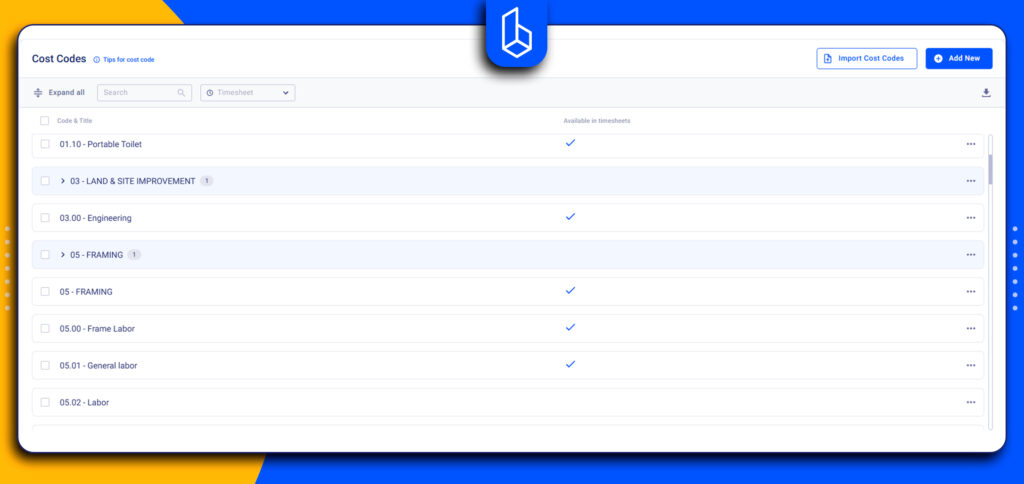
Using a structured workflow for estimating software helps centralize and maintain this data. Contractors can:
- Update material costs and labor rates within their estimating environment
- Reuse current cost codes across projects instead of starting from scratch
- Ensure that all team members are working with the same, up-to-date information
Give Up Spreadsheets and Use Estimating Software
Copying numbers between tabs, files, or external documents increases the likelihood of errors. Spreadsheets cannot cope with the complex and fast workflows of construction.
Recommended reading:
Another limitation is the lack of integration. Estimating doesn’t happen in isolation; it’s connected to budgeting, scheduling, and project execution. Spreadsheets don’t provide a seamless way to carry data through all these phases.
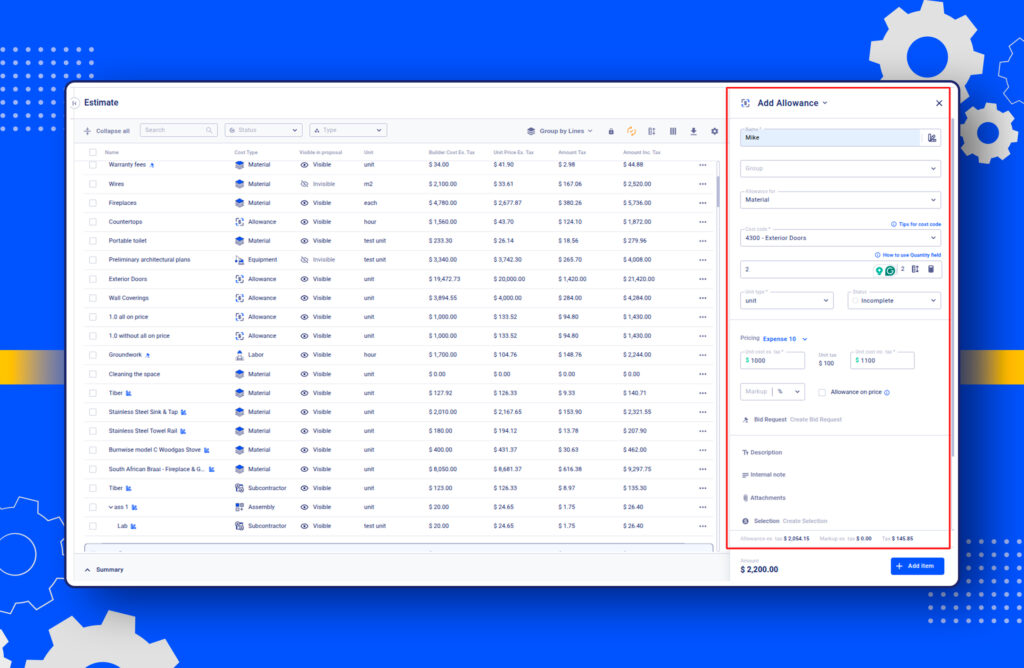
Moving the general contractor’s workflow to construction estimating software addresses these challenges. Instead of scattered files, contractors can:
- Build estimates using templates
- Automatically update cost data across projects
- Reduce manual errors through connected workflows
- Automatically add markups and allowances
Protect Profit in Estimates
A strong estimate should include safeguarding mechanisms like markup, contingency, and allowances.
- Markup ensures your business actually makes money. Many contractors either apply inconsistent markups or lower them too much, without realizing how easily unexpected costs can affect the margin.
- Allowances are essential for fixtures and finishes that aren’t picked during estimating. Without them, the initial estimate can be misleading and lead to disputes or budget overruns later.
- Contingency acts as a buffer for unexpected changes, such as design changes, weather delays, or site conditions. Skipping contingency might make your bid look more competitive, but it has no room for error.
Streamline Communication
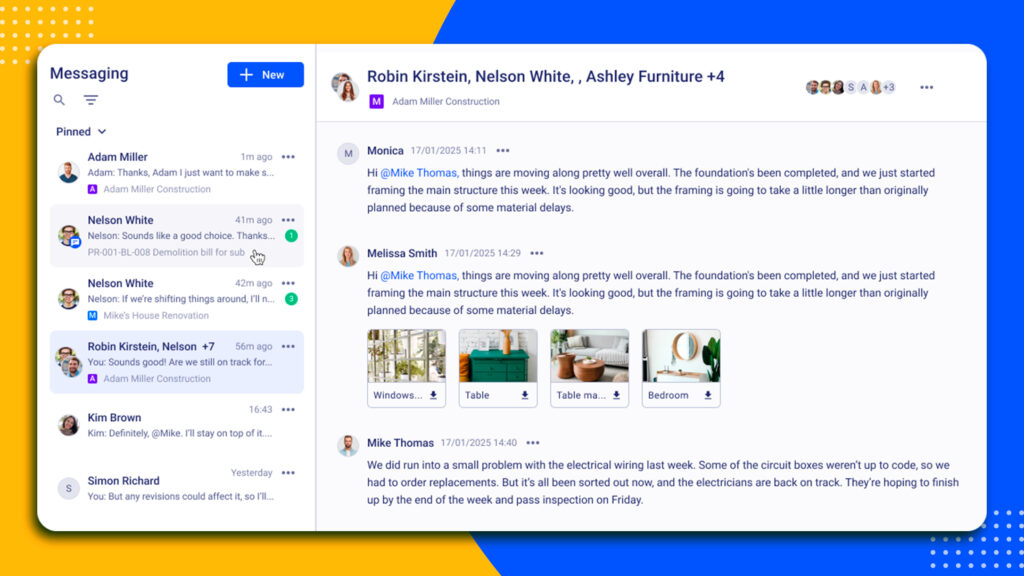
During the estimating phase, information flows between multiple stakeholders. Critical details can be confirmed later than needed or even omitted because of different communication channels.
When all interactions are managed in one place, the process is more accurate. You can have a unified communication hub within your estimating software.
Some critical daily routine actions are streamlined for contractors:
- Send and manage bids with clear scope details attached
- Level and compare bids side by side
- Leave comments and notes
- Communicate with subcontractors and suppliers without losing context
- Send notifications and track conversations linked to specific projects or bids
In this case, every decision, update, or clarification is documented and easily accessible.
Precision During Estimating is the Best Strategy
For a general contractor, the “winning bid” is only a victory if the profit margin is protected. I have considered the most common estimating mistakes, which almost all stem from a lack of real-time data and poor communication.
To stay on budget without losing your profit, you’d better use the tools that will help speed up the entire process and minimize the risk of miscalculation. Software centralizes project data and automates contingencies and markups, allowing you to transform your estimate from a risky forecast into a roadmap.