Cloud-Based Construction Software for 2026: What to Choose and Why It Matters


Construction software solutions have rapidly evolved from disconnected desktop tools into systems that now sit at the center of project management. In 2026, the real question is which platforms actually support how construction work happens day-to-day, without adding friction.
Margins are tighter, schedules are less forgiving, and clients expect transparency at every stage. When information is scattered across spreadsheets, emails, and local files, builders end up reacting instead of controlling outcomes. That pressure is what’s driving the shift toward cloud-based construction software that does more than store data.
From my experience, the right cloud platform no longer replaces individual tools like construction estimating software or construction scheduling software. It changes how decisions are made, how teams communicate, and how risk is managed across every project.
So, let me share some of my recent observations on choosing the best cloud-based construction software.
Table of Contents
- What Defines Modern Cloud-Based Construction Software in 2026
- Core Benefits of Cloud-Based Construction Software
- Why 2026 Changes the Software Evaluation Criteria
- Top 3 Cloud-Based Construction Software Solutions for 2026
- How to Find the Right Platform for Your Business
- Choosing Software That Works the Way Builders Actually Work
What Defines Modern Cloud-Based Construction Software in 2026
The strongest systems share a few defining traits:
- Centralized project data with no local files or version conflicts
- Real-time collaboration across office, site, and remote teams
- Permission-based access for builders, trades, and owners
- Continuous updates without downtime or manual upgrades
These points are no longer differentiators but minimum requirements. Let me explain what I mean.
Centralized Project Data
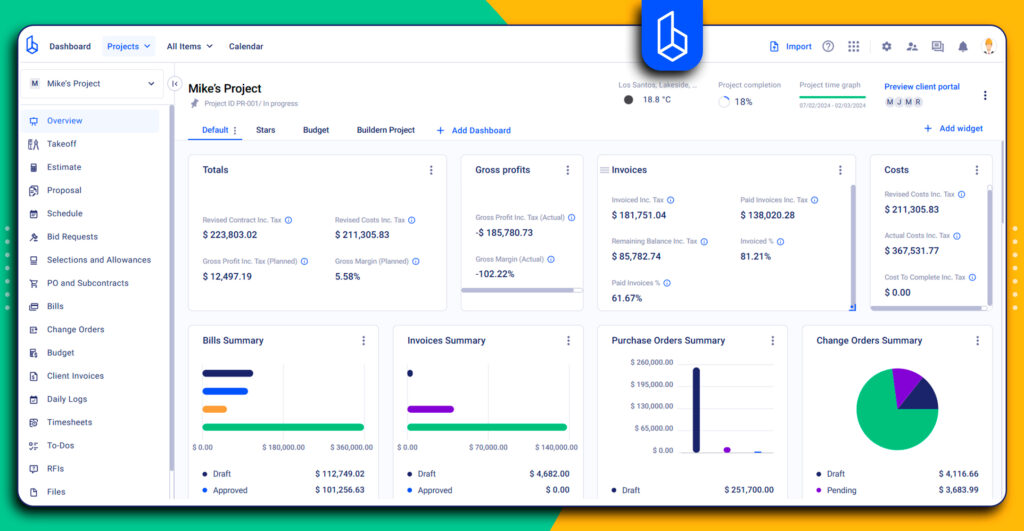
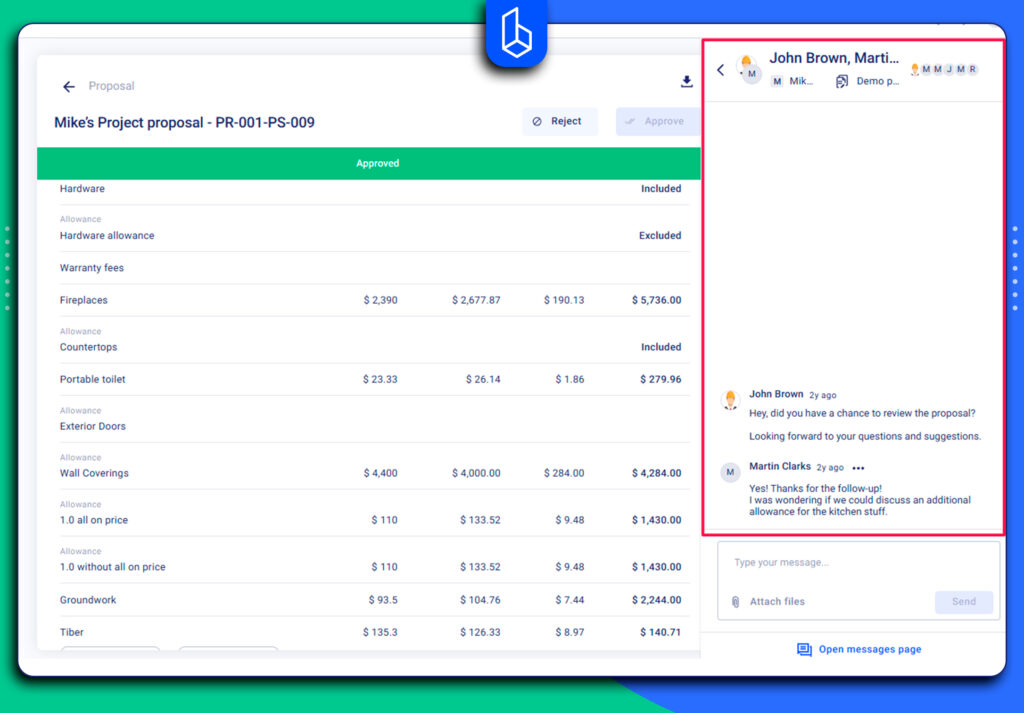
Modern platforms operate as a single source of truth. Budgets, schedules, documents, and change orders live in one environment. There are no competing file versions, no “latest update” emails, and no guessing which spreadsheet is correct. Such a solid foundation supports everything from construction document management to cloud job costing software.
Real-Time Collaboration
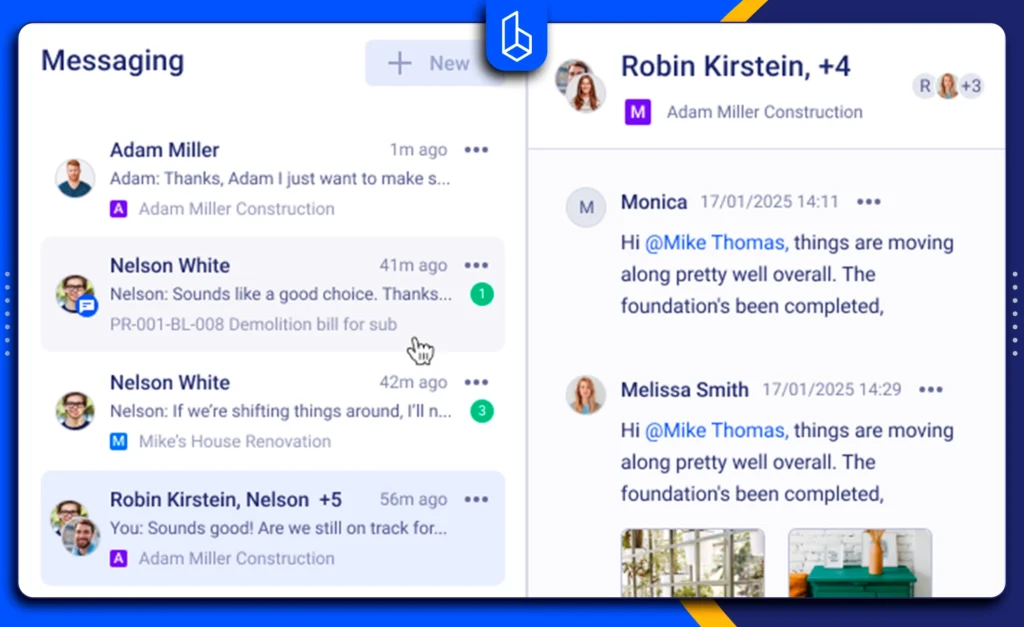
Office teams, field supervisors, and external partners work from the same live data. Updates made on site are visible immediately to project managers and owners. This matters most for construction apps for field teams, where delays in reporting often create downstream cost and schedule problems.
Permission-Based Access
Not every stakeholder needs the same level of visibility. Modern systems allow builders to control what trades, clients, and internal staff can see or edit. This is especially important for construction client portal access, where transparency must be balanced with control.
Continuous Updates
Cloud platforms update incrementally without interrupting operations. Builders are not forced into major system upgrades or retraining cycles. This allows construction management software for small businesses to improve over time without disrupting active jobs.
Core Benefits of Cloud-Based Construction Software
Once the foundation is in place, the real value of cloud construction software shows up in daily operations. The benefits are not theoretical. They appear in fewer surprises, faster decisions, and tighter control across projects. For builders managing multiple jobs at once, these advantages compound quickly.
#1 Single Source of Truth Across Projects
Cloud-based platforms replace fragmented tools with one live dataset shared across estimating, scheduling, billing, and documentation. Budgets, timelines, change orders, and files update together instead of drifting apart.
When teams rely on a single system for construction estimating software, construction takeoff software, and construction bidding software, data issues surface earlier. There is less backtracking, fewer disputes over “what was approved,” and more confidence that everyone is working from the same information. This consistency becomes critical as project volume increases and teams expand.
#2 Faster Decision-Making With Live Data
In residential and small-to-mid commercial construction, decisions rarely wait for perfect information. Cloud systems shorten the gap between what happens on site and what leadership sees.
Live cost data, schedule impacts, and change orders affect the surface immediately. Builders spend less time reacting to problems after they escalate and more time making controlled adjustments while options still exist. This shift supports practical construction project management best practices, where visibility enables action instead of documentation for its own sake.
#3 Scalability Without Process Breakdown
Growth often exposes weak processes. Adding more projects usually means adding admin work, more spreadsheets, and more coordination effort.
Well-designed cloud-based construction project management platforms absorb growth without forcing builders to redesign workflows each time volume increases. Repeatable processes for estimating, scheduling, AI billing, and reporting hold up across multiple jobs. Instead of hiring additional administrative staff, builders scale by tightening systems.
#4 Improved Accountability and Traceability
Cloud-based systems create a clear record of decisions. Every change, approval, and update is logged. Responsibility is visible without finger-pointing.
Such traceability protects both builders and clients. When questions arise about scope changes, pricing adjustments, or schedule shifts, the history is already documented. Strong construction document management combined with audit trails reduces conflict and supports clearer communication throughout the project lifecycle.
Why 2026 Changes the Software Evaluation Criteria
In 2026, most builders will no longer be debating whether cloud-based tools belong in construction. That question has already been settled on active job sites. What matters now is whether the software actually supports daily decision-making or simply logs information after issues surface.
A major shift is how AI-assisted workflows are viewed. They are no longer treated as optional add-ons or experimental features. Builders expect software to help flag problems early, while there is still room to respond. This does not mean handing control over to automation. It means having systems that highlight cost drift, schedule pressure, or scope gaps before they turn into margin loss.
Key expectations around AI in 2026 include:
- Early visibility into budget and schedule risks
- Pattern recognition based on recent project data
- Fewer surprises during execution, not just cleaner reports afterward
Another change is the demand for tighter integration across tools. Builders have little tolerance for disconnected platforms. Every tool is expected to operate on shared data.
In practical terms, software evaluation in 2026 has shifted away from long feature lists. Builders are focusing on fit. The strongest platforms are those that reflect real job workflows, help surface risks early, and scale alongside growing project volume without adding operational friction.
Top 3 Cloud-Based Construction Software Solutions for 2026
By this point, most builders are not shopping for software out of curiosity. This is a response to real pressure: tighter margins, more documentation, more client involvement, and less tolerance for errors. The tools that stand out today are not the ones that hold up under daily use.
The comparison below focuses on how different platforms fit into real construction workflows, not how they look in a demo.
1. Buildern
Buildern is designed around how builders actually run jobs, especially in residential and small-to-mid commercial construction. The software emphasizes structure, repeatability, and cost clarity rather than overwhelming teams with configuration.
Where Buildern Stands Out
- Unified construction estimating software, scheduling, billing, and budgeting in one environment
- AI-assisted workflows focused on cost intelligence, change tracking, and early risk signals
- Built-in construction takeoff software that feeds directly into estimates and budgets
- Strong alignment between estimating, job costing, and construction financial management software
- Integrated construction client portal for clear, controlled homeowner communication
Buildern is particularly effective for teams that want consistency across projects without adding administrative layers. The platform supports construction project management best practices by keeping data connected as it moves from preconstruction into execution.
Why Buildern Leads in 2026
Buildern applies AI construction software where it reduces friction, not where it complicates decisions. Its structure mirrors real construction workflows, helping builders maintain margin control as project volume grows.
2. Procore
Procore is widely used on large commercial projects with complex coordination needs. It offers broad coverage across the construction lifecycle and is often selected by firms managing many stakeholders at once.
Some of the key characteristics:
- Extensive construction document management and compliance tools
- Strong collaboration features across large teams and external partners
- Robust support for construction bidding software and subcontractor workflows
- Designed to manage high project volume and detailed reporting requirements
Trade-offs to consider:
- Higher setup effort and longer onboarding
- Steeper learning curve for smaller teams
- Operational overhead that may outweigh benefits for residential builders
Procore’s strength lies in scale and control, but that scale comes with complexity that not every builder needs.
3. Oracle
Oracle construction solutions are built for enterprise-level programs and capital-intensive work. The platform is commonly used on infrastructure, energy, and government projects where portfolio oversight is critical.
Notable strengths:
- Deep scheduling and cost control capabilities
- Strong integration with enterprise ERP and finance systems
- Designed for long-term, multi-program project oversight
- Powerful tools for portfolio-level planning and reporting
Limitations for smaller builders:
- Long implementation timelines
- Heavy configuration requirements
- Often excessive for teams focused on residential or small commercial work
Oracle delivers unmatched depth at scale, but for many builders, that depth introduces rigidity and slows adaptation.
How to Find the Right Platform for Your Business
Choosing cloud construction software from now on is less about how many features appear on a checklist and more about how well the system fits real job flow. Most platforms can store documents, create schedules, and track costs. The difference shows up once projects are active and changes start stacking up.
A practical evaluation usually starts with a few core questions:
- Does the software structure match your project types and volume?
- Can it handle change without breaking workflows?
- Does it reduce daily decision friction or add new admin work?
Residential builders running multiple jobs need systems that stay stable as volume increases. What works for a single home often fails once five or ten projects overlap. Construction management software for small businesses should support repeatable workflows without forcing constant reconfiguration or workarounds.
Over time, the right cloud construction software should reduce manual effort rather than add to it. Systems where estimating, takeoffs, billing, document control, and communication stay connected tend to protect margins quietly. The less time teams spend re-entering data, the more consistent project outcomes become.
Choosing Software That Works the Way Builders Actually Work
So, what’s the verdict?
Cloud-based construction software functions as infrastructure, not an upgrade. Builders still relying on disconnected tools usually feel the pressure first in estimating accuracy, then in schedule reliability, and eventually in client trust.
When estimating software reflects real costs and takeoff data flows directly into live budgets, control becomes repeatable rather than reactive. Fragmented tools may perform well individually, but together they increase effort, risk, and correction work as projects scale.
Therefore, effective cloud construction project management rarely feels dramatic day to day. It feels quieter thanks to fewer corrections, fewer explanations, and without late surprises. Over time, that consistency will translate into stronger construction profit margins and steadier growth.