Commercial General Contractor: Challenges and Tools Needed for Better Project Management


Commercial projects often promise larger contracts and higher revenue․ However, it’s clear that such projects come with more headaches.
Commercial contractors face more complexity and tighter schedules. Unlike residential projects, commercial construction typically involves larger teams, more complex contracts, stricter safety regulations, and higher financial risks.
For many contractors, transitioning into commercial construction is a natural step toward scaling their business. However, success in the commercial sector requires more structured planning and coordination.
In this article, we will highlight the challenges that a commercial general contractor faces and how to overcome them through better project management.
Table of Contents
- Who Is a Commercial General Contractor?
- Core Responsibilities of a Commercial GC
- Types of Commercial Projects General Contractor Handles
- Residential vs. Commercial General Contractor
- Challenges of Commercial General Contractors
- Key Highlights
Who Is a Commercial General Contractor?

A commercial general contractor is often described simply as the company responsible for building a commercial project.
In reality, the role implies a long list of responsibilities beyond building. A commercial contractor acts as the primary risk manager and lead orchestrator of a complex project that involves millions of dollars, strict regulations, and dozens of moving parts.
In commercial construction, the prime contractor holds the main agreement with the project owner. The GC becomes the central hub that connects architects, engineers, subcontractors, suppliers, inspectors, and project owners in different types of projects.
What Are the Core Responsibilities of a Commercial General Contractor?
The GC acts as a strategic manager who is involved in all stages from pre-construction planning to closeout. Their responsibilities typically span three major phases:
1. Pre-Construction Planning and Advisory
Long before construction begins, general contractors of commercial projects play an essential advisory role. One of the primary responsibilities during this phase is estimating and bidding, where the contractor prepares a detailed proposal.
It is the phase when a contractor works closely with architects and engineers to evaluate alternative materials or construction methods. GC oversees permits and regulatory compliance, analyzes drawings and technical specifications.
2. Project Execution and Site Coordination
When the construction starts, the commercial GC becomes the central coordinator of all site activities. This phase includes:
- Subcontractor management
- Site logistics and scheduling
- Communication between the stakeholders
- Safety and risk mitigation
3. Financial and Documentation Management
Commercial construction projects involve complex financial structures and extensive documentation requirements. It starts from cost control and budgeting to invoicing, and up to project closeout.
Types of Commercial Projects General Contractor Handles
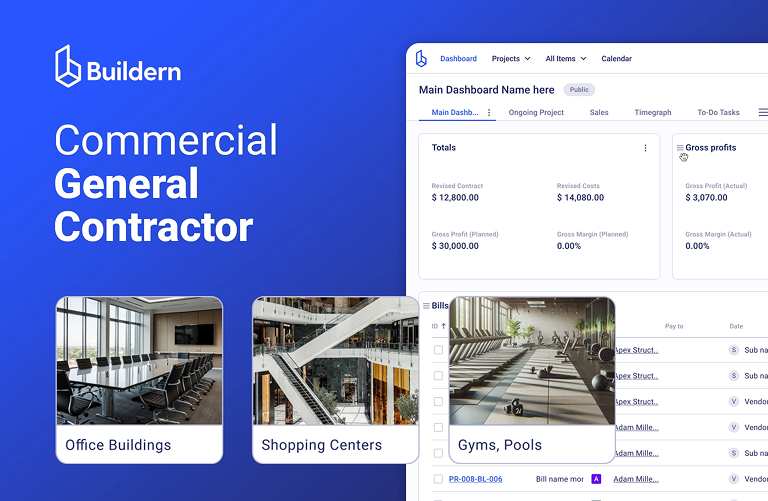
Commercial general contractors handle a wide range of projects, from office towers to gyms and swimming pools. Different sectors demand vastly different risk profiles and management styles.
Let’s see what types of buildings the general contractor is managing:
Office Buildings
High-rise or mid-rise office towers, corporate campuses, co-working space with a focus on tenant requirements, MEP systems, and phased occupancy.
Hospitality and Lodging
Hotels, resorts, and conference centers. This niche often involves complex finishes, guest experience design, and phased commissioning
Healthcare Facilities
Hospitals, clinics, medical offices, and specialized labs that need strict compliance with safety codes, medical regulations, and workflow efficiency
Educational Buildings
Schools, universities, training centers, and libraries require attention to safety codes, accessibility, and long-term durability.
Government and Public Sector Projects
Public infrastructure building, such as fire stations or municipal buildings. GC needs to comply with public procurement rules and strict reporting requirements.
Retail and Shopping Centers
Malls, standalone retail stores, restaurants, and grocery stores usually require coordination with branding, fit-outs, and local zoning codes.
Recommended reading:
Residential vs. Commercial General Contractor
While both commercial and residential general contractors oversee construction projects, the level of expertise, professional responsibilities, and management differ significantly.
A residential contractor typically focuses on single-family homes, custom houses, remodeling, or small-scale multi-family units. In this case, a home builder is focused on the needs and preferences of a homeowner. They supervise smaller teams, while the projects are usually shorter, budgets are smaller, and the regulatory environment is simpler.
In contrast, a commercial general contractor operates in a more complex professional landscape. They must manage expensive projects with multiple stakeholders, including developers, architects, and engineers.
Commercial contractor’s expertise includes risk management, legal compliance, scheduling across multiple trades, and safety regulations.
Here is a snapshot of the main differences:
| Aspect | Residential General Contractor | Commercial General Contractor |
| Primary Clients | Individual homeowners, families, property owners | Developers, investors, retail chains, organizations, government agencies |
| Project Timeline | Weeks to months | Months to years |
| Profit Potential | Lower margins but quick project turnover | Higher contract value with larger risks |
| Financial Workflow | Simple invoicing (deposits and milestones) | Schedule of values (AIA G702/703) |
| Legal/Compliance | Building codes, zoning regulations, and standard permit processes | Stricter safety regulations, accessibility, standards, permits, and regulation processes |
| Communication | Focuses on homeowner updates, client and subcontractor portals, selections, and RFIs are usually simple clarifications. | Involves more stakeholders, submittal logs, and more substantial reporting. |
Read more about AIA billing:
While the scale and revenue of these commercial projects are attractive, the financial and administrative burden is often harder to handle.
Let’s look at the specific challenges that commercial GCs face.
Challenges of Commercial General Contractors (and Proposed Solutions)
The scale and complexity of commercial construction projects come with a bunch of potential risks at every stage. Here are common problems that need to be addressed to succeed:
Estimating Accuracy
In the commercial sector, estimating is a complex financial forecast. Unlike residential work, where material costs are relatively predictable, commercial bids must account for volatile market fluctuations and specialized labor rates.
Risks: The challenge arises from the volume of variables involved. Commercial projects often include detailed specifications, technical systems such as HVAC and electrical infrastructure, and changing design documentation.
Besides, if the estimate does not reflect the true cost of, for example, crane rentals, the project can become a financial liability before even starting the actual build. Another dangerous scenario is underestimating, when unbalanced bids cover immediate overhead but create a cycle of debts.
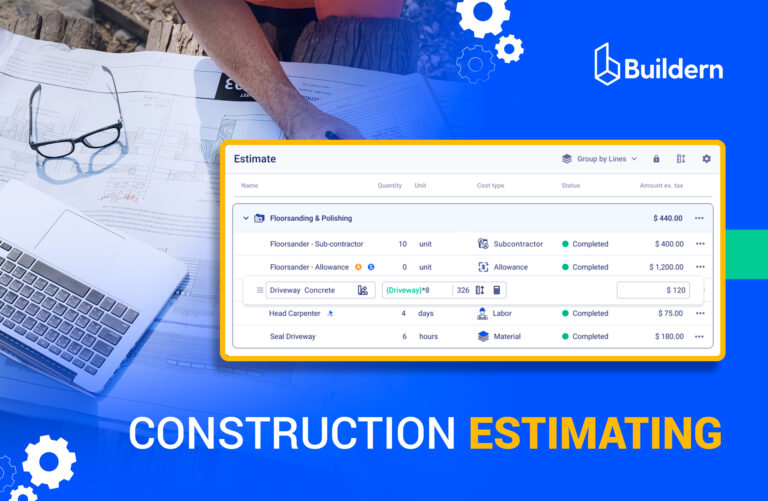
Solution: To minimize the risks, construction estimating software should be used wisely. First of all, software enables the use of centralised cost catalogs. These databases can be updated in real-time to reflect current market volatility, ensuring that every bid is based on verified material and labor rates.
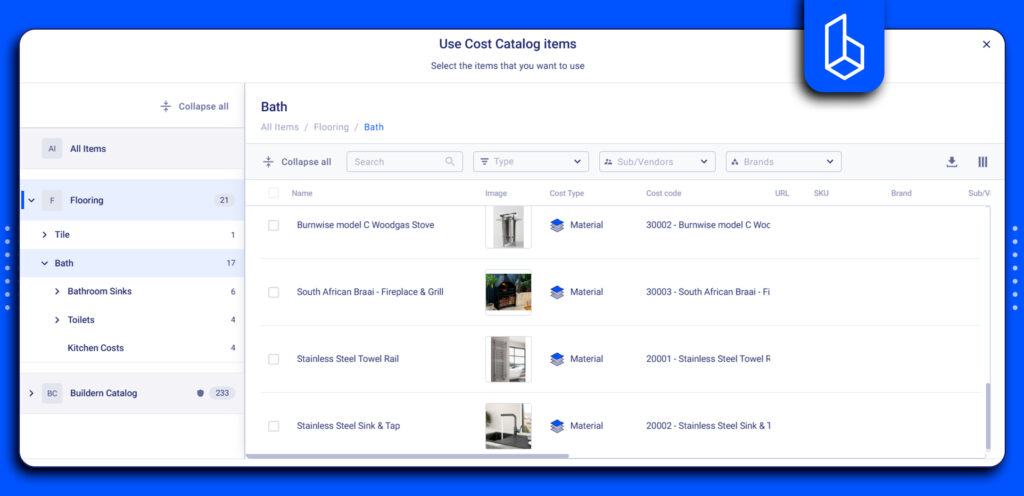
Besides, professional software uses assemblies instead of individual studs and screws to ensure nothing is omitted.
And finally, with estimating software, there is no vacuum in data management. Once a bid is won, the software automatically converts the estimate into a budget.
Recommended reading:
Approval Mess
In commercial construction, the approval process is the engine behind many chains of the project. In residential projects, decisions are often made verbally on-site and are usually discussed between the general contractor and the project owner.
However, commercial work relies on a multi-party approval hierarchy involving architects, engineers, owners, and specialized consultants.
Risks: The primary challenge is the sheer volume of submittals and shop drawings that must be vetted before one part of the job starts. Administrative lag is inevitable if the approvals are managed through different channels or email threads.
The financial risk here is significant, as a delay in submittal approval for a custom air handling unit or structural steel can trigger a delay in the overall schedule.
Solution: Transitioning to a centralized digital approval workflow is the only way to maintain the project’s critical path. The professional software provides a single source of truth workflow for every submittal and RFI (Request for Information).
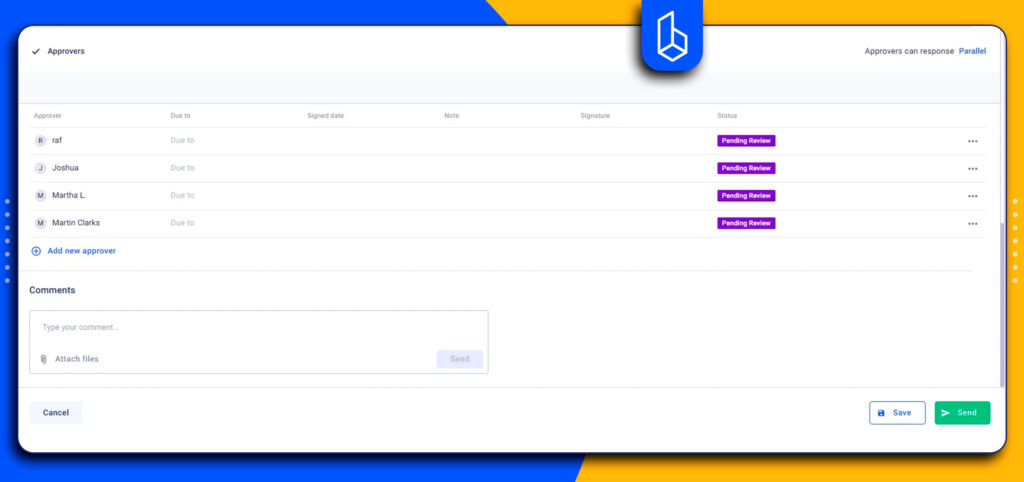
Besides, digital workflows allow automatic reminders to be sent to reviewers, reducing the likelihood of approvals being unnoticed for long periods.
When the approval process is digitized, the software ensures the subcontractors are only accessing the most current, approved versions of drawings and other data.
Recommended reading:
Complicated Invoicing
Financial management in the commercial sector is not sending one invoice. It is a highly structured process of progress billing and contractual compliance. Commercial general contractors typically submit monthly payment applications using standardized formats such as AIA-style documents.
Risks: The complexity in client invoices begins with the Schedule of Values (SOV), a breakdown of the total contract sum into individual work tasks. Manually managing an SOV across dozens of subcontractors (also tracking retainage) is challenging.
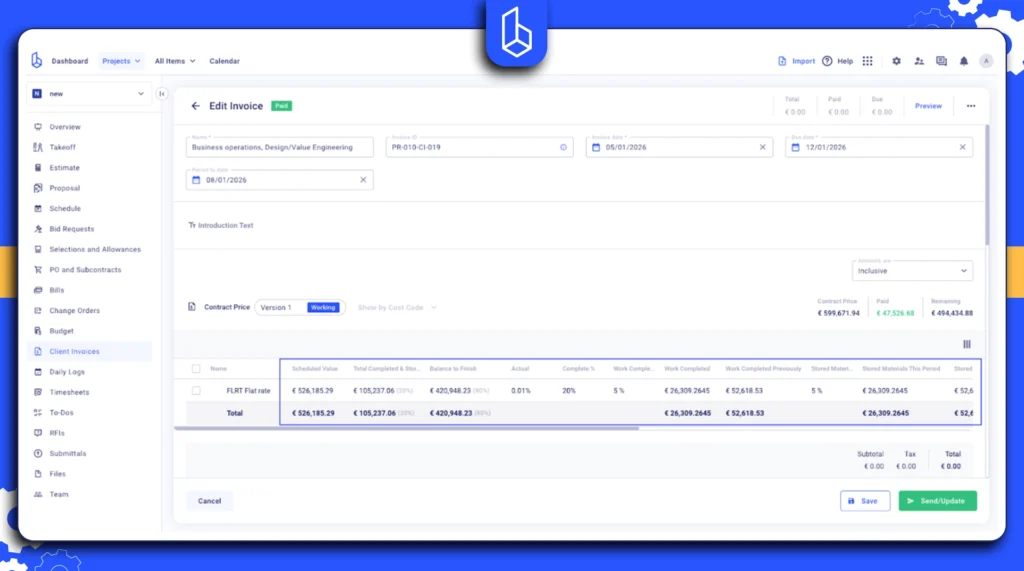
If a monthly pay application, complete with AIA-style documents, change orders, and lien waivers, is arranged manually, there is a risk of mathematical error. Meanwhile, a rejected invoice for a commercial contractor means a delay in payments and disrupted cash flow.
Solution: Automation through construction management software simplifies this process. The project budget is connected to a structured Schedule of Values.
The contractors track progress billing based on the percentage of completion, milestone payments, or “balance to finish” indicators.
Tough Subcontractor Coordination
A commercial job site can host up to 20 different crews of subcontractors, ranging from structural steel erectors to fire protection installers. They have to operate in sync without overlapping schedules.
Risks: The primary challenge in this environment is the so-called domino effect because commercial trades are highly interdependent.
If there is a delay from one of the subcontractor teams, it creates a catastrophic ripple effect on the entire project. The financial and operational risks, including a great volume of rework, are immense unless subcontractors are coordinated properly.
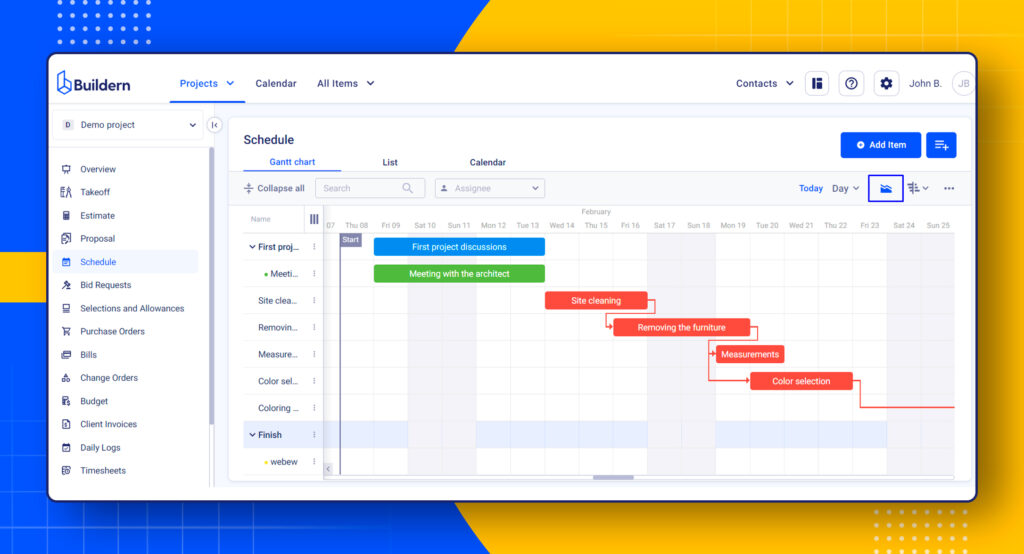
Solution: Overcoming this complexity requires moving to a centralized subcontractor portal and scheduling tools using a Gantt Chart.
When the critical path shifts, the platform automatically pushes notifications to all affected trades, allowing them to adjust their labor and material deliveries before they arrive at a site that isn’t ready for them. If subs have access to the latest approved submittals, RFIs, and change orders, the risk of communication is minimized.
Cash Flow Management
Cash flow is about managing the gap between high-volume expenditures and delayed receivables. Commercial GCs must pay for massive material orders and weekly labor for dozens of crews before receiving their own payment from the owner. Obviously, the project’s liquidity is under constant pressure.
Risks: The primary challenge is negative cash flow. In commercial construction, the general contractor finances the project for the owner. If your billing cycle lags behind your accounts payable, the contractor faces liquidity risks.
Solution: Proactive cash flow management requires a unified financial dashboard that links the field to the back office. There is a real-time job costing to track every expense against the budget as it is committed.
Recommended reading:
Project management software links estimates, schedules, and invoicing, providing visibility into upcoming expenses, pending payments, and budget variances. Automated progress billing and payment tracking ensure that pay applications align with the Schedule of Values and percentage of completion.
Delayed Permits and Compliance
Safety and permits are legal prerequisites for such projects, since commercial sites are subject to heavy oversight from OSHA, environmental, and other agencies.
Risks: The primary challenge is the documentation gap. If your safety logs, specialized permits, and inspection records are disorganized, a single surprise site visit can result in a stop-work order.
Beyond the legal risk, delayed permits can be caused by the lack of audit-readiness. If the city or an inspector is waiting on a specific structural report, the project’s timeline is frozen.
Solution: A digital document flow integrated into your project management system ensures that requirements, records, and permits are accessible.
The role of a commercial general contractor requires fundamental knowledge, complex task oversight, and high-level strategic management.
It’s clear that success in this field is no longer possible through manual operations or fragmented communication, but rather requires a centralized digital infrastructure.
Key Highlights
Commercial general contractors manage large and complex construction projects that involve multiple stakeholders, strict regulations, and significant financial risk.
They have a long list of responsibilities and face numerous challenges that cannot be addressed through manual processes. By using construction management software, they can streamline the cash flow, coordination of subcontractors, communication, and scheduling.

What Does a Commercial General Contractor Do?
A commercial general contractor manages the entire construction process, from pre-construction planning to project closeout. They ensure the project meets safety standards, timelines, and financial targets.
What is the Difference Between a Residential and a Commercial GC?
Residential contractors focus on homes and small residential projects, while commercial GCs manage larger developments like retail spaces, restaurants, or hospitals. Commercial work involves bigger budgets and more stakeholders.
Can a Residential Contractor Shift to Commercial Jobs?
Yes, but it requires adapting to larger project scopes and stricter regulations. Residential contractors usually need stronger project management platforms and experience with commercial compliance.
How Can Software Help Commercial GC?
Construction management software streamlines estimating, scheduling, document control, and financial tracking. It helps commercial GCs coordinate subcontractors, manage approvals, and monitor cash flow at a higher level required for commercial workflow.
![Construction Estimating Software for Small Businesses: 7 Tools Compared [2026 Update]](https://buildern.com/resources/wp-content/uploads/2025/12/BLOG_COVER_Best-Construction-Estimating-Software-for-Small-Businesses-2026-768x501.jpg)