AI Construction Project Management Software: From Reactive Scheduling to Predictive Project Control


I remember when project management meant reacting. A delay would surface, and we would adjust. A cost overrun would show up in a report weeks later, and we would investigate. Most of the time, we were not controlling the job but catching up to it.
For years, construction project management relied on dashboards, email threads, spreadsheets, and Gantt charts. They showed us what had already happened and rarely told us what was about to happen.
The shift I have seen over the last few years is different. AI construction project management software can now analyze patterns, forecast outcomes, and highlight risk before it becomes visible damage.
So, let me explain how the predictive logic embedded into scheduling, cost control, change analysis, and field reporting can turn the reactive oversight into predictive control.
Table of Contents
- What Is AI Construction Project Management Software?
- Why Traditional Project Management Still Breaks Under Pressure
- Core AI Capabilities in Modern Construction Project Management Software
- 5 AI Construction Project Management Software Platforms Worth Investing In
- The Real ROI of AI in Construction Project Management
What Is AI Construction Project Management Software?
Traditional construction project management platforms focus on structure:
- Task lists
- Gantt charts
- Document storage
- Budget dashboards
- Communication logs
They centralize information and improve visibility. But they typically require the project manager to interpret everything manually and connect the dots.
AI construction project management software goes further. It introduces systems that:
- Analyze historical and live project data
- Detect patterns in performance and risk
- Forecast probable outcomes
- Recommend corrective actions
- Automate structured workflows
At a technical level, this relies on machine learning and predictive analytics. Machine learning models evaluate past project data such as schedule performance, labor productivity, cost code behavior, and subcontractor patterns. Predictive analytics applies those insights to the current project to estimate risk probability, delay likelihood, or cost deviation before those issues appear in traditional reports.
AI does not decide how to resequence trades. Instead, it highlights which activities are most likely to slip based on performance patterns. It does not approve change orders.
Traditional PM tools show status, while the AI-enhanced PM software models development trajectory.
That distinction is where practical value begins.
Why Traditional Project Management Still Breaks Under Pressure
Before discussing AI solutions, it is important to understand where traditional PM systems fail under real jobsite conditions.
Schedule Fragility
Critical path shifts happen constantly during construction. Dependencies change when inspections are delayed, materials arrive late, weather disrupts work, or a preceding trade falls behind. Weekly plans often disconnect from the master schedule because they are built manually and not dynamically recalculated.
Most legacy tools require manual updates. By the time a PM adjusts dependencies, recalculates durations, and communicates changes, the impact has already moved through downstream activities.
This creates reactive planning. Teams spend time correcting drift instead of preventing it.
Communication Overload
Construction communication volume is heavy and fragmented:
- Emails
- Messaging apps
- Submittal notifications
- RFI responses
- Change alerts
- Field notes
Important signals hide inside message threads, while risk indicators are scattered across platforms. The issue is not a lack of information. It is the absence of prioritization and structured interpretation.
Without intelligent filtering, project managers waste time searching for the issues that actually matter.
Fragmented Field Inputs
Field data frequently arrives in fragments:
- Manual progress notes
- Unstructured daily logs
- Photo uploads without tagging
- Version conflicts in drawings
When reporting is inconsistent, schedules and budgets rely on partial information. Project managers reconstruct events after they happen instead of managing them as they unfold.
Core AI Capabilities in Modern Construction Project Management Software
This is where differentiation matters.
AI construction project management software is a collection of predictive and analytical capabilities embedded across active execution.
Predictive Scheduling and Dynamic Critical Path Analysis
Traditional scheduling tools visualize tasks and dependencies. AI-enhanced systems simulate impact.
AI Scheduling Image
AI scheduling tools are designed to:
- Recalculate dependencies automatically
- Forecast delay probability for specific activities
- Identify tasks most likely to slip
- Suggest resequencing strategies
- Model how a single delay affects downstream milestones
Instead of waiting for a missed deadline to shift the critical path, AI highlights activities trending toward risk based on productivity data and historical patterns.
This transforms scheduling from record keeping into forward modeling.
Intelligent Budget Monitoring and Cost Anomaly Detection
Execution-phase financial control is where many projects lose margin.
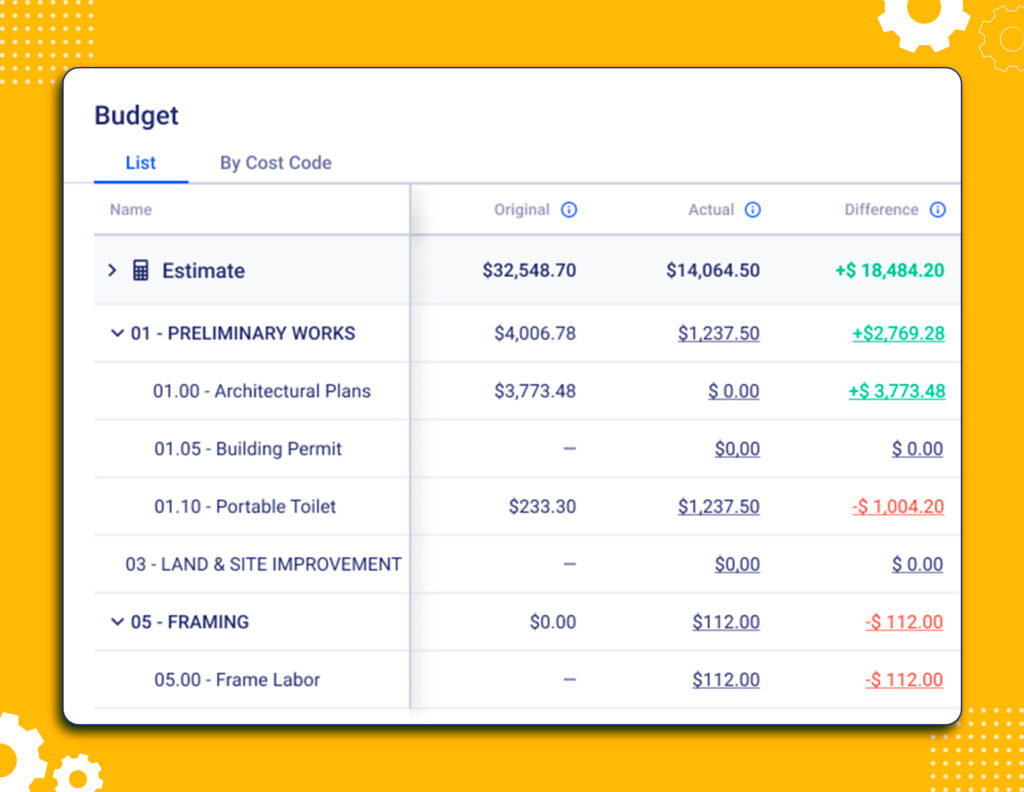
You can use project management software with AI capabilities to:
- Flag unusual cost spikes by cost code
- Detect early labor overrun trends
- Connect field progress to burn rate
- Predict final cost at completion using real-time data
If framing labor hours exceed productivity benchmarks during week two instead of week six, AI surfaces that deviation early. That gives management time to correct staffing, sequencing, or subcontractor alignment.
This differs from AI estimating. Estimating AI improves preconstruction accuracy. Project management AI protects margins during execution.
AI-Assisted Weekly Planning
Weekly planning is where schedule drift begins.
Nevertheless, AI-enhanced project management software can:
- Translate master schedules into structured weekly plans
- Detect task conflicts automatically
- Adjust manpower allocation based on productivity patterns
- Suggest realistic completion dates using historical performance data
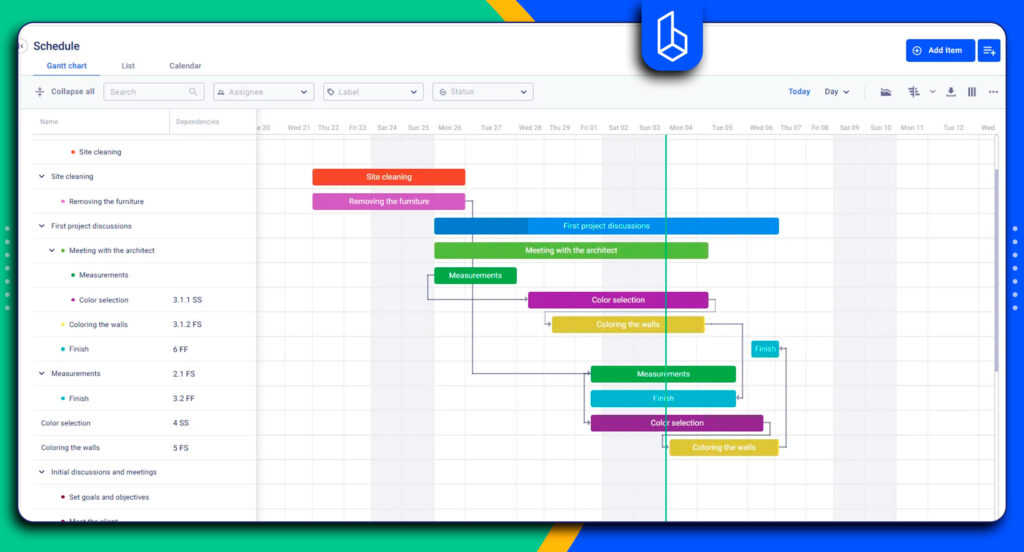
Instead of manually rebuilding weekly plans each Friday, the system proposes structured allocations based on live project conditions.
Smart Notifications and Risk Prioritization
Traditional systems send alerts, but artificial intelligence prioritizes them, allowing project managers to:
- Rank notifications by projected project impact
- Flag stalled tasks automatically
- Detect subcontractor underperformance trends
- Trigger escalation when milestone drift exceeds defined thresholds
This reduces noise. The PM sees the risks most likely to affect cost, schedule, or contractual deadlines. It shifts focus from monitoring everything to addressing what matters.
AI-Powered Field Reporting and Voice Capture
AI improves project structure and speed through:
- Voice-to-structured-report conversion
- Automatic tagging of issues
- AI categorization of site photos
- Conversion of unstructured notes into searchable data
Better data quality improves every downstream decision. Predictive systems depend on clean input. When field reporting becomes faster and structured, schedule and budget models become more reliable.
5 AI Construction Project Management Software Platforms Worth Investing In
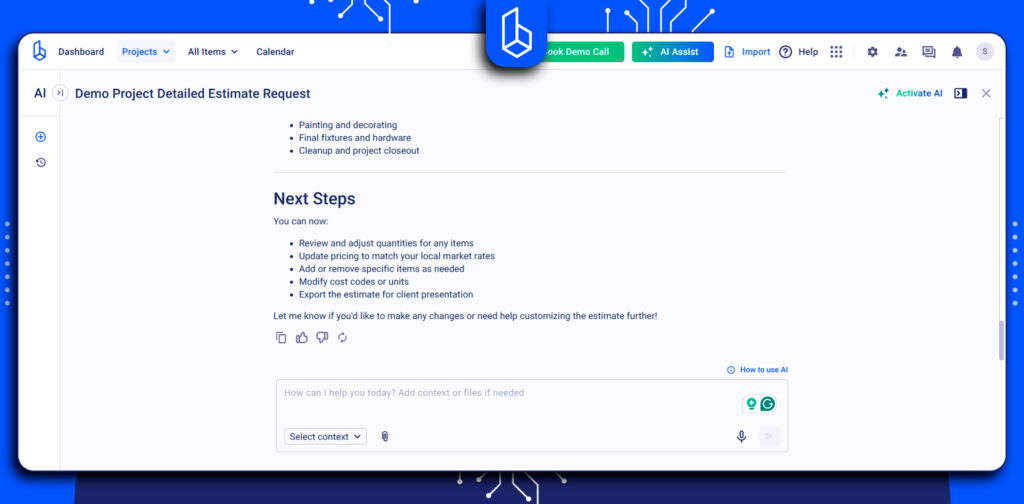
Buildern
Construction project management software is suitable for integrated AI across scheduling, cost control, and field reporting.
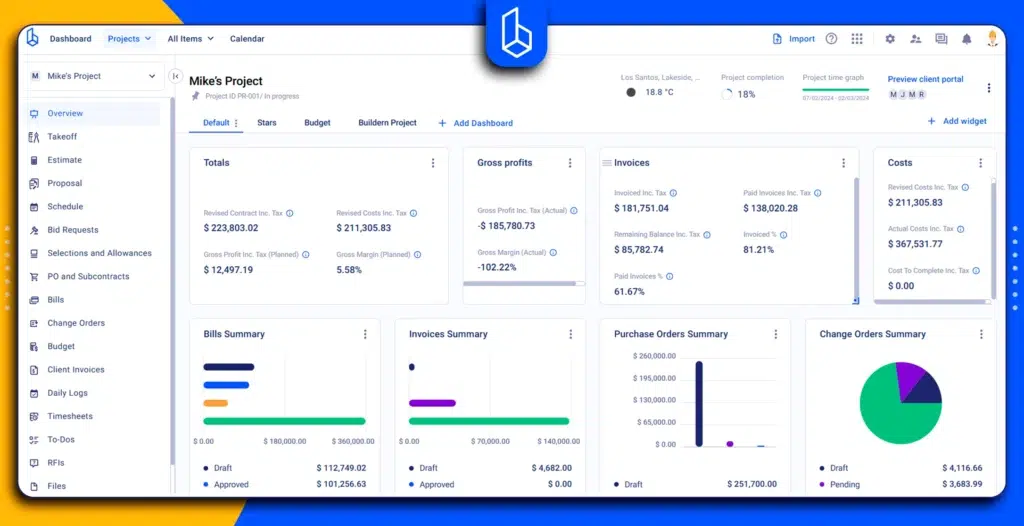
AI project management features contractors love:
- Predictive scheduling logic
- Cost anomaly detection
- AI-assisted weekly planning
- Smart risk alerts
- Voice-based reporting automation
Can be used by:
- Builders who want scheduling, cost, and field data working together
- Teams managing multiple active jobs with constant changes
- Projects where weekly planning and execution alignment matter
Limitation: Not structured for large enterprise environments with rigid program-level controls.
Wrike
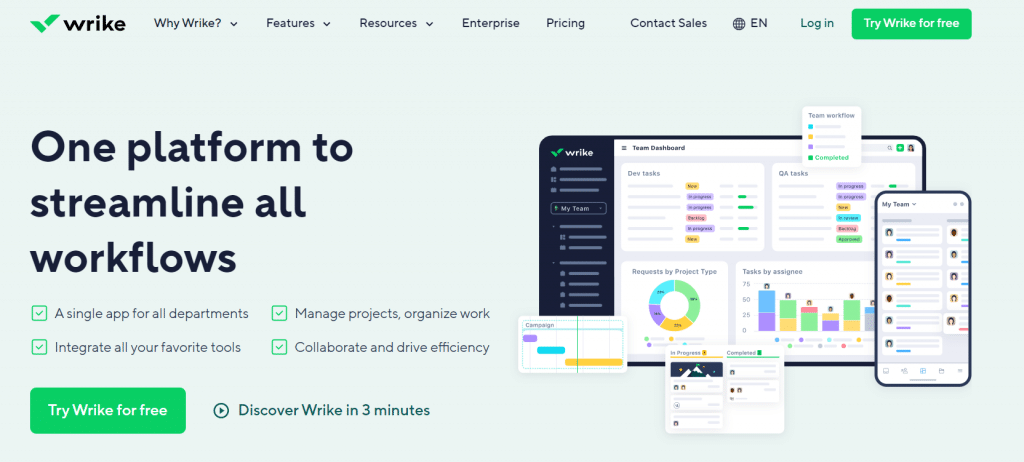
Wrike integrates AI for workload forecasting and workflow automation. It supports predictive task prioritization but is not construction-specific by default. It requires customization to reflect jobsite realities.
Can be used by:
- Teams managing cross-functional workflows outside strict construction logic
- Organizations needing flexible task management with AI support
Limitations:
- Not construction-specific by default
- Requires customization to reflect jobsite workflows
- Lacks native cost tracking and trade-based scheduling logic
Miro

Miro supports collaborative planning with AI-enhanced organization and content structuring. It is strong for early planning and team alignment, but lighter on predictive construction analytics.
Can be used for:
- Preconstruction planning and team alignment
- Design coordination and early-stage discussions
- Workshops and collaborative sessions
Limitations:
- No schedule tracking or predictive analytics
- No cost control or field data integration
- Not designed for active construction project execution
Buildots
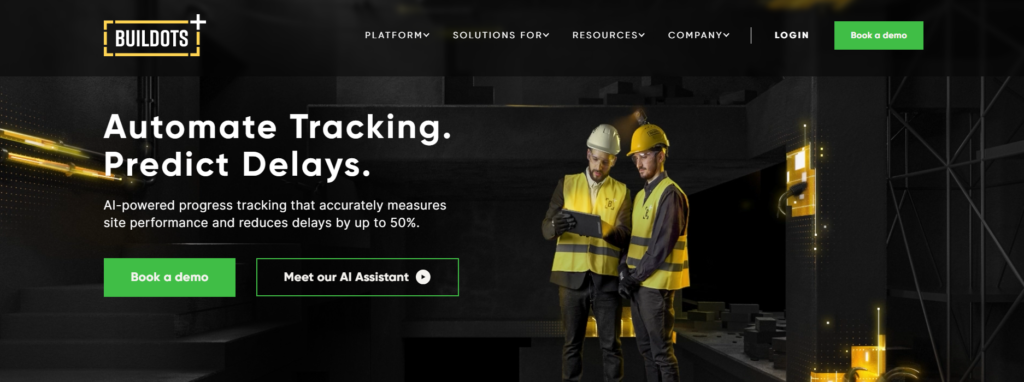
Buildots applies AI and computer vision to track physical site progress against BIM and plans. Its strength lies in automated progress verification and deviation detection.
It complements scheduling systems but does not replace integrated cost control and weekly planning intelligence.
Can be used in:
- Projects where accurate, real-time progress tracking is critical
- Reducing reliance on manual reporting
- BIM-driven environments
Limitations:
- Does not manage budgets or cost tracking
- Does not replace scheduling or planning systems
- Functions as a complementary layer, not a full PM solution
nPlan
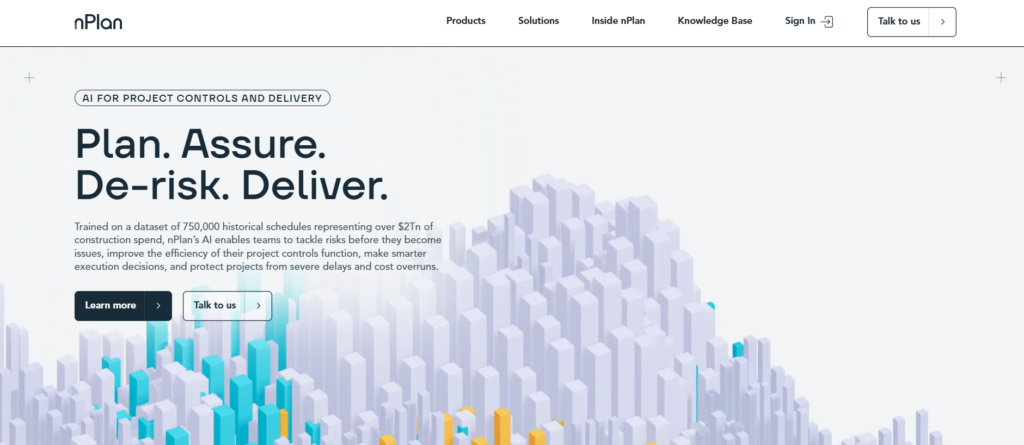
nPlan focuses on predictive schedule risk analysis. It analyzes historical schedule data to forecast delay probability and highlight high-risk activities.
It excels in modeling risk exposure but does not cover full project management workflow integration.
Can be used in:
- Planning phases and schedule validation
- Projects with complex timelines and high uncertainty
- Deeper risk visibility before execution
Limitations:
- Does not support daily project management workflows
- No cost tracking or field coordination features
- Analytical tool, not a full project management system
The Real ROI of AI in Construction Project Management
The return on AI construction project management software is operational, not theoretical.
It delivers:
- Earlier risk detection
- Reduced schedule drift
- Fewer surprise cost overruns
- Faster weekly planning cycles
- Stronger alignment between the field and the office
- Improved decision speed under pressure
The most valuable shift is timing. Problems detected earlier cost less to correct.
AI reduces the gap between signal and action.
When predictive scheduling, cost monitoring, structured field reporting, and risk prioritization operate together, project management transitions from reaction to controlled execution.

What makes AI construction project management software different from standard PM tools?
Standard tools record and display data. AI-enhanced systems analyze patterns, forecast risk, and recommend action to support proactive control.
Can AI predict construction delays accurately?
AI estimates delay probability using historical and live project data. It improves early detection but does not eliminate the need for professional judgement.
How does AI estimating software improve cost control during active construction?
Estimating AI improves preconstruction budgets. Execution-phase AI improves cost control by detecting burn rate deviations and projecting cost at completion during the build.
Is AI construction software suitable for small builders?
Yes. Smaller teams often benefit significantly because predictive alerts reduce administrative burden and protect limited margins.
Does AI replace construction project managers?
No. AI augments decision-making. Leadership, coordination, and contractual management remain human responsibilities.