What Is Commercial Construction? Definition, Scope, and Project Types


Commercial construction sounds straightforward until you actually work around it.
On paper, it usually gets reduced to a category of buildings. In practice, it is a much broader operating environment with more stakeholders, more regulation, tighter coordination, and a much higher cost of being wrong.
I look at commercial construction project management as the part of the industry where the building itself is only half the job. The other half is managing complexity. The schedule is more exposed. Procurement is less forgiving. Documentation matters more. A missed scope item or a weak handoff between trades tends to travel further and cost more than it would on a smaller residential project.
That is also why the term matters. If you are trying to understand how these projects are priced, scheduled, staffed, or managed, it helps to define the category properly before getting into methods or software.
Table of Contents
- Commercial Construction Explained in Plain Terms
- What Counts as a Commercial Construction Project?
- Commercial vs Residential vs Industrial Construction
- What The Commercial Construction Process Usually Involves
- Why Commercial Construction Is Harder to Estimate and Manage
- Safety and Compliance Are a Bigger Part of the Job
- Why the Definition Matters in Practice

Commercial Construction Explained in Plain Terms
At the industry-classification level, commercial construction usually sits inside the broader category of commercial and institutional building construction, which includes:
- New work
- Additions
- Alterations
- Repairs
- On-site assembly of prefabricated commercial and institutional buildings
The category covers structures such as office buildings, parking garages, arenas, prisons, schools, hospitals, and similar facilities.
That technical definition is useful, but it still feels a bit too clean, doesn’t it?
In day-to-day terms, commercial construction is the work involved in building or improving properties used for business, public service, education, healthcare, hospitality, retail, logistics, and similar non-residential functions. It usually involves larger teams, more formal procurement, more code and compliance pressure, and a stronger need for budget and schedule control across multiple trades.
Operational Characteristics of Commercial Construction
Commercial project management typically involve larger teams, more formal procurement processes, and significantly tighter compliance requirements. Builders must coordinate multiple trades while meeting strict code, accessibility, and safety standards.
Several patterns appear consistently across commercial work:
- Consultant-driven scopes and detailed specifications
- Stricter life-safety, accessibility, and regulatory requirements
- Multiple subcontractor packages requiring precise coordination
- Heavier documentation during construction and closeout
Because of this, commercial projects often feel heavier to manage even when the physical scope appears modest.
A relatively small medical office fit-out, for example, may demand more coordination than a much larger residential project. Mechanical, electrical, plumbing, fire protection, accessibility, and occupancy requirements all interact with the schedule and the estimate. When those systems overlap, sequencing becomes less forgiving and planning errors compound quickly.
Financial and Coordination Complexity
The same complexity appears on the financial side of commercial construction.
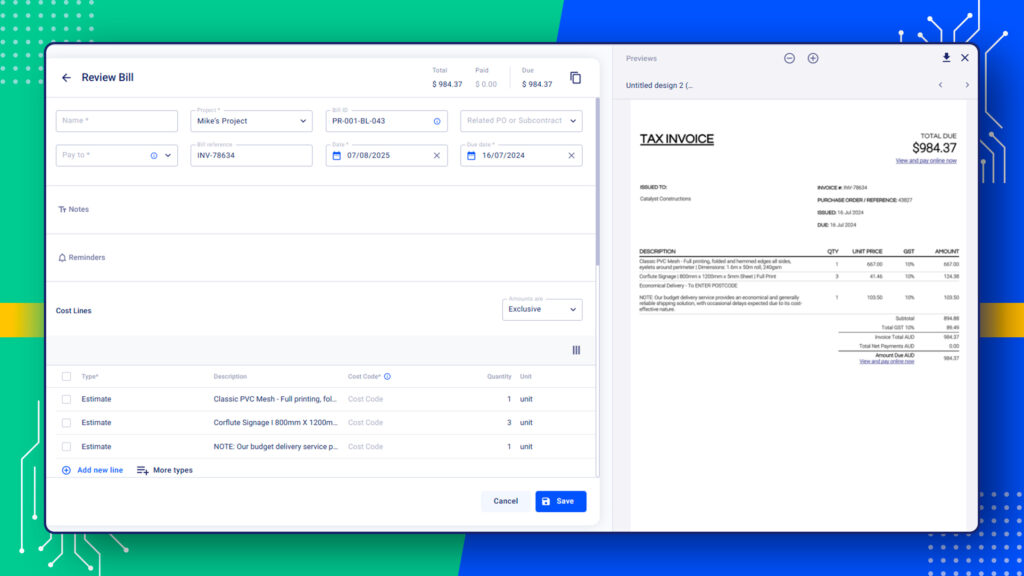
These projects usually involve more subcontractor contracts, more structured billing processes, and tighter tracking against committed and actual costs. When scope gaps appear, they rarely stay isolated because many trades depend on each other’s work.
Instead, small issues tend to cascade into broader project impacts, such as schedule drift, billing disputes, margin erosion, and so on.
For this reason, commercial construction is often defined less by the building type and more by what the project demands from the team managing it.
What Counts as a Commercial Construction Project?
The category is wide. It does not stop at office towers or shopping centres.
Typical commercial construction projects include but aren’t limited to:
- Office buildings
- Retail stores and shopping centres
- Restaurants and hotels
- Warehouses and distribution facilities
- Schools and universities
- Hospitals and clinics
- Parking structures
- Government and civic buildings
Some of these projects are private, some are public. Others are technically “institutional” rather than strictly commercial, but in practice, they are often grouped together because they share similar construction demands: formal planning, layered approvals, complex MEP coordination, larger subcontractor scopes, and tighter documentation requirements.
This matters because the term is often misunderstood. Commercial construction is not defined only by the size of the building. A relatively modest medical office project can behave like a highly complex commercial job, while a larger but simpler shell building may have fewer coordination risks. Use, complexity, and delivery structure matter as much as square footage.
Commercial vs Residential vs Industrial Construction
One practical way to understand commercial construction is to compare it with the two other major building categories: residential and industrial construction.
All three involve planning, coordination, and skilled trades. What changes is the type of building, the systems involved, and the level of operational complexity once the project begins.
Residential projects usually move with shorter decision chains. A homeowner, a builder, and a handful of subcontractors often handle most of the work.
Commercial projects introduce a much wider project team. Owners, architects, engineers, specialty consultants, lenders, inspectors, and multiple subcontractor trades may all be involved at the same time. As the number of stakeholders grows, coordination, documentation, and compliance requirements grow with it.
Industrial construction adds another layer of complexity because the building itself must support production processes, heavy equipment, and specialized infrastructure.
These differences affect how projects are planned and delivered.
Commercial construction, in particular, becomes far more documentation-driven and coordination-heavy than residential work. RFIs, submittals, revisions, approvals, and consultant coordination become central to keeping the project moving.
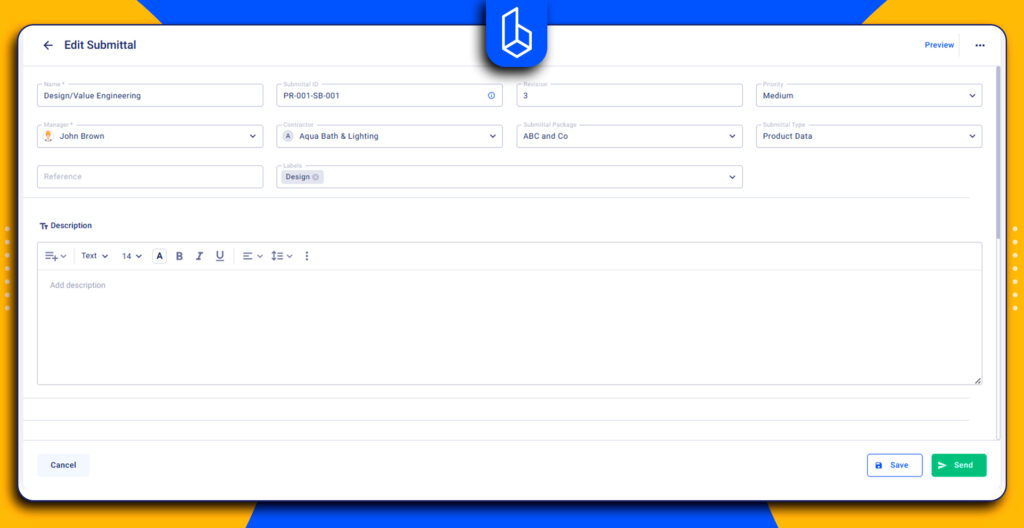
Because of that, commercial jobs leave little room for informal decision-making or disconnected tracking. Once the project reaches a certain size or technical complexity, the “we’ll sort it out on site” approach quickly turns into a schedule problem, a cost problem, or both.
How Large Is The Sector?
Commercial construction is not a niche slice of the market. It is a major part of overall construction activity.
According to the U.S. Census Bureau’s latest release covering December 2025, total U.S. construction spending ran at a seasonally adjusted annual rate of $2.1688 trillion, while private nonresidential construction alone ran at $730.9 billion.
That number matters for two reasons. First, it shows the sheer weight of the category. Second, it explains why the industry keeps investing in better estimating, scheduling, and cost-control systems. Once project volume reaches that scale, weak coordination stops being a local issue and becomes a structural one.
What The Commercial Construction Process Usually Involves
The basic phases are familiar, but commercial projects put more pressure on each one.
1. Preconstruction
This is where the job is defined, priced, clarified, and de-risked. Estimating, value engineering, site review, subcontractor scoping, and procurement planning all sit here. On commercial work, preconstruction is not a light front-end exercise. It is where teams either build clarity or store up problems for later.
2. Design Coordination
Even on projects with a complete design package, there is usually more coordination to do than the drawings suggest. Structural, architectural, and MEP scopes have to align in ways that affect procurement and sequencing directly. This is also where RFIs and submittal workflows start gaining momentum.
3. Procurement
Commercial procurement in construction is often more strategic than residential buying. Long-lead items, specialty systems, and vendor approvals can shape the schedule early. Poor procurement timing can quietly break a commercial schedule before site execution visibly slips.
4. Construction Execution
This is where sequencing pressure shows up. Trades stack on top of each other. Access constraints matter. Inspections affect downstream work. Field decisions have to stay aligned with cost, documents, and current revisions.
5. Closeout and Handover
Commercial closeout is typically more formal. Commissioning, punch work, inspections, turnover documents, warranties, and as-builts are all more structured, especially on institutional and regulated projects.
These phases are not unique to commercial work, but the level of coordination inside each one is.
Why Commercial Construction Is Harder to Estimate and Manage
Commercial projects break down when teams underestimate complexity. That usually shows up in three places first.
1. Scope Interpretation
Specifications are heavier, consultant packages are denser, and exclusions matter more. Small scope misunderstandings are harder to absorb because downstream trades are more tightly connected.
2. Scheduling
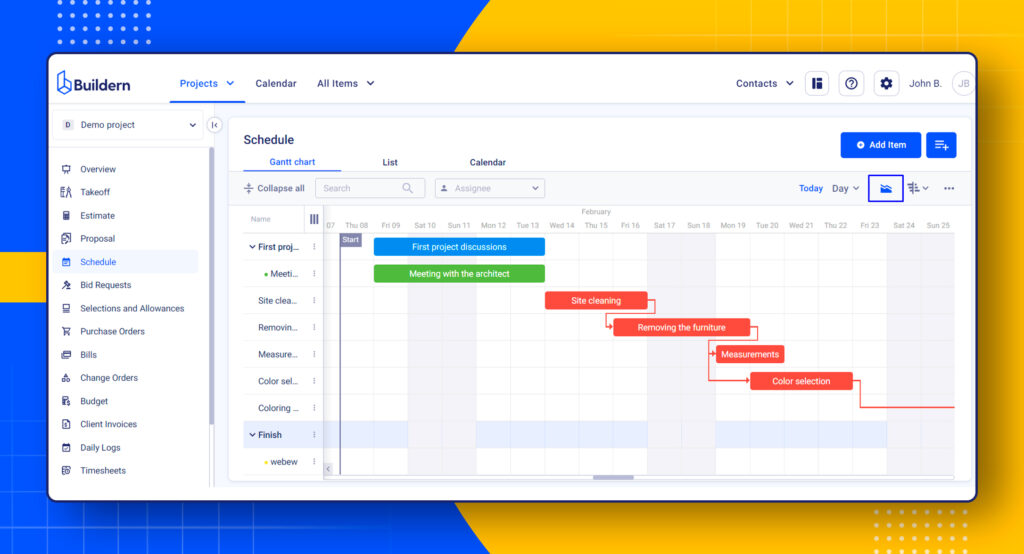
Commercial schedules are more exposed to dependency risk. One delayed approval or one late delivery can affect multiple trades. A static master schedule is not enough.
3. Cost Control
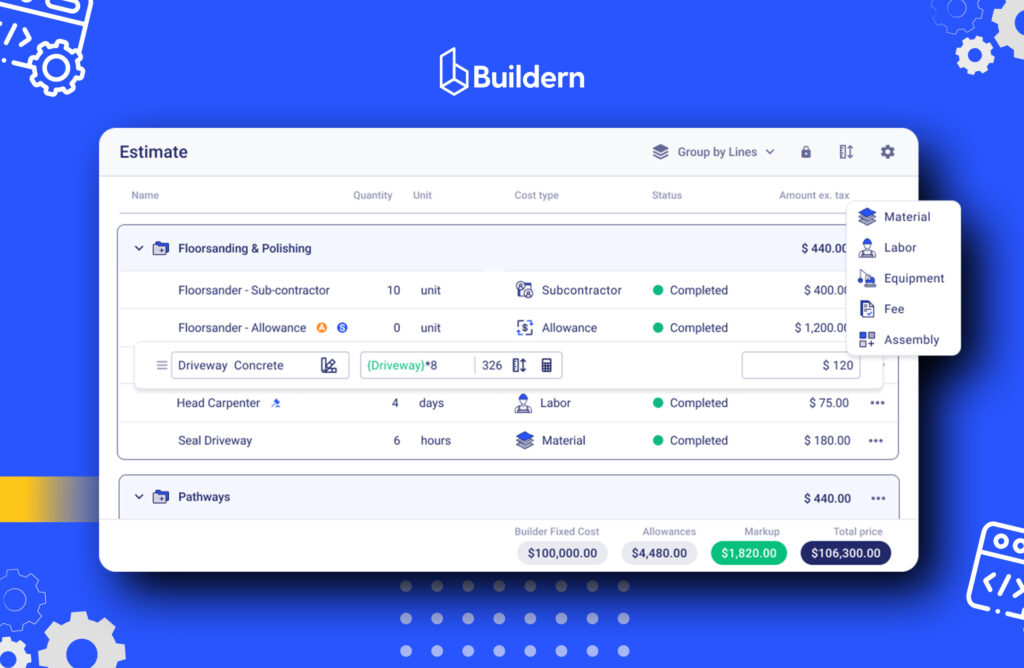
The problem is not usually a lack of reporting. It is delayed visibility. By the time overruns appear clearly in a monthly report, the job has often already absorbed the damage. Commercial projects need cost control tied to execution, not finance viewed in isolation.
That is one reason commercial software solutions matter more here.
When estimating, scheduling, budget management, and field updates live in separate places, project control becomes reactive very quickly.
Safety and Compliance Are a Bigger Part of the Job
Construction in general is a high-hazard industry, and OSHA describes it as involving a wide range of construction, alteration, and repair activities that expose workers to serious risks such as falls, electrocution, heavy equipment incidents, silica dust, and asbestos.
Commercial projects tend to increase that pressure because they often involve:
- More workers on site at the same time
- Extra equipment and logistics movement
- More formal inspection requirements
- Active coordination between active scopes
- Liability tied to public or institutional use
This is another reason commercial construction should not be viewed simply as “bigger building work.” The compliance burden is heavier, and the consequences of poor coordination are broader.
Why the Definition Matters in Practice
A lot of people ask what commercial construction is because they want a category label. That is fine, but the more useful question is what the category implies.
If a project is commercial, it usually implies:
- More formal bidding and procurement
- More technical estimating
- Heavier document control
- Stronger dependence on subcontractor coordination
- Greater need for schedule discipline
- Tighter cost management during execution
That’s my honest takeaway.
Final Thoughts
Commercial construction is the part of the industry where planning quality gets tested hardest. The buildings are more complex, the workflows are less forgiving, and the cost of fragmented execution is higher.
At the definition level, commercial construction covers the construction, alteration, repair, and expansion of commercial and institutional buildings. That is the official side of it. In practice, though, it is better understood as a delivery model shaped by complexity, coordination, and control.
That is why good commercial teams focus so heavily on estimating structure, schedule continuity, document control, and cost visibility. On these jobs, success usually does not depend on one dramatic decision. It depends on whether the project was set up to handle pressure before pressure arrives.