Over the years, I’ve seen how construction projects win or lose before the first crew even steps on site. It always comes down to estimating. The accuracy of every quantity, markup, and material cost determines whether a project stays profitable or slips into the red.
By 2026, estimating will have become more demanding than ever. Material prices keep changing, labor costs fluctuate, and clients expect tighter budgets. Working from spreadsheets or outdated tools is no longer enough to stay competitive. Builders need systems that deliver real-time data, automation, and financial clarity.
I tested and reviewed the leading construction estimating software tools available in 2026 to see which ones actually help builders protect their margins.
Consequently, each platform was evaluated for accuracy, automation, integration, scalability, and feedback from real users. My goal is simple: to identify which estimating tools truly improve profitability and performance on every project.
When I test estimating tools, I look for more than how quickly they generate numbers. A great estimating platform builds confidence in every decision you make. It helps you move from rough projections to precise, data-backed figures that protect your margins from the very beginning.
From my experience, the estimating software should do the following five things exceptionally well:
Ensure accuracy: It gives builders confidence that every material, labor, and markup value reflects current market conditions.
Automate repetitive work: Instead of spending hours adjusting spreadsheets, you can reuse templates and cost catalogs that update automatically.
Connect to accounting systems: Integration with QuickBooks or Xero prevents double entry and keeps estimates aligned with real financial data.
Simplifie collaboration: Team members can review, adjust, and approve estimates from one platform, eliminating version confusion.
Scale with growth: As projects and teams expand, the same system should handle multiple users, projects, and divisions without performance issues.
In short, estimating software should make your numbers as dependable as your craftsmanship. It is not just about faster calculations; it is about gaining the clarity and control needed to deliver consistent profitability.
My Evaluation Criteria for Construction Estimating Software
When I started reviewing this year’s top estimating tools, my goal was simple: find out which platforms actually help builders improve accuracy, reduce errors, and save time without overcomplicating the process.
I tested each system using the same project data set and looked at how easily the software handled item libraries, cost updates, integrations, and reporting. I also spoke with builders using these tools daily to see how they perform under real conditions, not just in product demos.
During testing, I focused on:
Estimating Accuracy: Precision of calculations, cost update reliability, and error prevention mechanisms
Automation Depth: Quantity takeoffs, template reuse, and reduction of manual data entry
Integration Strength: Seamless connection with accounting, job management, and reporting systems
Item Library Management: Flexibility, speed of updates, and material cost control
Reporting Clarity: Transparency of outputs and ease of client-ready documentation
Real-World Usability: Feedback from builders using the tools in active projects
The results below reflect how each platform performed across these areas, with emphasis on practical return on investment rather than feature volume.
Buildern: Accuracy and Financial Visibility
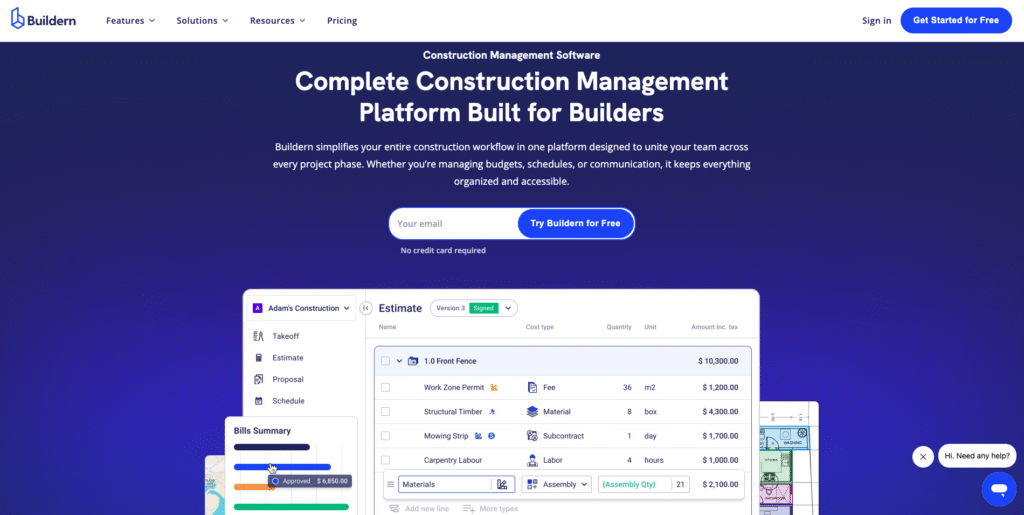
Buildern connects estimating with every other stage of a project’s financial workflow. Once an estimate is approved, it turns into a live budget that updates automatically as bills, purchase orders, or timesheets are added. Its connection eliminates the risk of numbers drifting apart between estimating and actual costs.
Key strengths:
Cost Catalog with reusable templates and markup formulas
Seamless conversion from estimates to budgets
Cost to Complete forecasting for ongoing financial control
Direct integration with QuickBooks and Xero
Client-ready quotes and professional proposals
Real user feedback:
“ Helps create accurate and detailed estimates has never been easier. Buildern estimating tool allows you to generate precise quotes quickly, with customizable templates that adapt to various project types. The integration of material and labor costs ensures that your estimates are always up-to-date, reducing the risk of unexpected expenses and improving your accuracy ”.
Verdict: Buildern delivers a full-picture view of profitability, making it ideal for builders who want precise estimates linked directly to project performance.
Buildxact: Fast and Easy for Smaller Teams
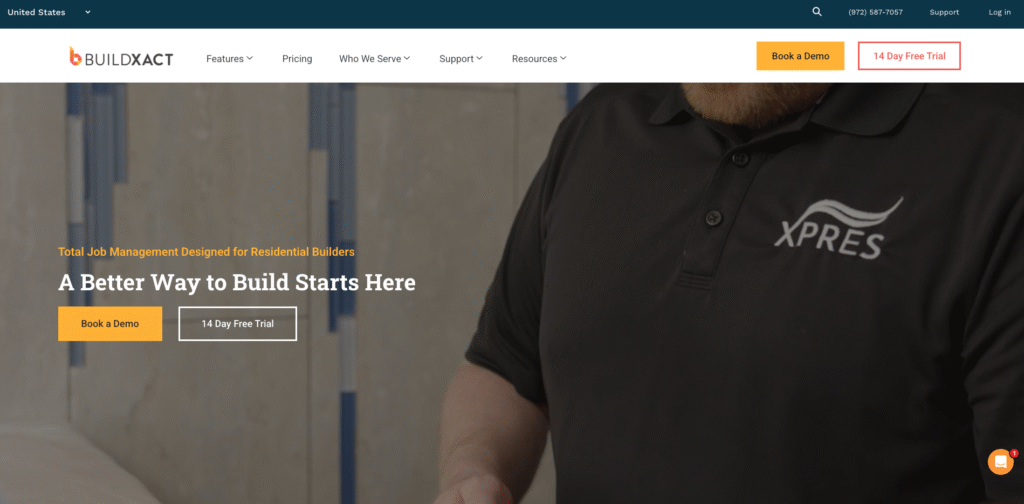
Buildxact has earned a reputation for being straightforward and practical. It is cloud-based, quick to learn, and ideal for builders who want to move from spreadsheets to a simple estimating tool. The platform connects with supplier price lists, allowing users to import live pricing and keep estimates accurate without extra data entry.
Pros:
Drag-and-drop takeoff tool
Supplier pricing imports
Templates for common project types.
Limitations:
Basic reporting and forecasting tools
Limited scalability for larger or complex projects
Mobile experience could be improved.
Real user feedback:
“ While it meets the majority of the requirements for minor construction projects, it has limits when dealing with larger, more complex projects. The reporting features could be more extensive, and I believe the mobile app experience should be enhanced for better on-site administration ”.
Verdict: Buildxact is a dependable entry-level solution for small builders and renovators who need a simple yet capable estimating tool. It covers the core essentials of estimating with speed and accuracy, though larger companies may eventually require software with stronger automation, deeper reporting, and advanced financial management features.
Buildertrend: Client-Friendly but Limited in Cost Control
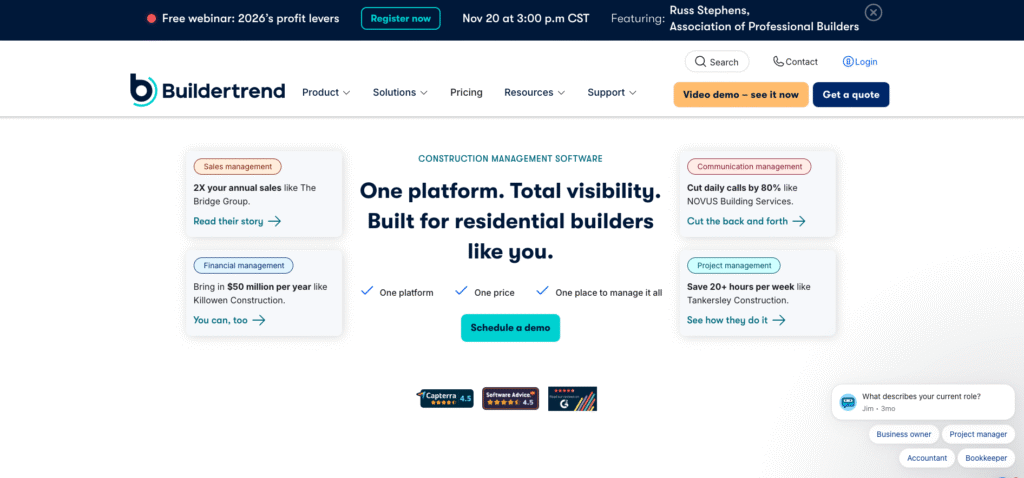
Buildertrend brings estimating and client communication together in one system. It lets builders prepare proposals, manage client selections, and track approvals from a single dashboard. For design-build companies, its setup creates a smoother client experience and keeps communication organized throughout the project.
Pros:
Smooth proposal and estimate creation
Client selections and approvals managed in one place
Integrates with scheduling and communication tools.
Limitations:
Limited cost reporting and forecasting depth
Cost-code setup lacks flexibility for complex jobs
Some advanced estimating and takeoff tools are available only in higher-tier plans
Setup and data entry can take time to configure properly
Pricing increases quickly with added modules and users, which can reduce ROI for smaller teams
Real User Feedback:
“ I have been using it for a couple of weeks and having come from various construction software systems I am finding Buildertrend really poor. It feels like there has been some effort put towards the look and feel but functionally it just feels like everything is a workaround. the financial module is too far behind the functionality of a QuickBooks or Xero so it makes using it for processing really poor. We are looking for alternatives ”.
Verdict: Buildertrend is a good choice for companies that value strong client interaction and project visibility. However, builders who need detailed cost forecasting, deeper reporting, or flexible financial workflows may find its estimating tools restrictive over time.
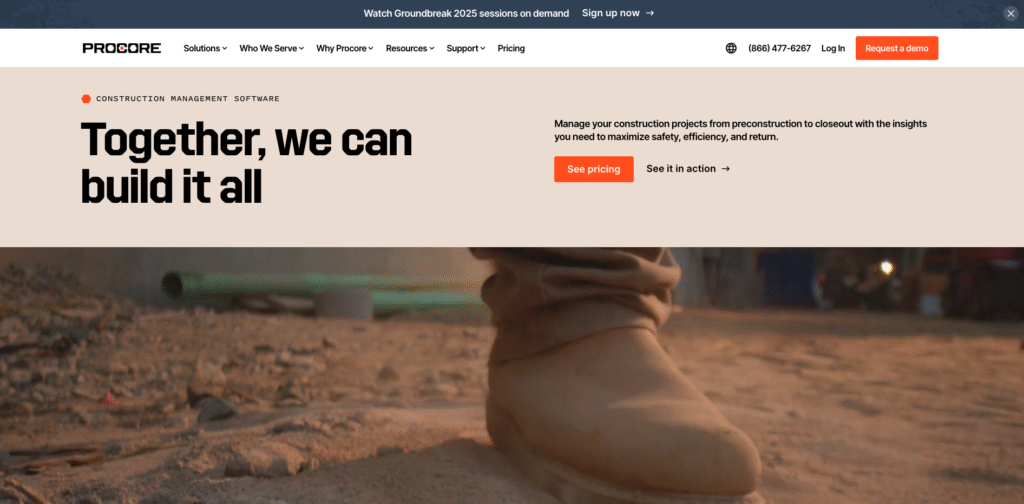
Procore: Good but Complex for Everyday Estimating
Procore is built for large construction firms that manage extensive project portfolios and detailed financial workflows. Its estimating tools are part of a broader system designed to control costs, track performance, and centralize data across multiple departments.
While the platform offers reporting and integration capabilities, it often feels too heavy for day-to-day estimating tasks.
Pros:
Detailed financial tracking and multi-project control
Wide integration options with accounting and ERP tools
Customizable permissions for large teams.
Limitations:
High subscription cost and additional fees for advanced modules
Long onboarding and training requirements
Interface can be overwhelming for smaller teams
Estimating features are less intuitive compared to specialized tools.
Real User Feedback:
“ It was truly awful. Their salespeople make you think you’re making the best decision possible. The second they have your money, the whole dynamic changes and you’re on your own. Good luck calling their technical support line. If they answer, you’ll get a person who likely has never even used Procore. Procore failed at every single level ”.
Verdict: Procore suits enterprise contractors who need deep financial oversight and compliance controls. For builders looking mainly for fast and flexible estimating, the system may feel complex and costly compared to more focused estimating platforms.
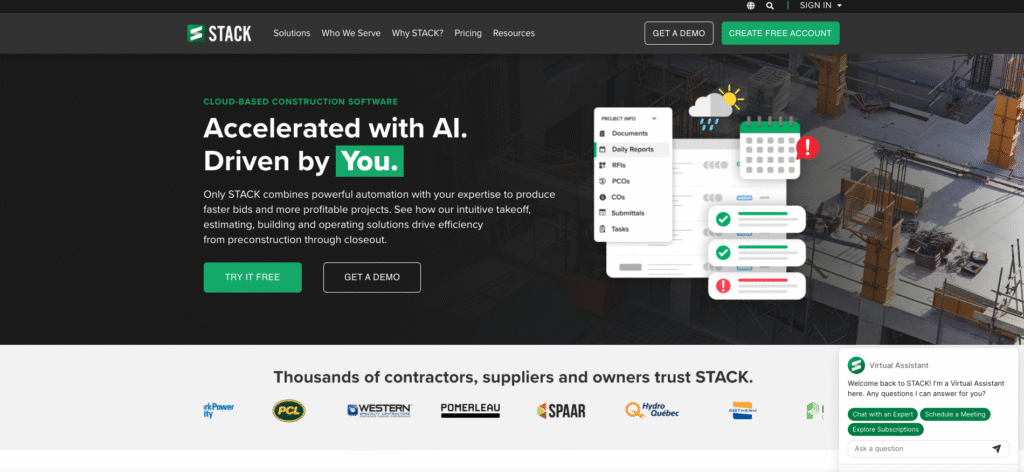
StackCT: Takeoffs for Digital Plans
StackCT focuses on cloud-based takeoffs and quantity estimating. It is popular among subcontractors and builders who work directly with digital plans and need precise material measurements. The platform allows users to perform takeoffs quickly and collaborate with team members in real time.
Pros:
Accurate cloud-based takeoff tools
Real-time team collaboration
Easy to use for plan-based estimating.
Limitations:
Limited budgeting and financial reporting features, so builders still need another platform for cost tracking and forecasting
No native accounting integration, which means estimates must be manually transferred into financial systems
Designed primarily for subcontractors, making it less suitable for general contractors managing multiple cost categories.
Verdict: StackCT is ideal for teams that focus heavily on takeoffs and need accurate measurements from drawings. It performs best as part of a larger estimating or project management workflow rather than as a standalone financial solution.
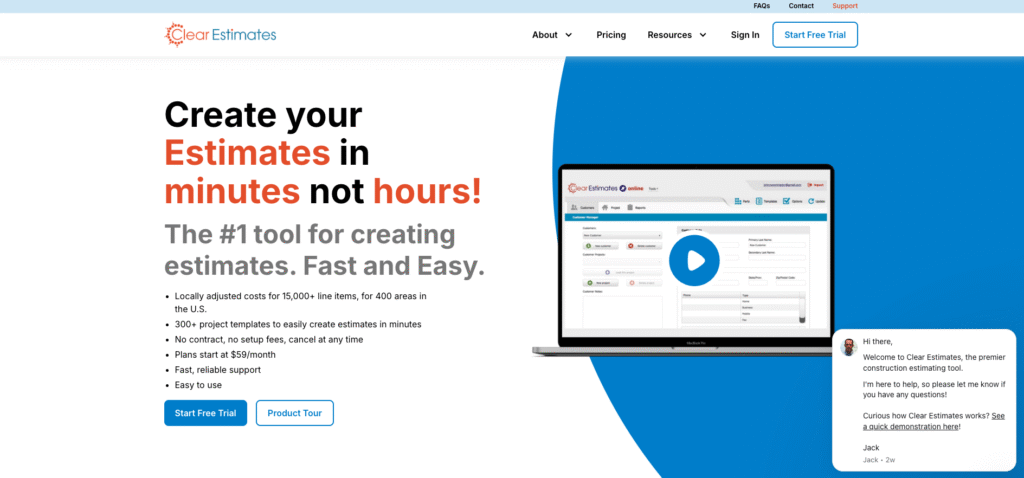
Clear Estimates: Simple Residential Estimating
Clear Estimates is designed for small builders, contractors, and remodelers who need quick, professional quotes. It includes prebuilt templates and a cost database with updated residential construction prices, which makes it easy to prepare accurate proposals without advanced technical skills.
Pros:
Quick setup and straightforward interface
Preloaded cost data for common residential work
Ready-made templates for repeat project types.
Limitations:
The cost database can feel too generic for custom or complex projects and often requires manual adjustments
No direct integration with accounting platforms, which limits automation for invoicing or budget tracking
Reporting capabilities are minimal and better suited for small, one-off projects than ongoing portfolio management
Collaboration tools are limited, so multiple estimators cannot easily work on the same project.
Verdict: Clear Estimates works for small builders or remodelers who want to produce clean, client-ready quotes without needing a full estimating or accounting system. It is reliable for quick pricing but lacks the scalability needed by larger construction companies.
Closing Summary
Accurate estimating has become one of the most important factors in maintaining profitability across every construction project. In 2026, the tools builders rely on must do more than calculate numbers. They need to provide a clear view of costs, improve collaboration between teams, and connect estimating with budgeting and reporting for complete financial visibility.
The difference between success and lost profit often comes down to how reliable the estimating process is. Builders who invest in structured, data-driven systems can plan confidently, manage resources effectively, and make faster decisions when prices or schedules change.
Ultimately, choosing the right estimating solution should be about fit. The best tool is the one that aligns with your business size, workflow, and goals while giving you control over both time and cost.
When estimating becomes accurate, consistent, and transparent, every other part of a construction project benefits from that stability.
A common estimator’s dilemma is how to balance between accurate estimating for winning a project and a healthy profit margin. From my experience, a correctly calculated cost estimate that fully meets the interests of a general contractor is the backbone of a construction project. Mistakes at this stage are risky as they will have a […]
It usually happens that the general contractor’s workflow outgrows his expectations. The tools used for a constantly growing construction management workflow can change as well. In this case, it’s logical for you to start searching for a new tool to meet your extra needs. If you’re navigating construction project management with BuildBook and find it’s […]
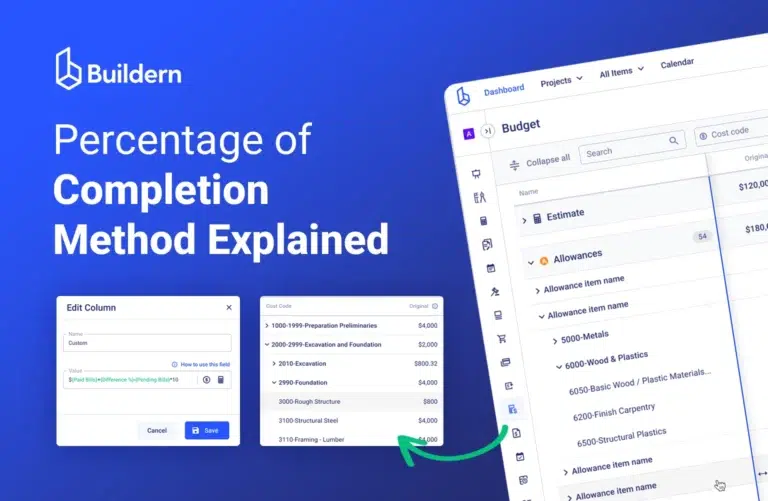
I have never liked financial reports that tell the truth too late. Construction projects run for months, sometimes years. If revenue were recorded only when the job finishes, the numbers in between would be distorted. One quarter would look weak, the next would look inflated, and neither would reflect what was actually happening on the […]