Builder’s Risk Insurance vs Construction Risk Insurance: What Each Actually Covers


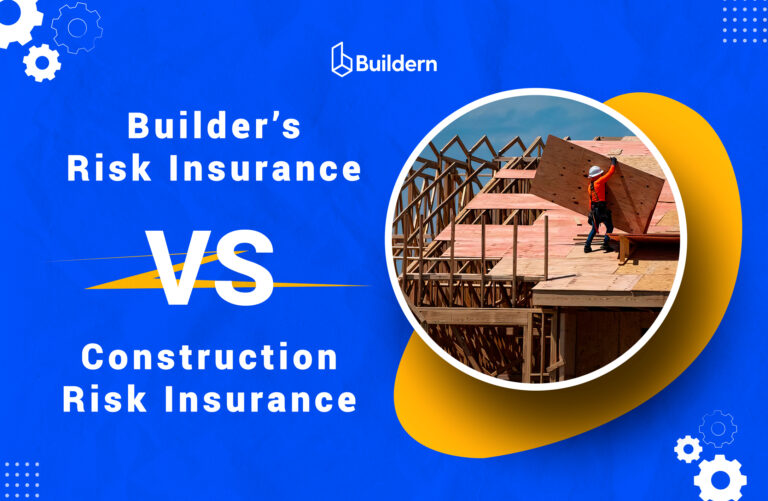
A fire breaks out, or a tree falls on a newly built roof. These are common construction risks that any project can face.
Construction projects are exposed to risk from day one. Weather damage, material theft, site accidents, and unexpected delays quickly affect the financial flow without proper insurance coverage.
One of the most common pain points is understanding which construction insurance policy actually applies.
In this article, I will break down clearly what builder’s risk insurance and construction risk insurance are. You’ll learn the key differences between builder’s risk insurance and construction risk insurance, and what each policy covers and excludes.
Table of Contents
- Builder’s Risk Insurance?
- Builder’s Risk Insurance Coverage
- Construction Risk Insurance
- Construction Risk Coverage
- Choosing the Right Coverage for Your Project
- How to Reduce Risks Beyond Insurance
- Summing Up Key Differences

What Is Builder’s Risk Insurance?

It is a type of property insurance designed specifically for buildings that are under construction or major renovation. It protects the physical structure of a project while it is being built, along with materials and equipment on-site.
Simply put, it covers what you are building before the project is complete. Coverage usually starts when construction begins and ends once the project is completed or occupied.
Example: You’re building a residential home. Halfway through the project the framing and roofing materials stored on-site are damaged by fire. Without builder’s risk insurance, the cost to replace those materials would come directly out of pocket. With builder’s risk insurance, those losses are typically covered, helping the project stay financially on track.
Who Needs Builder’s Risk Insurance?
- Property owners or developers
- General contractors
- Home builders
- Commercial construction firms
- Anyone financially responsible for a construction project
While builder’s risk insurance does not cover worker injuries or design errors, it plays a critical role in protecting a project from unexpected physical damage.
Builder’s Risk Insurance Coverage
Builder’s risk primarily covers the physical structure under construction, as well as materials, equipment, and temporary structures associated with the project.
It mainly covers:
- Buildings under construction or renovation: from the foundation to the finishing touches.
- Materials and supplies on-site, including fixtures, roofing, and framing materials.
- Temporary structures, such as scaffolding, fencing, or site offices.
- Materials in transit or temporarily stored off-site, while being delivered to the construction site
- Covered causes of loss: fire, theft, vandalism, lightning, windstorm, and sometimes water damage from burst pipes or accidental leaks.
Exceptions
While builder’s risk insurance provides strong protection for physical losses, it does not cover every type of risk:
- Normal wear and tear, gradual deterioration of materials, is excluded
- Contractor negligence, intentional or reckless acts by the contractor, are not covered.
- Delays and financial losses not caused by physical damage, such as project delays or lost revenue.
In short, builder’s risk insurance is excellent for protecting your investment in a project from unexpected damage. However, it is not a substitute for general liability, professional liability, or workers’ compensation coverage, which protect against other important risks in construction.
| Category | Covered ✅ | Not Covered ❌ |
| Common danger | Fire, lightning, hail, explosions, vandalism | Earthquakes, floods, mudslides |
| Physical Assets | The structure under construction, foundations, and installed fixtures (HVAC, plumbing, electrical) | Land, trees, landscaping, and existing structures are not part of the project |
| Materials | Supplies and materials on-site | Construction vehicles (trucks, vans) and heavy equipment (cranes, backhoes) |
| Theft | Theft committed by outside third parties | Employee theft |

Construction Risk Insurance
Construction risk insurance is a broader term used to describe insurance coverage that protects construction projects against multiple types of risk, not just property damage.
Unlike builder’s risk insurance, which focuses on the structure itself, construction risk insurance often includes liability-related coverage, such as general liability insurance.
Simply put, it protects construction businesses from claims and losses that occur because of construction activities, rather than damage to the building itself.
Coverage typically applies throughout the active construction phase and may continue even after project completion, depending on the policy.
Example: You’re managing a construction site when a visitor trips over debris and suffers an injury. The injured party files a claim for medical expenses and damages. Without construction risk or general liability insurance, the contractor would be responsible for these costs out of pocket. With proper coverage, the policy can help cover legal fees, medical expenses, and settlements.
Who Needs General Liability Insurance?
- General contractors
- Subcontractors
- Construction firms of all sizes
- Independent trades and specialty contractors
- Anyone performing physical work on a construction site
Construction Risk Insurance Coverage
Construction risk insurance typically covers bodily injury to third parties, such as clients, site visitors, or pedestrians who may be injured on or near the job site. It also covers damage to third-party property, including neighboring buildings, vehicles, or utilities affected by construction work.
In addition, the policy often includes coverage for legal defense costs and court judgments resulting from covered claims. Thus, it’s a part of a broader construction risk management strategy, helping contractors avoid financial losses when incidents occur.
This type of insurance also protects against accidents caused by routine construction operations, such as falling tools, debris, or equipment-related incidents. In many cases, it applies across multiple projects rather than a single job site.
| Category | Covered ✅ | Not Covered ❌ |
| Bodily Injury | Medical bills and legal fees if a non-employee (client, visitor) is injured on site. | Employee injuries (covered by Workers’ Compensation). |
| Property Damage | Accidental damage caused by you or your crew to a client’s or neighbor’s property. | Your own tools, vehicles, or the actual materials you are installing. |
| Completed Operations | Damage that occurs after the job is done (e.g., a pipe bursts a month later). | The policy doesn’t cover the faulty work itself, only the damage it causes, not the cost to fix or replace it. |
| Legal Defense | Attorney fees, court costs, and settlements for covered claims. | Fines resulting from criminal acts. |
Choosing the Right Coverage for Your Project
Selecting the right insurance coverage depends on the type of project, who is managing it, and any contractual or lender requirements.
For example, for small residential projects, builder’s risk insurance may be sufficient for protecting the physical structure, especially if the project is straightforward and short-term. General liability is still recommended to cover any third-party injuries or property damage.
Meanwhile, large commercial projects require a combination of builder’s risk, construction risk, and possibly other liability coverages. The reason is that large projects have higher risks and more stakeholders.
Besides, insurance requirements are not universal. They vary significantly depending on the country, state, or province where the work is being performed. These regulations depend on local safety laws, the scope, and the type of the project.
For example, Florida requires general liability insurance for licensed contractors to get permits and work on projects, protecting clients and the public.
How to Reduce Risks Beyond Insurance

Insurance is one of the necessary financial management tools, but it shouldn’t be your only line of defense. Many construction risks can be avoided altogether through smart project management and clear documentation.
Let’s see how to plan and manage risks wisely.
Clear Material Management and Change Orders
Untracked materials and undocumented changes often lead to cost overruns and conflicts. Keeping accurate records of material deliveries, usage, and approved change orders helps prevent misunderstandings and protects project margins.
Accurate Documentation Flow and Risk Management
Clear documentation is one of the most effective ways to reduce risk. Contracts, drawings, approvals, and daily reports should be stored in one platform so as not to lose or miss any important details.
This documentation is critical when resolving disputes, handling claims, or proving compliance with contract terms.
Strict Safety Protocols and Training
Insurance covers the cost of an accident, but a consistent safety strategy prevents the accident from occurring in the first place. It starts from addressing specific site hazards and ends with strict PPE compliance for all workers and visitors.
Do not ignore training and proactive hazard identification, and you will decrease the likelihood of costly claims.
Consistent Communication Across Teams
Many risks come from miscommunication. Regular updates, shared access to project information through subs and vendors portals, and clear task management help ensure everyone is informed and responsible for the actions.
Summing Up Key Differences
Both types of insurance protect construction projects, but they cover different risks.
First of all, the scope of coverage differs. Builder’s risk insurance focuses on the physical structure under construction, including materials, equipment, and temporary structures. Meanwhile, construction risk insurance covers the third-party claims arising from construction activities, such as bodily injury or property damage caused to clients, visitors, or neighboring properties.
They also have different timings and durations. In the case of builder’s insurance coverage usually begins when construction starts and ends when the project is completed or occupied. In the other case, coverage often continues during and after construction, including for completed operations.
While builder’s risk insurance protects your investment in the project itself, general liability protects the business from financial losses due to claims by others.
What Does Building Insurance on Risk Mean?
Building insurance on risk means insurance coverage that applies while a building is under construction or renovation. It protects the structure, materials, and equipment on-site.
How Much Does Builder’s Risk Insurance Cost?
The cost may vary, but a typical builder’s risk insurance is between 1% and 5% of the total cost of the construction project. The cost depends on project value, location (flood/fire zones), construction type, and duration.
How Much is Construction Insurance?
The cost of construction insurance depends on the type of coverage, the size of the business, and the level of risk involved. For general liability insurance, construction businesses typically pay anywhere from $500 to $3,000 per year for small contractors.
How to Handle Construction Site Insurance?
Ensure you have the right coverage for the project, including builder’s risk, general liability, and workers’ compensation. Keep accurate records, document site activity, and review policies regularly to avoid gaps.