Quote vs Estimate in Construction: What Builders Need to Know Before Pricing a Job


I have seen too many pricing mistakes start with a language problem that looked harmless at first.
A lot of builders use “quote” and “estimate” interchangeably. I understand why. In day-to-day conversations, the difference can feel minor. In actual project delivery, it is not minor at all. It changes how you price, how you communicate risk, how you document scope, and how well you protect your business when the job starts moving.
This is not a terminology issue for the sake of terminology, but more an operational control issue.
- If you treat an early-stage construction estimate like a fixed quote, you carry risk too early.
- If you present a quote as if it were flexible, you create confusion before the contract is even signed.
Builders who handle that distinction clearly usually price with more discipline and deal with fewer downstream disputes.
So, let’s clarify this together.
Table of Contents
- What Is an Estimate in Construction?
- What Is a Quote in Construction?
- Quote vs Estimate: Side-by-Side Comparison
- When to Use a Quote vs Estimate
- How Estimates Turn Into Quotes (Real Workflow)
- The Risk Factor: Why Confusing Quotes and Estimates Costs You Money
- How Builders Structure Pricing to Stay Profitable

What Is an Estimate in Construction?
No doubt you know the answer.
An estimate in construction is a projected cost of a project based on current drawings, specifications, and assumptions at a given stage. It breaks down expected costs across labor, materials, equipment, and other costs to guide budgeting and decision-making, but it is not a fixed or binding price.
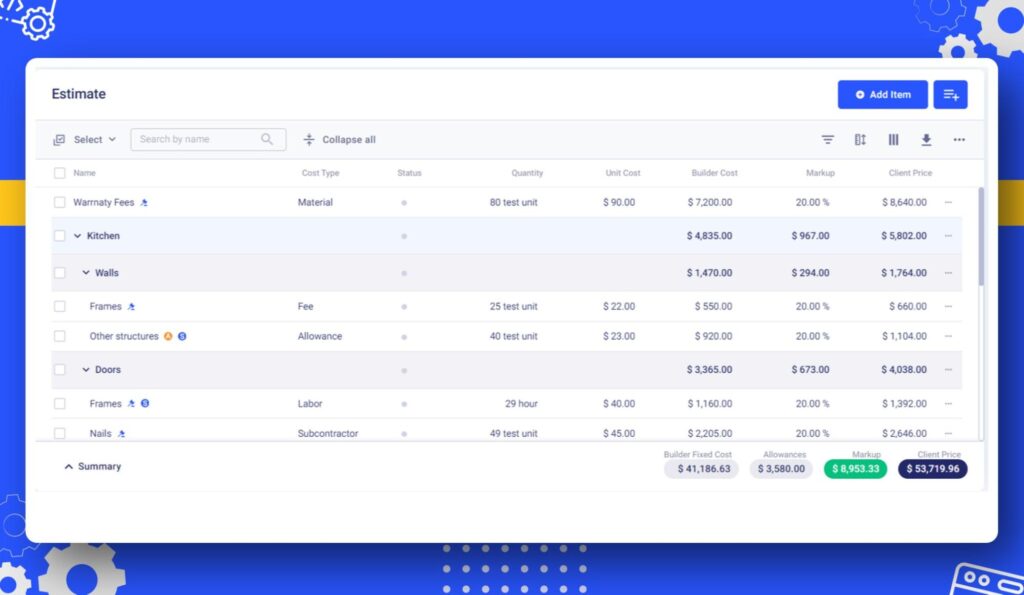
It gives direction, not final certainty.
We build estimates when:
- Drawings are incomplete
- Selections are still open
- Site details are still being confirmed
- The client is still exploring budget options
That is why estimates are flexible by design. They are supposed to move as information improves and help guide decisions during planning, feasibility, and value engineering. Yet, they are not meant to lock the builder into a final delivery price before the job is clearly defined.
Construction estimating, in general, creates a starting point for refining the job into a tighter number.
That last point matters. A good estimate is not casual just because it is flexible. It still needs structure, scope logic, quantity thinking, and cost discipline. The difference is that it accepts uncertainty instead of pretending uncertainty is gone.
What Is a Quote in Construction?
A quote is different because it carries commitment.
Where an estimate is designed to stay flexible, a quote is meant to present a defined price for a defined scope. In practical terms, it tells the client, “If this is the work, this is the price we are prepared to stand behind,” subject to whatever conditions are clearly stated.
Construction quote guidance generally treats a quote as a formal client-facing pricing document tied to a specific scope of work, assumptions, and cost breakdown.
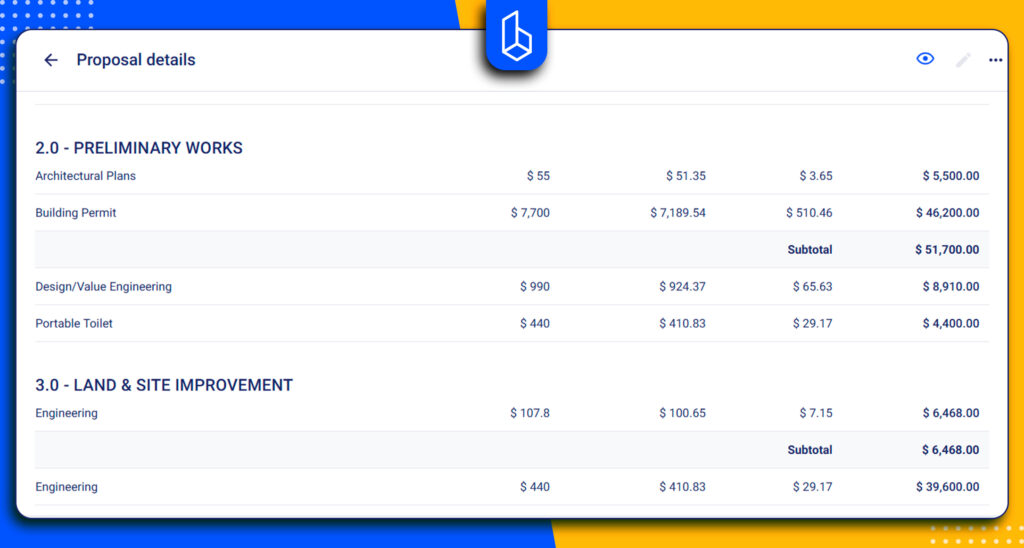
A quote is usually built when:
- Drawings are substantially complete
- Scope and specifications are clear
- Subcontractor pricing has been checked
- Procurement assumptions are credible
- The builder is close to the contract or agreement stage
That is why quotes are often fixed or semi-fixed. The builder is no longer just helping the client explore options. The builder is turning refined project information into a price commitment.
A useful way to think about it is this:
- An estimate helps the client think.
- A quote helps the client decide.
This is also why quotes are usually tied more closely to agreements, letters of intent, or contracts. The builder is not just giving a number. The builder is defining commercial terms around a price.
Estimate, Quote, Bid, Proposal: Clearing the Confusion
These terms overlap in conversation, but they are not the same. The cleanest way to separate them is by purpose.
- Estimate is an internal or early-stage number used to guide planning and budget alignment
- Quote is a client-facing price tied to a defined scope
- Bid is a competitive submission, often in response to a tender or formal request
- Proposal is the full package, usually including scope, terms, exclusions, assumptions, and pricing
The distinction matters because each one carries a different level of obligation. Builders get into trouble when they use one format but behave as if they issued another.
Quote vs Estimate: Side-by-Side Comparison
The difference becomes clearer when you compare them directly.
An estimate gives the builder room to refine. A quote reduces that room because the expectation has changed. The client is no longer hearing “this is where the project may land.” They are hearing “this is what the work will cost.”
That means the estimate stage should absorb uncertainty, while the quote stage should isolate and manage it. Builders who skip the following shift usually end up carrying client-side uncertainty inside contractor-side pricing.
When to Use a Quote vs Estimate
The right format depends less on what the client asks for and more on what the project can actually support at that moment.
Early Planning and Client Exploration → Use Estimates
This is the right stage for estimates because the project is still moving.
Typical cases include feasibility discussions, early budget alignment, concept design review, client option comparisons, and so on. At this stage, the builder often knows enough to structure a sensible cost model, but not enough to stand behind a final committed number.
That is completely normal.
In fact, early-stage estimating is useful precisely because it helps narrow the conversation. It gives the client information about the budget, scope, and changes if there are any.
Trying to force a quote too early usually creates artificial certainty. That feels helpful in the short term, but it often causes more damage later.
Defined Scope and Ready-to-Build → Use Quotes
Quotes make sense when the job is mature enough to price with control.
That usually means:
- Final drawings or close to final drawings are available
- Specifications are substantially defined
- Subcontractor pricing is confirmed or nearly confirmed
- Key procurement assumptions are known
- There is a realistic path from price to contract
At this point, the builder should be able to issue a number that reflects the actual delivery intent, not just a planning approximation.
This is where many builders tighten scope language, confirm inclusions, add allowances where required, and define exclusions clearly. The quote becomes a commercial control document, not just a pricing sheet.
Hybrid Situations (Where Most Projects Actually Sit)
Most jobs do not move neatly from vague concept to perfectly defined scope. They sit somewhere in between.
That is why hybrid pricing situations are common.
Examples include partial drawings with incomplete details, provisional sums for uncertain work, allowances for finishes or owner-supplied items, and quotes issued with explicit conditions attached.
This is where pricing discipline matters most. The builder may still issue a quote, but only with clearly stated conditions around uncertainty.
Hybrid pricing is often the most realistic way to move a project forward. The mistake is not in using it. The mistake is using it without naming it clearly.
How Estimates Turn Into Quotes (Real Workflow)
A lot of builders lose control without realizing it at this stage. The transition from estimate to quote is where many small, soft assumptions either get cleaned up or get buried.
In my experience, a practical workflow usually looks like this:
1. Initial Estimate Created from Takeoff or Rough Inputs
The builder starts with the available information. That may be rough drawings, preliminary takeoffs, benchmarked costs, or early trade assumptions.
At this point, the goal is not precision for its own sake. The goal is to create a usable pricing frame.
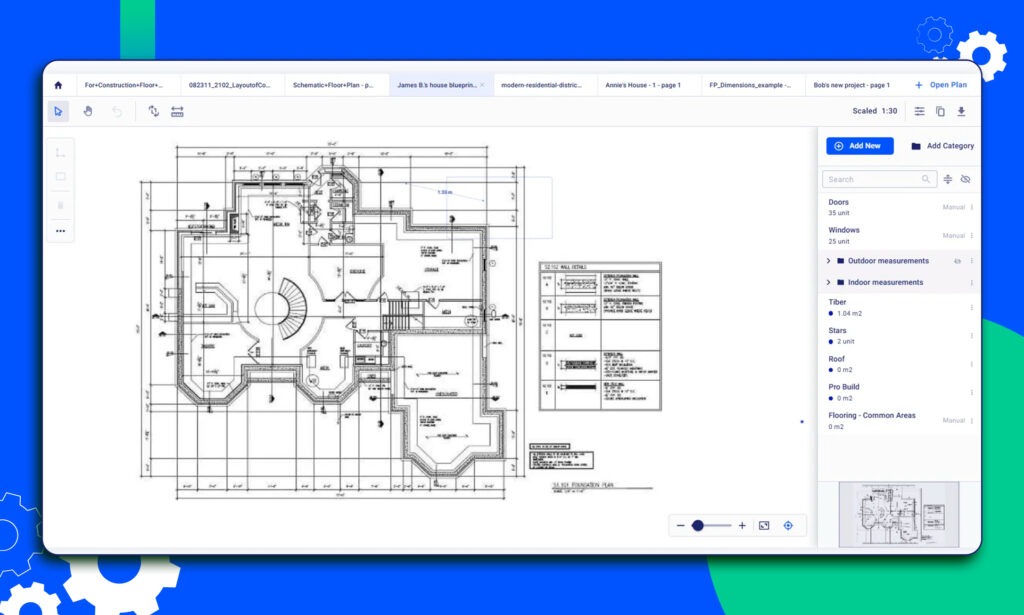
2. Scope Refinement and Cost Breakdown
As the project becomes clearer, the estimate gets broken down more carefully. As a result, quantities improve, scope gets organized, and cost categories become more specific.
We start shifting from broad budget language to structured pricing logic.
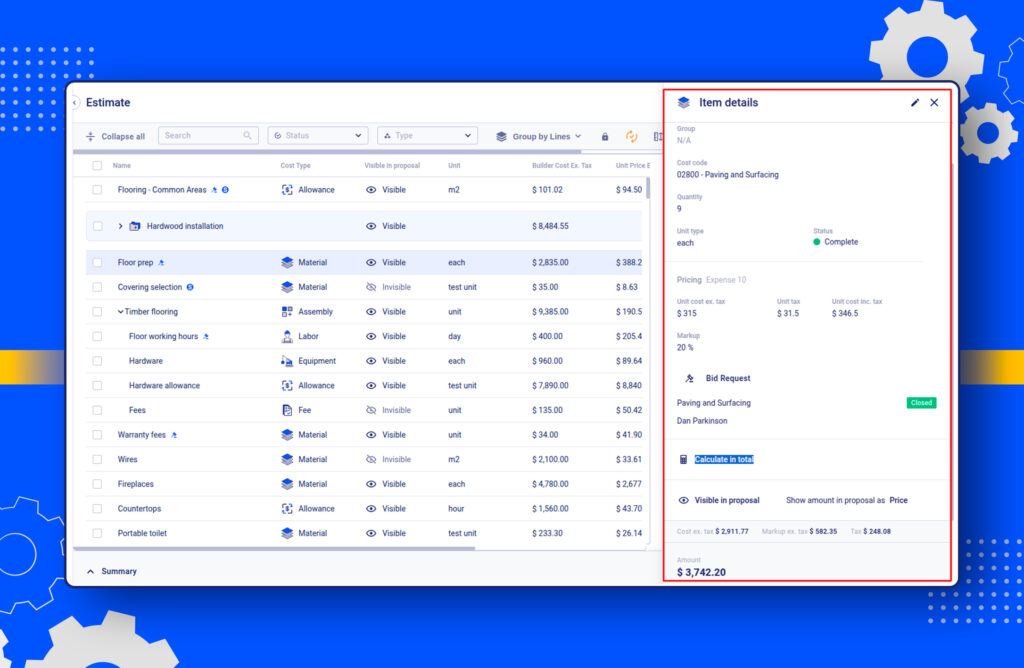
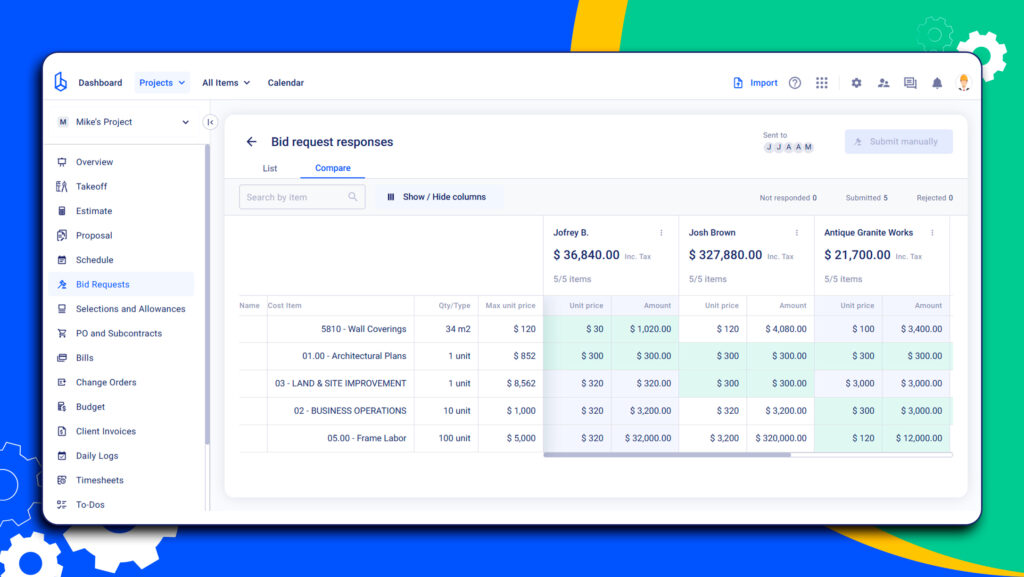
3. Trade pricing and vendor inputs added
Now the estimate begins to harden.
Subcontractor pricing, supplier quotes, and procurement realities get pulled in. This is often where the biggest difference between the early estimate and the final quote starts showing up.
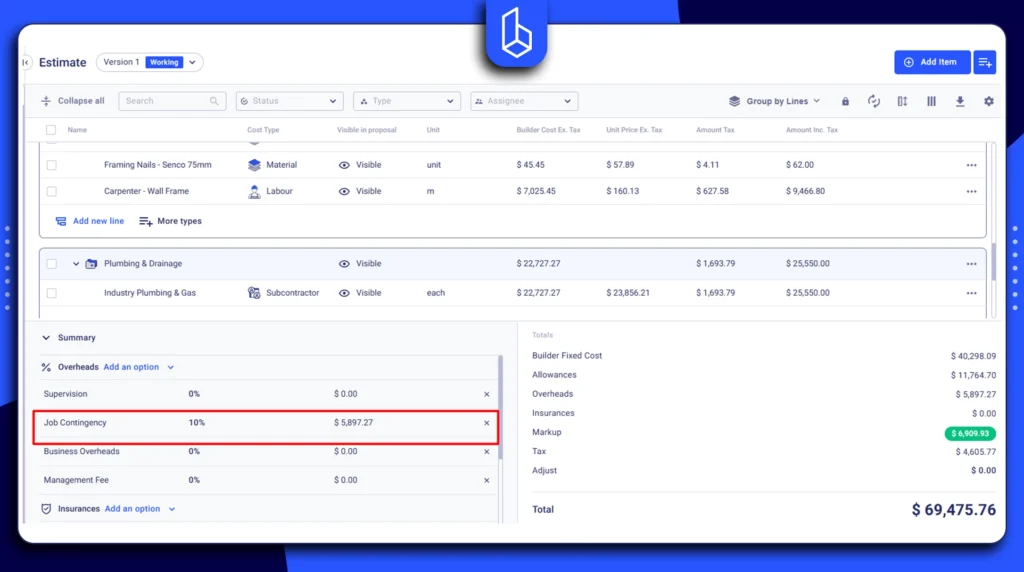
4. Risk Adjustments and Contingencies Applied
By this stage, the builder has a much better sense of where the uncertainty still sits and how risk management works.
That may lead to:
- Contingency adjustments
- Revised labor assumptions
- Procurement buffers
- Allowance structure
- Clarification of exclusions and assumptions
5. Final Quote Issued
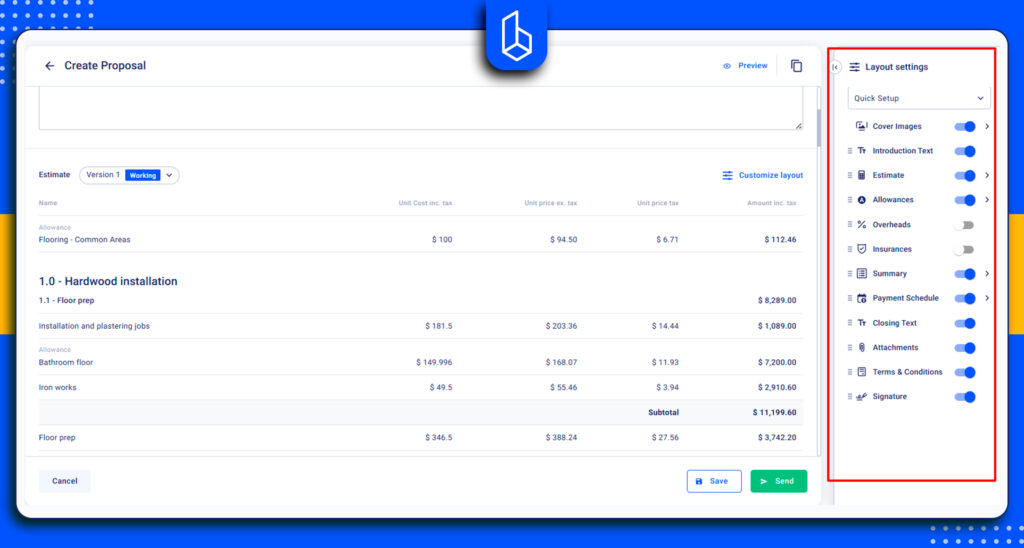
Only after that refinement does the number become a quote.
At this point, the builder is not just presenting a price. The builder is presenting scope logic, commercial clarity, and a pricing position the business can actually support.
Therefore, adjusting everything the client needs to see will help you stay professional.
The Risk Factor: Why Confusing Quotes and Estimates Costs You Money
I have spoken with general contractors across different projects, and the pattern is clear. Most pricing issues do not come from bad calculations but from treating estimates and quotes as the same thing when they are not.
So, here is where that confusion shows up, and how it turns into real financial risk.
Underpricing Due to “Soft Estimates” Treated as Quotes
This is one of the most common problems.
A builder gives a number based on partial information. The client treats it as committed pricing. Then the builder has three bad options:
- Absorb the gap
- Try to explain the increase
- Proceed into the job underpriced
None of those are good business.
Client Expectations Misalignment
Clients do not always care what term the builder used. They care what they think they heard.
If the builder says “estimate” but presents it like a final number, the client may hear “quote.” If the builder says “quote” but keeps changing it, the client may feel the number was never real in the first place.
This is why format and communication both matter. The document needs to match the stage of the project, and the language around it needs to match the document.
Scope Gaps and Missing Line Items
Confusion between quote and estimate also makes omissions harder to catch.
When early-stage pricing gets treated as final, builders often miss:
- Incomplete trade scope
- Temporary works
- Coordination labor
- Procurement costs
- Preliminaries
- Minor items that become major once repeated across the job
Scope gaps are not always dramatic. Most of the time, they are small enough to survive review, then large enough to reduce profit once construction starts.
Change Order Conflicts
The mess usually shows up here.
If the original number was really an estimate, then change handling is expected. If the client believes it was a quote, then every adjustment becomes an argument.
That is where pricing confusion turns into conflict. The builder may be right on scope, while the client may still feel misled. Once that happens, the discussion is no longer only about cost. It becomes about trust.
Therefore, having a reliable change order management system to record all the changes is the key to successful project completion.
How Builders Structure Pricing to Stay Profitable
We have seen that profitable projects rarely come down to the final number alone. They come from how that number is built, structured, and controlled from the start.
From a personal experience, builders who stay consistent here do not rely on guesswork. They break pricing into clear components that can be tracked, adjusted, and defended as the job evolves.
A few habits matter more than most.
Cost Codes and Categorization
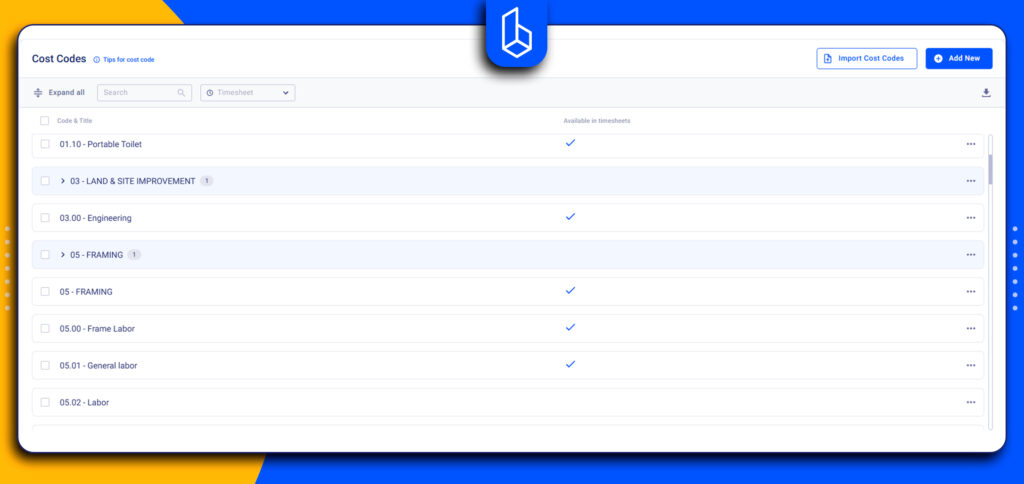
If the estimate is loosely organized, the quote will usually be weaker.
Cost codes create structure by forcing the builder to place scope where it belongs. That reduces the chance of missing categories or hiding labor inside broad lump sums.
Labor vs Material Separation
Separating labor and material is one of the easiest ways to improve visibility.
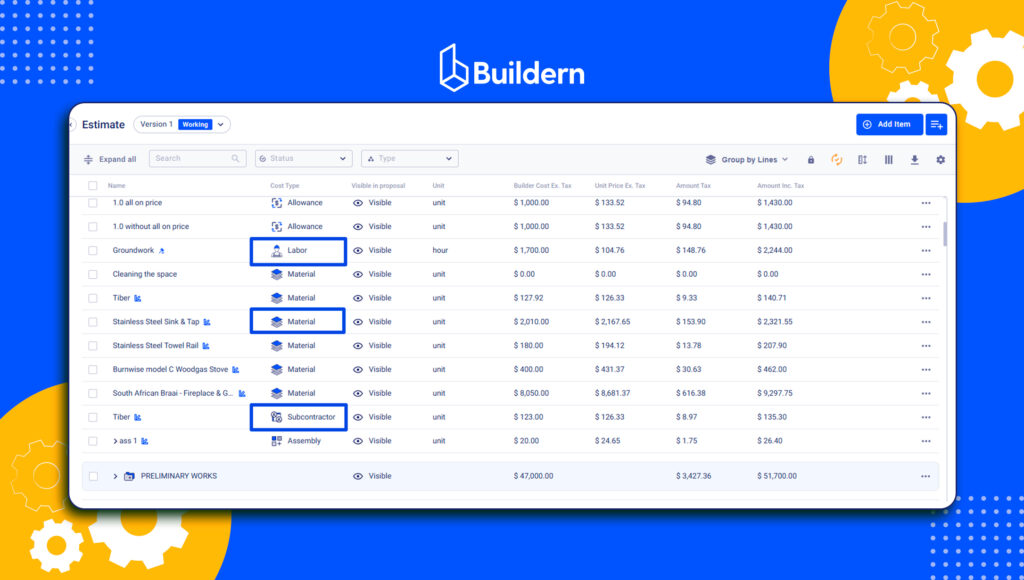
It helps builders see:
- Where margin is actually coming from
- Which trade packages are labor-heavy
- Which items are vulnerable to supplier changes
- How productivity assumptions affect total cost
It also makes later adjustments cleaner if procurement or site conditions shift.
Allowances and Contingencies
These should not be treated as signs of uncertainty weakness. They are pricing tools for handling uncertainty honestly.
Allowances are useful when selections are unresolved. Contingencies are useful when risk exists but cannot yet be costed precisely. Used correctly, both protect margin and improve communication.
Markup Strategy
Contractor’s markup should be deliberate, not default.
Builders need to think about:
- Job complexity
- Contract type
- Schedule risk
- Management burden
- Contingency exposure
Not every project deserves the same markup structure. A quote built from a weak template and a flat markup logic often looks clean on the surface and performs poorly later.
The practical takeaway here is simple: structured estimates reduce rework later. The more disciplined the pricing format is at the front end, the less commercial cleanup the builder has to do once the project moves toward delivery.
To Sum Up…
The loss of control usually appears later, when assumptions harden into expectations and flexible numbers get judged like committed ones.
That is why this distinction matters.
The goal is not to produce perfect numbers every time. Construction rarely allows that. So, my advice here is to aim at producing predictable outcomes.
That means:
- Using estimates when uncertainty is still real
- Issuing quotes only when the scope is mature enough to support commitment
- Documenting assumptions clearly during the transition
- Structuring pricing so gaps are easier to spot before they become losses
When the distinction in quote vs estimate is handled properly, the business usually sees the difference in stronger margins, cleaner communication, and fewer disputes once the job starts.