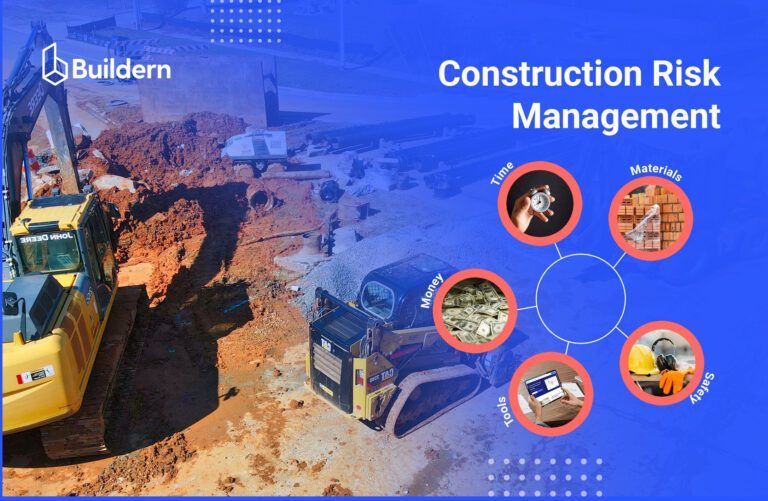
Construction Risk Management: Overview, Types, and Tips to Succeed


Last updated January, 2026
How do companies minimize the risk of failures and ensure that everything goes as smoothly as expected?
The answer lies in proper construction risk management, assisting companies in avoiding the probability of rework and ensuring the successful completion of the project. Delivering a successful project requires careful attention to detail. Thus, even the tiniest oversight during various construction stages can cascade into major project challenges.
Table of Contents
- What is Risk Management in Construction
- Why is Risk Management Important in Construction
- Types of Risks in Construction Projects
- Construction Risk Management Process
- 4 Effective Tips to Succeed in Construction Risk Management

What Is Construction Risk Management
The term construction risk management is how we stay ahead of problems before they turn into real costs. It means identifying potential risks early, understanding how they could affect the project, and putting practical controls in place to limit their financial impact. Done well, it protects margins and reduces unpleasant surprises rather than eliminating risk altogether. Construction is never risk-free, and pretending otherwise usually gets expensive.
In day-to-day work, risk management is less about theory and more about preparation. We look at where issues typically appear, pricing gaps, schedule pressure, scope changes, vendor delays, and define how we will respond if they happen. That planning gives project managers clearer options instead of rushed decisions when something goes wrong.
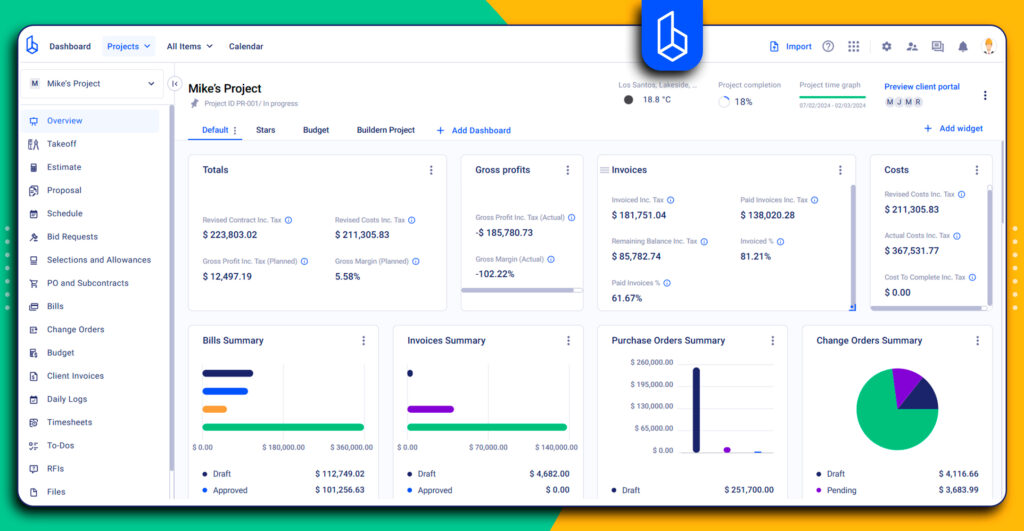
Data plays a quiet but critical role here. When teams track costs, schedules, and outcomes consistently, patterns start to emerge. Past performance shows where estimates tend to drift, which phases carry the most exposure, and where contingencies actually get used. With that visibility and clear tracking dashboards, risks become easier to anticipate, easier to quantify, and easier to control. The result is steadier projects, tighter financial performance, and fewer lessons learned the hard way.
Why Is Risk Management Important in Construction
Risk management matters because construction rarely follows a straight line. Costs shift, schedules compress, and small issues can turn into expensive problems if they are not caught early. A structured approach helps teams stay in control instead of reacting under pressure.
In practice, effective risk management helps construction teams:
- Identify potential issues early, before they impact the schedule or budget
- Reduce safety risks on site by planning preventive measures in advance
- Limit cost overruns by understanding where financial exposure is highest
- Spot troubled projects or phases early and take corrective action
- Create consistent processes for responding to change, delays, and scope growth
- Improve overall project predictability and decision-making
A large share of this value is created during preconstruction. When risks are evaluated early, teams can align scope, budget, and resources more accurately while meeting regulatory and safety requirements. This leads to smoother site operations, fewer disruptions, and projects that are easier to manage from start to finish.
Types of Risks in Construction Projects
In construction, risk is anything likely to affect the project’s cost or progress, negatively affecting quality. The industry is diverse, and there may be various sources of risks on the construction site. Yet, recognizing what risks there are will help you come up with a precise risk management plan.
Safety Risks
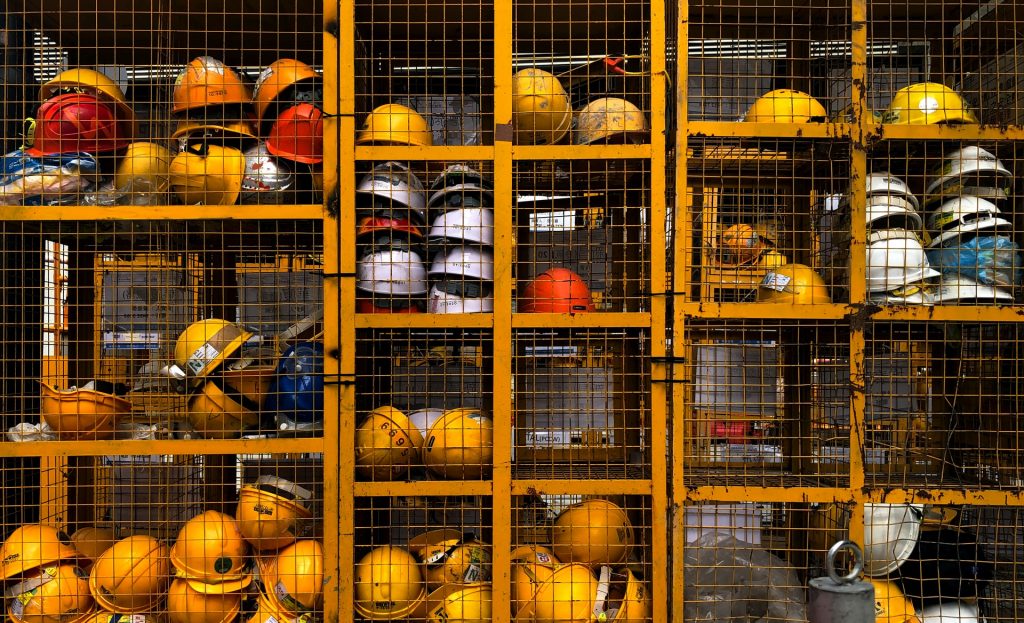
The workforce is the most important asset in any construction project since nothing can be done without them. Unfortunately, the construction field is one of the least safe workplaces to be in. While you may have skilled employees, that does not guarantee them from safety hazards.
Identifying safety risks early allows teams to:
- Address hazardous tasks and site conditions
- Put preventive measures and training in place
- Reduce accidents, downtime, and liability
Financial Risks
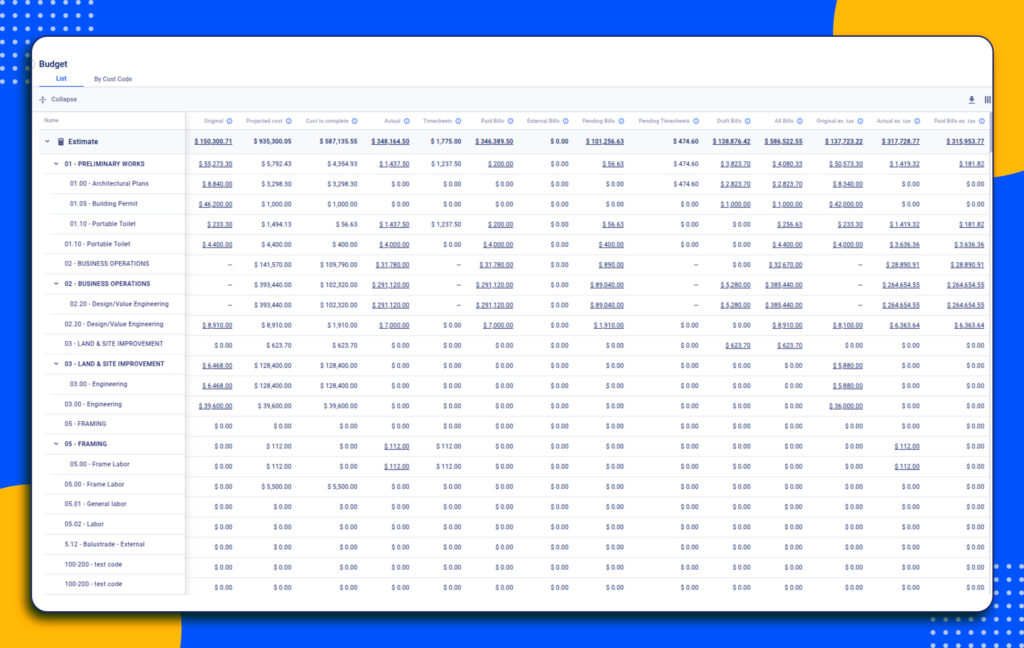
Every project depends on steady financial control. Even with detailed preconstruction estimates, unexpected costs, material waste, or pricing changes can still appear during execution.
Some of the common financial risks in construction include:
- Cost overruns caused by inaccurate estimates or scope changes
- Cash flow disruptions
- Material price fluctuations and waste
- Unplanned project changes and poor resource management
The earlier these risks are identified, the easier it becomes to stay within budget and protect profitability.
Legal Risks
Construction projects also involve legal restrictions that may negatively affect the project and hinder its inherent flow. This includes regulations, code violations, or contract term disputes that will push your project off balance. When designing your contract, take your time, understand what you expect from your employee throughout the project, and clearly state it all in the subcontractor’s agreement statement. Here are a couple of things to include in the document:
- Scope of their work
- Compensation for the harm or loss
- Dispute resolution procedures
- Terms of the payment
- Termination terms
Project Planning Risks
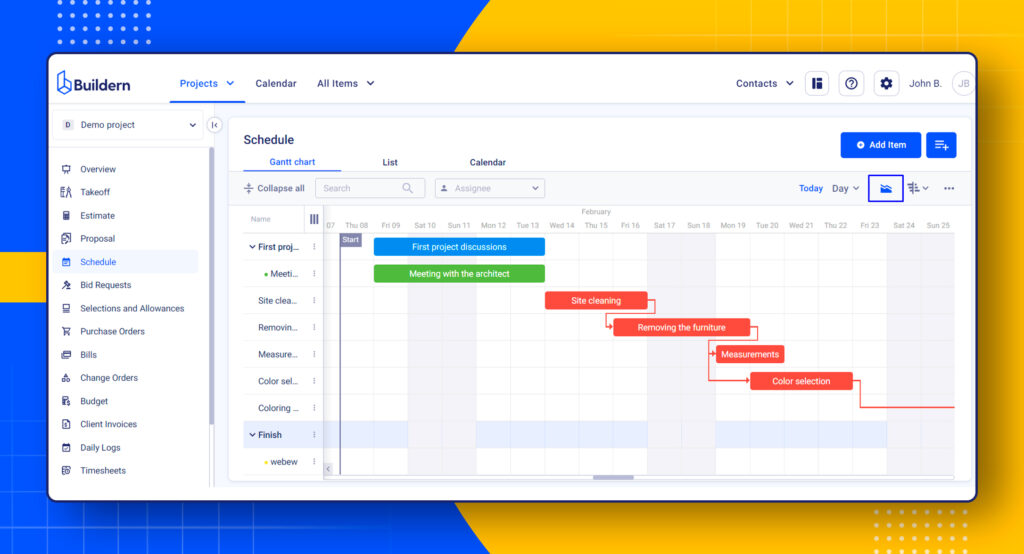
Project risks are tied directly to planning and execution. Poor coordination, resource misallocation, or missed milestones can lead to critical paths that result in delays and budget pressure. Typical project management issues may come from:
- Schedule slippage
- Inefficient resource planning
- Incomplete or outdated project information
Environmental Risks
Environmental risks, also known as “Acts of God,” refer to the natural disasters that may arise unexpectedly. Unfortunately, these are the kinds of risks you cannot predict. You never know when there will be an earthquake, fire, or flood; the environmental hazards are mostly out of your control.
It may be a wise option to conduct a site analysis, ensuring the avoidance of building in areas vulnerable to natural disasters such as earthquakes. This way, you can pre-plan your actions if you encounter an environmental risk during your project. The best solution is to get appropriate risk insurance that will cover your loss in case of a natural disaster.
Construction Risk Management Process
Of course, you never know what surprises life might bring to you, so you can’t tell the risks your company might face during the construction project. To help you make better decisions and mitigate those risks, let’s explore the typical construction risk management process that most companies incorporate in their work.
Identify the Risk
Specify the risks that can occur during the project. Here’s where your risk checklist will be of use. But even with it, make sure you carefully review all of the documents, specifications, and plans. Fully understanding the project’s scope is mandatory to avoid risks from your side. If you’ve already worked on similar projects, rely on that experience to identify the issues that can come up during the work.
Assess the Impact
Not all risks are equal; therefore, they may have different magnitudes of impact on the given construction project. After identifying all the possible risks that may arise throughout the project, determine the frequency, probability, and severity of these potential risks. When trying to assess the most probable risks, bear the following questions in mind:
- What is the likelihood of that risk occurring?
- What is the worst thing that can happen, in case it is impossible to prevent that risk?
- How much will you lose if it happens?
Once you have identified the most probable risks, start prioritizing them. For that, figure out the impact of each risk on your list and consider its probability. This way, you can divide your list into high-impact/low-impact and high-probability/low-probability sections. The risks having both high impact and high probability should be taken care of first.
Plan the Risk Mitigation
After identifying and prioritizing your risks, you should start planning the solutions. The first thing to do is to decide if you can reduce, eliminate, avoid, or accept each risk. This step may differ depending on the type of risk. There are certain types of risks deemed acceptable, while in other scenarios, companies may need to change the scope of the work to meet the needs of the project. After planning the solution, you will need to plan how you will resolve the risk accordingly.
Review and Track
Construction risk management is a process that requires constant improvement. Conducting periodic reviews will allow you to analyze failures and successes and make the necessary adjustments by incorporating the lessons learned. It may be wise to engage other stakeholders and motivate the team to respond to risk. In this way, you will increase the likelihood of encountering the same risk.
Effective Tips to Succeed in Construction Risk Management
Construction risk management is not a one-time exercise completed during preconstruction. It is an ongoing discipline that supports daily decision-making on the job. The most effective approaches focus on visibility, preparedness, and consistency rather than complex frameworks that never make it to the field.
Below are practical, experience-driven tips I know will help your team reduce exposure, respond faster to issues, and keep projects moving forward with fewer surprises.
Optimize the Communication Flow Within the Team
People working in the construction industry are usually famous for their strong work ethic and outstanding technical skills. But because of this, most of the time, construction workers overlook the importance of soft skills. The reality is that clear communication is probably one of the most vital aspects of the work, especially if you want to avoid construction risks.
Try to establish a strong communication chain. Clear communication reduces risk by ensuring that information moves quickly and reaches the right people. On larger projects, this requires structure. Project managers cannot communicate individually with everyone on site, so reporting lines must be clearly defined.
A strong communication setup means:
- Clear reporting responsibilities and escalation paths
- Consistent documentation of decisions and changes
- Tools that support real-time updates across teams
Always Have a Plan B
One of the most crucial aspects of construction risk management is always having a Plan B. You should be ready for all kinds of situations that might come up during the project. That’s why we suggest always saving contacts of all the vendors and subcontractors you have worked with in case there is an immediate need for resources in the middle of the project.
Invest in Ongoing Safety Training
Safety training is often treated as a one-time onboarding requirement. In reality, it should be continuous. Site conditions change, crews rotate, and new risks emerge as projects progress.
Providing construction site safety training will help you avoid major threats on the jobsite and reduce the probability of severe injuries or even deaths. So, training is not only a part of your construction risk management but is pretty much obligatory for ensuring the safety of your site workers.
Keep Optimizing the Procedures and Management Strategies
Finally, remember that the construction risk management process never stops. Even if you have taken months to pre-plan and create your risk management strategy, you still need to be open to changes throughout the project. Even minor success can be a reason to optimize and improve the existing framework.
If a strategy is not reducing risk as expected, it should be revised, even mid-project. Flexibility is not a weakness in construction management. It is often what keeps projects financially and operationally stable.
Key Takeaways
Equipped with all these tips, you have everything you need to create an adequate construction risk management flow and avoid running out of budget or time.
A solid risk management approach gives project teams structure. It clarifies how issues are identified, who responds, and what actions follow. That consistency reduces uncertainty, limits financial leakage, and helps projects recover faster when disruptions occur.
Using professional construction software can support this process by centralizing data, improving visibility, and keeping teams aligned. When cost, schedule, and communication live in one system, risks are easier to track, and decisions are made with better context.

![Construction Estimating Software for Small Businesses: 7 Tools Compared [2026 Update]](https://buildern.com/resources/wp-content/uploads/2025/12/BLOG_COVER_Best-Construction-Estimating-Software-for-Small-Businesses-2026-768x501.jpg)