


Last Updated April 2026
I have worked with many builders who treat construction invoicing like the last administrative step on the job. The work gets done, someone creates a bill, accounting sends it, and then everyone waits.
That sounds simple, but it is not how construction invoicing actually works.
On real projects, invoicing appears at the intersection of contract terms, project progress, documentation, approvals, and cash flow. If one of those pieces is weak, payment usually slows down with it.
That is why I do not look at construction invoicing as “how to make an invoice.” Instead, I treat it as part of project control. A strong invoicing process helps protect cash flow, reduce disputes, and keep billing aligned with the actual status of the work. A weak one creates confusion, delays, and avoidable collection pressure.
To help you think the same way, this guide is meant to explain how construction invoicing really functions across contract structures, project stages, and billing methods.
Table of Contents
- What Is Construction Invoicing?
- Invoice vs Payment Application vs Purchase Order
- How Construction Invoicing Works From Start to Finish
- Common Construction Invoicing Methods
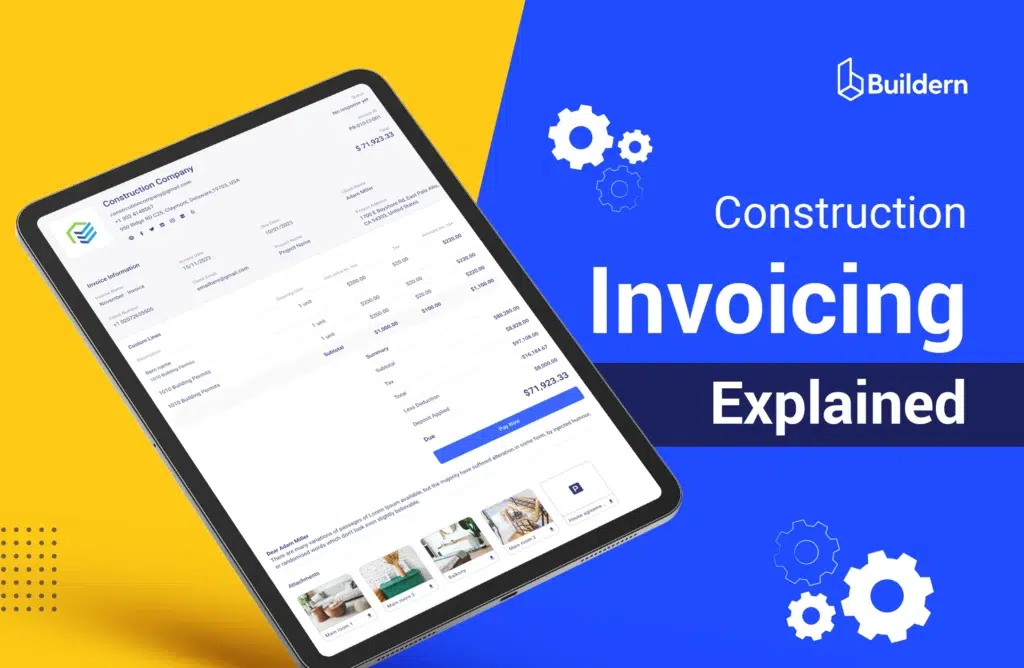
- What to Include in a Construction Invoice
What Is Construction Invoicing?
Let’s make this clear:
Construction invoicing is the process of billing for work performed, materials supplied, or milestones reached on a construction project. At a basic level, an invoice requests payment. In practice, it also represents what has been earned, what has been approved, what still needs support, and how the contract says payment should move.
How Construction Invoicing Differs from Standard Invoicing
The reason construction invoicing feels more complex than ordinary invoicing is that the bill is usually tied to progress, conditions, and supporting records, not just a completed one-time sale. The deeper point is that construction invoices do not stand alone. They depend on the contract, the work status, and the documentation chain behind them.
A standard invoice is often simple. A product is sold or a service is delivered, and the seller bills the buyer. Construction rarely behaves that neatly.
Construction invoicing is different because it is usually:
- Project-based rather than transaction-based
- Tied to phased work and partial billing
- Dependent on contract structure
- Linked to labor, materials, field progress, and approvals
That means the billing process has to reflect how the project is actually being delivered. A lump sum contract, a cost-plus agreement, and a time-and-materials arrangement do not bill the same way. Progress billing is common because construction payment schedules usually break the full contract value into staged payments rather than a single final payment.
This also explains why construction invoicing often needs more backup. If the invoice reflects a percentage of work complete, milestone achieved, or tracked hours and materials, then the billing has to be supported by records the client, GC, lender, or owner can review.
Why Invoicing Matters Beyond Getting Paid
Getting paid is the obvious reason invoicing matters, but it is not the only one.
A good invoicing process improves:
- Cash flow stability, because regular and accurate billing reduces timing gaps
- Revenue visibility, because earned work gets translated into current billing more consistently
- Dispute resolution, because clear records make scope and payment conversations easier
- Cost control, because billing discipline usually exposes weak documentation and scope drift sooner
Payment schedules help keep projects moving by aligning billing with work performed and reducing the pressure to fund too much work out of pocket. At the same time, construction retainage, if used, can create working-capital strain when earned money is withheld until later milestones or completion.
Invoice vs Payment Application vs Purchase Order
These three documents are related, but they are not interchangeable.
An invoice is the direct request for payment. It tells the paying party what is due, for what period, and under what terms.
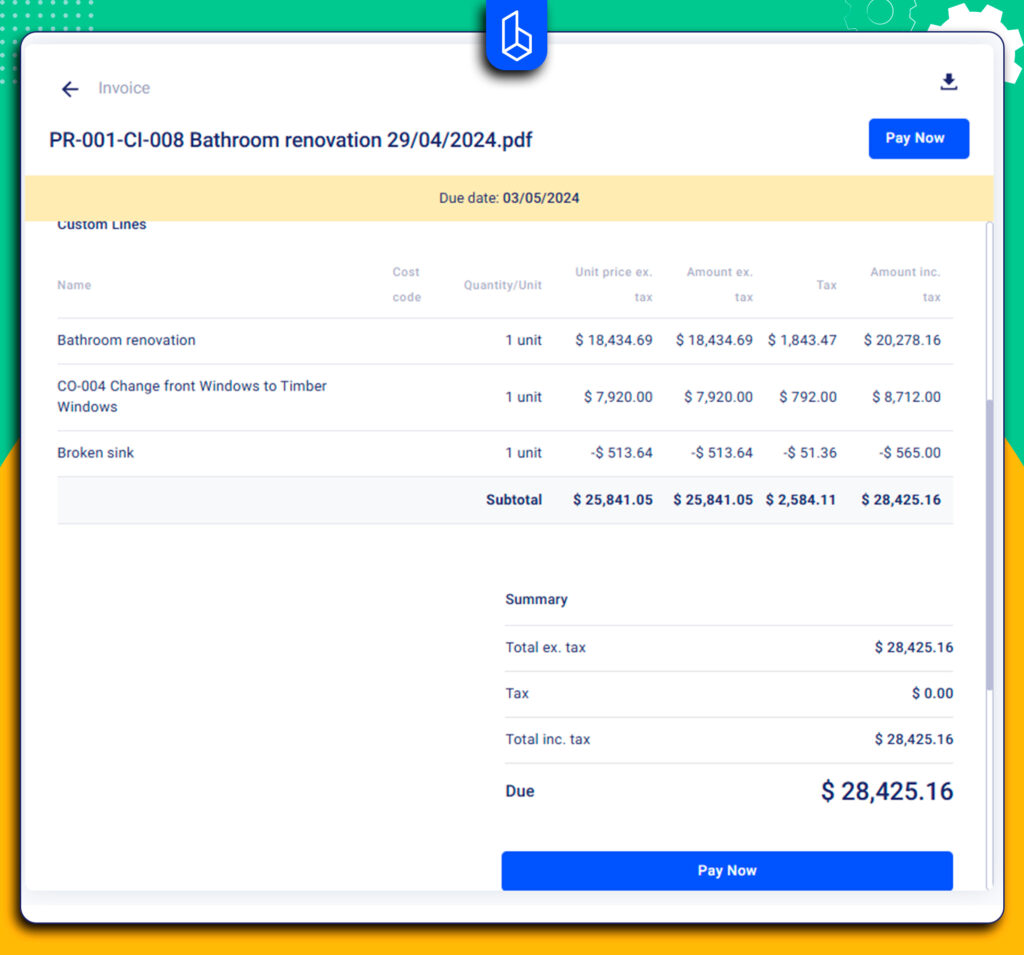
A payment application or pay app is usually broader. It often includes the billing request plus supporting documents and a formal breakdown showing what has been completed, previously billed, currently billed, and retained. On many larger projects, especially those using schedules of values, the pay app is the package the owner or general contractor reviews before approving payment. Progress claims and pay applications are often tied to schedules of values or work breakdown structures that track completed work against the contract value.
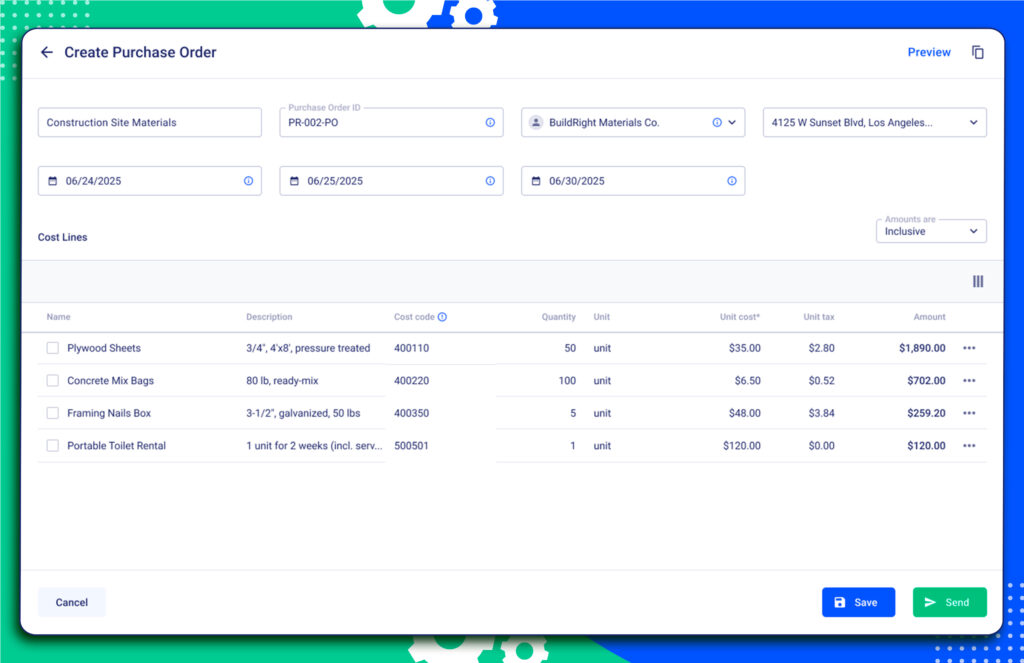
A purchase order is different again. It is issued before billing, not after. It authorizes a purchase of goods or services and usually sets the commercial reference the later invoice may need to cite. Buildern’s current article already separates invoices from payment applications and purchase orders. The stronger version of that logic is this: the PO authorizes spending, the pay app supports approval, and the invoice requests payment.
How Construction Invoicing Works From Start to Finish
Good invoicing does not start in accounting, but in the field and then moves through validation, documentation, review, submission, and collection.
I’ve seen how projects success and fail, all because of the construction invoicing. So, here’s a step-by-step workflow that works for most jobs.
Step 1. Work Is Completed and Documented
Before anything is billed, the work has to be recorded clearly enough to support the charge.
That usually means:
- Logging labor hours
- Tracking materials
- Recording site progress
- Capturing change orders
- Noting deliveries, inspections, or approvals where relevant
This sounds basic, but it is where many invoicing problems begin. If field records are weak, the invoice becomes harder to defend later. Documentation does not have to be bloated, but it does have to be consistent.
Step 2. Billable Amounts Are Validated
Once the work is documented, the billable amount has to be checked against the contract.
At this stage your accounting team has to review all the financial workflows, including the payment terms, billing method, current work completed against milestone, schedule, or unit quantity, etc. Approved versus pending changes also matter, as this is where most teams face miscalculations.
That review matters because not everything completed is always billable in the same way. Some work may still be waiting on approval. Some stored materials may have separate billing rules. Retainage also needs to be applied correctly, and on many projects it is commonly withheld at around 5% to 10% (8% is totally okay) until a later milestone or project completion.
Step 3. Supporting Documents Are Assembled
The invoice becomes easier to approve when the backup is already organized.
Depending on contract type and project requirements, the support package may include:
- Timesheets
- Receipts or vendor backup
- Photos
- Signed change orders
- Inspection records
- Delivery slips
- Lien waivers where required
Lien waivers are commonly used in construction in exchange for payment, and they are often part of the payment process because they help reduce downstream lien risk for the paying party.
This is also where discipline pays off. If backup is assembled only after the client asks for it, payment usually slows down.
Step 4. Invoice or Pay App Is Created
Now the billing document itself gets built.
Depending on the project and method, that may mean:
- Line-item billing
- Summarized progress billing
- Milestone billing
- Time-and-materials backup billing
- A full pay app tied to a schedule of values
At minimum, the billing should make the period and the amount clear. It should also show tax, retainage, and due date correctly. If the invoice is hard to read, hard to reconcile, or disconnected from the contract structure, review friction increases quickly.
Step 5. Internal and External Approvals Happen
This step is often where timing is won or lost. Internally, the invoice or pay app needs a review by the project manager and accounting team.
Externally, the package may need owner, GC, lender, or consultant approval, depending on how the contract is set up.
Step 6. Invoice is submitted, tracked, and collected
Once the billing package is ready, it has to move through the right channel and stay visible until payment is recorded.
That includes:
- Using the required submission method
- Tracking whether the billing was received and reviewed
- Following up on a consistent cadence
- Recording payment correctly once received
- Resolving exceptions, short-pays, or rejections
This last stage matters more than most teams admit. A well-prepared invoice can still sit too long if submission timing, follow-up rhythm, or dispute response is weak. Invoicing is finished only when the cash is recorded.
Common Construction Invoicing Methods
Construction invoicing methods vary because construction contracts vary.
Each method changes how revenue is recognized, how cash flows through the job, and how much documentation is required to justify every dollar billed. In practice, builders do not choose based on preference, they choose based on how predictable the work is and how much control they have over costs.
Understanding this upfront is what keeps billing aligned with reality instead of turning every invoice into a negotiation.
Lump Sum
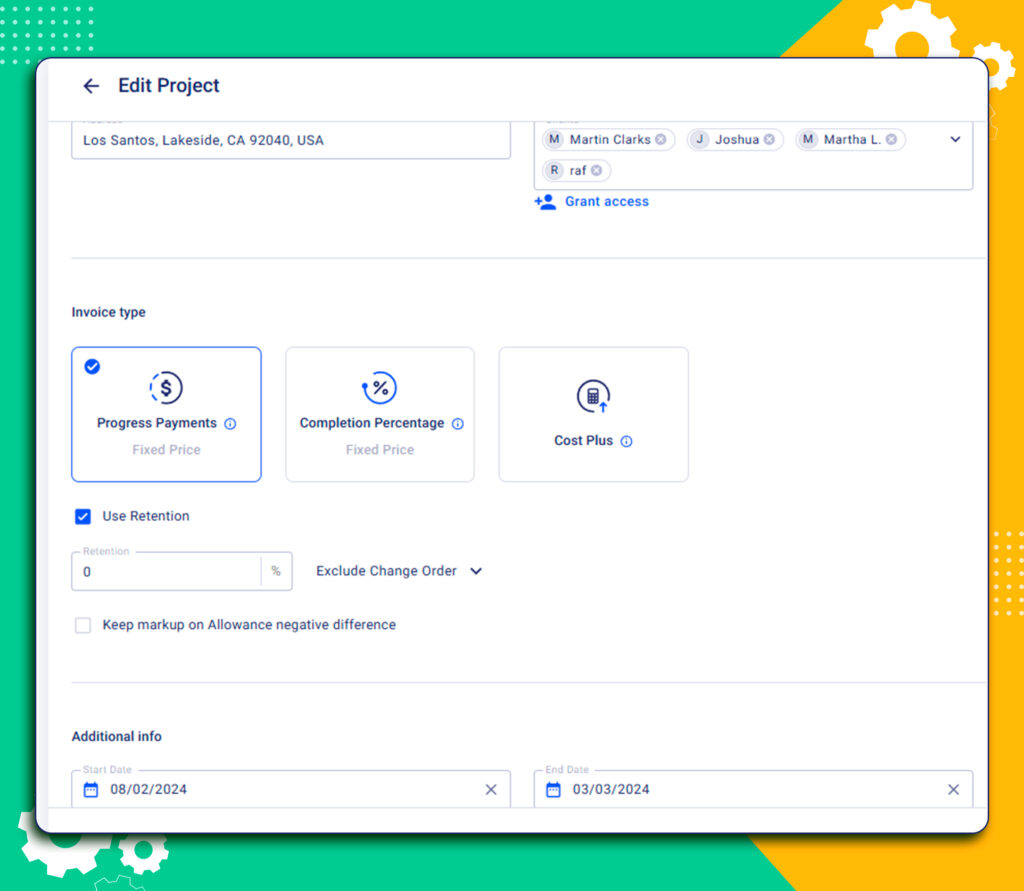
A lump sum contract sets a fixed price for the work. Billing is usually tied to progress or milestones rather than open-ended cost accumulation. This method works best when the scope is well defined.
Cost-Plus
Under cost-plus billing, the client pays actual costs plus an agreed fee or markup. The invoicing process needs stronger cost backup because the billing is tied directly to documented expenses and fees.
Time and Materials (T&M)
T&M billing charges based on labor hours and materials used. This method depends heavily on detailed backup such as timesheets, delivery records, and usage documentation. It is often used where the scope is less defined or expected to change.
Unit Price
Unit-price billing charges by measurable quantities, such as cubic yards, linear feet, or installed units. Accuracy depends on quantity tracking and agreed rates.
Progress or Milestone Billing
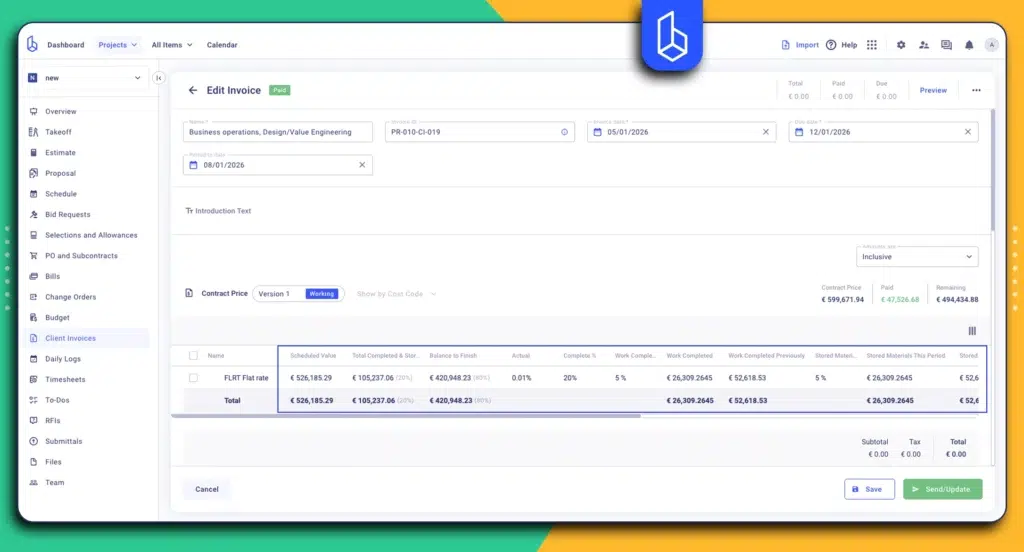
Progress billing invoices work completed to date, often monthly or at agreed milestones. It is common on longer projects because it aligns cash movement with project progress rather than final completion only. Schedule of Values structures are often used here to support billing by work item or cost code.
What to Include in a Construction Invoice
From core fields like the invoice number and project information to more specific information like prior billings and payment instructions, construction invoices can have multiple fields that make them unique.
Here’s a proven structure that makes the invoice defensible and easy to review.
Core Invoice Fields
Every invoice should include the basics:
- Invoice number
- Billing period
- Issue date and due date
- Customer and project information
- Contract or PO reference if relevant
Cost and Scope Breakdown
The invoice should show what is being billed in a way that matches the contract and the review process.
That may include:
- Labor
- Materials
- Equipment
- Subcontracted work
- Taxes
- Approved change orders
The right level of cost breakdown depends on billing method. A time-and-materials invoice needs more backup than a simple milestone invoice. But in both cases, the paying party should be able to understand what the number represents.
Retainage, Prior Billings, and Balance Due
Construction billing often needs more context than a standard invoice.
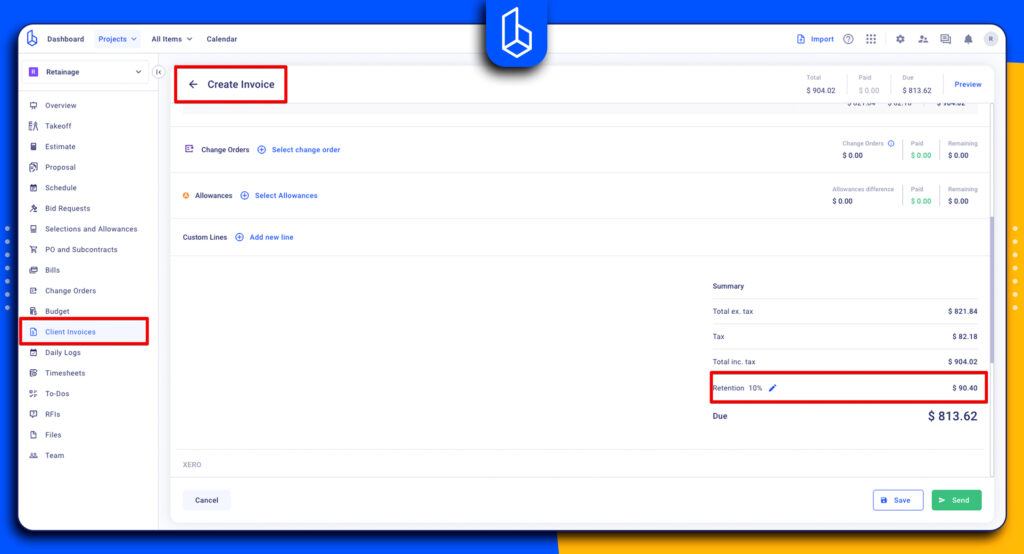
Retainage is especially important because it represents earned money that is being withheld under the contract. If that amount is not shown clearly, billing confusion grows quickly.
Payment Instructions and Terms
If the invoice is easy to approve but unclear to pay, collection still slows down.
Include:
- Accepted payment methods
- Due dates
- Late fees, if contractually allowed
- Remittance details
Payment terms should match the contract, not rely on assumption. General conditions and payment schedule provisions typically define how invoicing is managed and whether retainage applies.
Attachments that strengthen the invoice
Attachments often determine whether the invoice moves quickly or stalls.
Depending on the job, useful support includes timesheets, photos, delivery slips, signed approvals, lien waivers, etc.
Final Thoughts
My advice is to stop treating construction invoicing as a disconnected admin task. It reflects what was planned, what was actually built, and what can be justified on paper at any given moment.
The difference is not in how invoices are formatted, it is in how well billing is tied to the job itself. Methods, documentation, change orders, and retainage all need to move together, not in fragments. Once that connection is in place, invoicing stops being reactive and starts becoming a controlled, predictable part of delivery.
At that point, getting paid is no longer a matter of follow-ups. It becomes a byproduct of having the right structure behind every invoice you send.